



By: Rakesh Gupta, Ravi Kumar, Suprakash Mandal, Kausar Neyaz, Ritu Sharma, Abhishek Bharti, Rakesh Gupta, Ravi K. Chaudhary
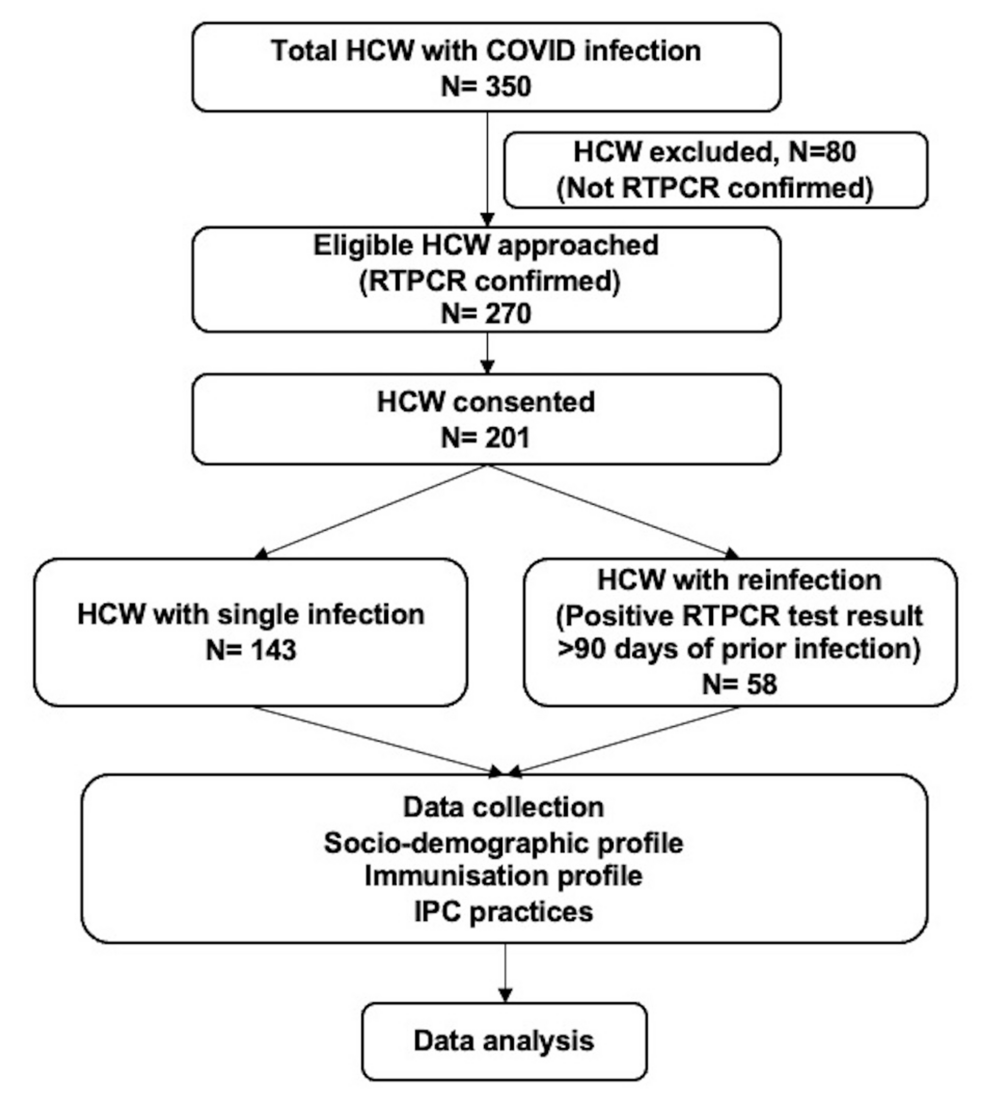
Introduction: The emergence of COVID-19 surges, exposing healthcare workers (HCWs) to the risk of COVID-19 reinfection, raises the alarm and prompts the search for the most effective infection prevention and control (IPC) practices to promote and sustain their rationalised use. We aimed to assess the role of individual IPC practices in preventing COVID-19 reinfection among HCWs.Methods: This was a hospital-based, cross-sectional study conducted during the pandemic that included consenting HCWs involved in COVID care with RTPCR-confirmed COVID-19 infection. We used a self-developed, pre-tested, interviewer-administered, semi-structured questionnaire to collect clinico-demographic details and attitudes towards IPC practices. The responses of HCWs with a single infection and those with reinfection were compared.Results: Resident doctors exhibited higher odds of reinfection (OR = 14.11; 95% CI: 3.58-55.59; p < 0.001); HCWs assigned to OT/ICUs or laboratories demonstrated significantly lower odds of reinfection (OR = 0.30; 95% CI: 0.11-0.84; p = 0.021); those who were on duty within the hospital faced significant risk of reinfection (OR = 3.54; 95% CI: 1.19-10.51; p = 0.023). Both partially and fully vaccinated HCWs had lower odds of reinfection compared to unvaccinated individuals. Random Forest analysis showed that among the IPC practices, mask use provided the greatest protection against reinfection, followed by the use of sterile gloves.Conclusion: Strengthening and rationalising IPC practices are critical to reducing the risk of COVID-19 reinfection among HCWs.