


By: Ryuichi Ohta, Toshihiro Yakabe
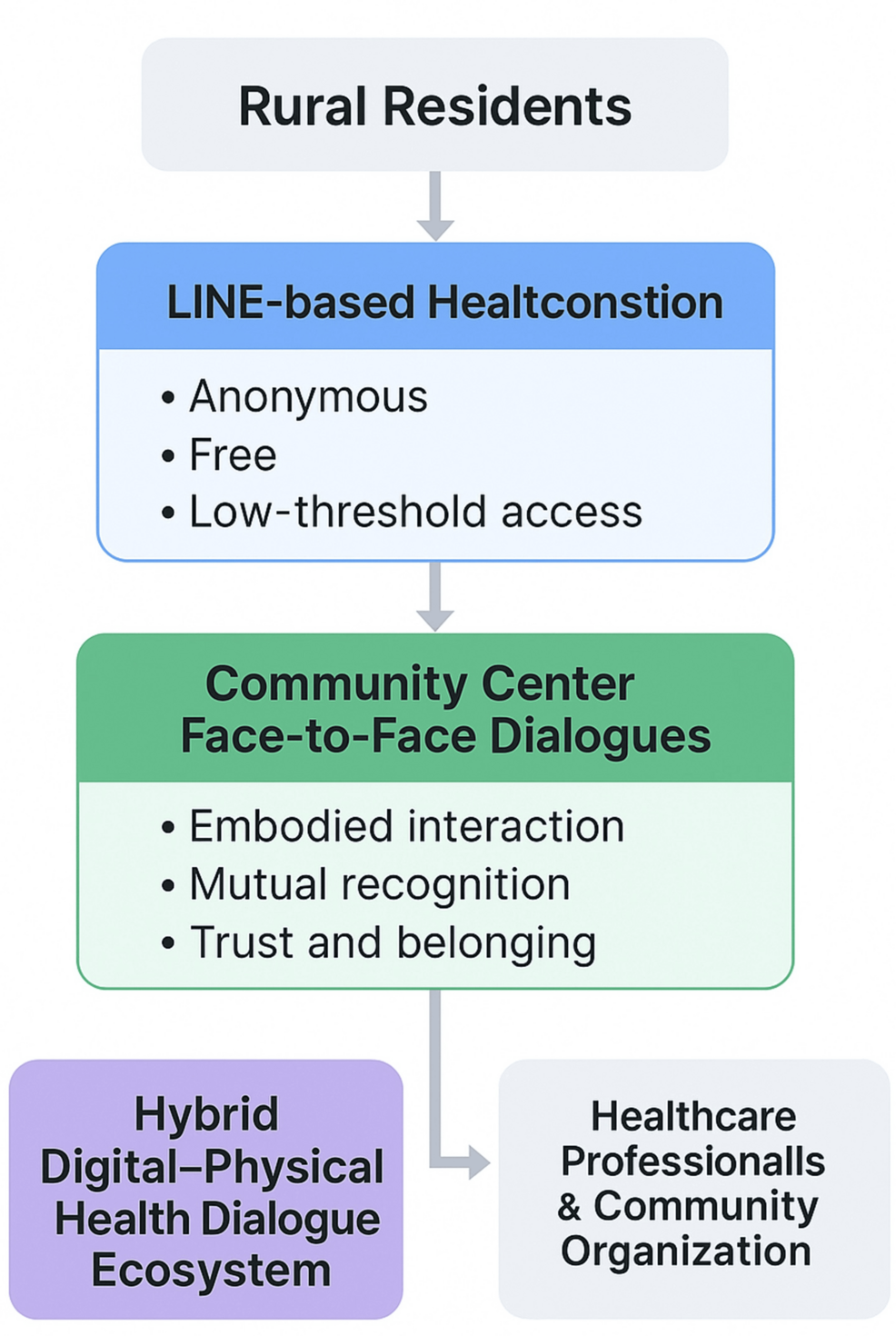
Rural communities often face structural and psychological barriers to healthcare access, particularly among older and socially isolated populations. Conventional clinic-based services may not adequately address early, ambiguous health concerns or facilitate low-threshold help-seeking. This technical report describes the implementation of a hybrid digital-physical health dialogue model designed to enhance accessibility, trust, and sustained engagement in a rural Japanese community. The intervention integrated an anonymous, free health consultation service delivered via the LINE messaging platform (LINE Corporation, Tokyo, Japan) with face-to-face dialogue sessions conducted at local community centers. Healthcare professionals and a community-based organization collaboratively facilitated both components. Rather than evaluating effectiveness, this report focuses on the implementation process and on observational insights from routine operations, including staff field notes, informal debriefings, and participant feedback. The digital consultation service served as a low-threshold entry point, enabling residents to raise health-related concerns early. Over time, some participants transitioned from online consultations to in-person dialogues, which may indicate gradual trust-building and increased confidence in engagement. Face-to-face sessions appeared to foster mutual recognition, peer support, and a shared understanding of community health concerns. Healthcare professionals reported enhanced contextual awareness of residents’ lived experiences. Key challenges included digital exclusion among some older adults, reliance on voluntary human resources, and the absence of formal outcome evaluation. The hybrid digital-physical health dialogue model demonstrates practical feasibility as an implementation approach to support accessible and relational health dialogue in a rural setting. While not an effectiveness study, the findings provide transferable insights for designing community-based, low-threshold health dialogue initiatives that balance accessibility, trust, and sustainability in resource-limited contexts.