


By: Mahmood, Massimo, Imtiaz, Ibrar, Riaz, Gannuscio, Muhammad, Todaro, Ozge, Tahir, Nouman, Waqas, Hafiz Muhammad, Muhammad Naeem, Ahmed, Roshan, Ul Hassan, Riccardo, Sizmaz, Beenish
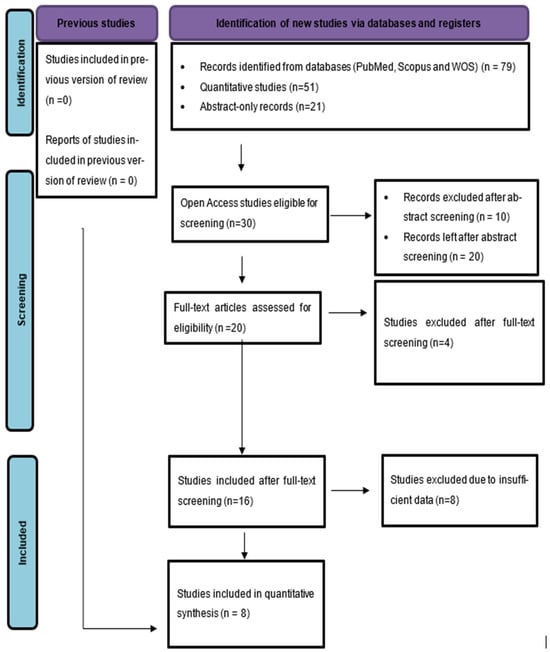
The incorporation of Camelina sativa and its by-products (oil, meal, seeds, and expellers) into ruminant diets improves feed efficiency and reduces environmental impacts. This systematic review and meta-analysis, conducted in line with PRISMA guidelines, identified 79 studies, of which 8 met strict inclusion criteria, yielding 23 comparisons. Data were analyzed using random-effects models in R with additional meta-regression and sensitivity analyses. Camelina supplementation significantly reduced dry matter intake (DMI; MD = −0.63 kg/day, p = 0.0188) with high heterogeneity (I2 = 98.6%), largely attributable to product type and dosage. Although the pooled effect on daily milk yield was non-significant (MD = −1.11 kg/day, p = 0.1922), meta-regression revealed a significant positive dose–response relationship (β = 0.3981, p < 0.0001), indicating higher milk yield at greater Camelina inclusion levels. Camelina oil and its mixtures reduced rumen pH and methane emissions, consistent with polyunsaturated fatty acid (PUFA)-mediated suppression of methanogenesis. Impacts on milk fat and protein are inconsistent, but improvements in unsaturated fatty acid profiles, including omega-3 and conjugated linoleic acid (CLA), have been reported. Camelina also lowered milk urea (MD = −1.71 mmol/L), suggesting improved nitrogen utilization. Despite promising outcomes, substantial variability and limited sample sizes restrict generalizability, underscoring the need for standardized, long-term trials.