



By: Li Luo, Xiangyang Yu, Zhihao He, Weibin Hong, Yuchen Guo
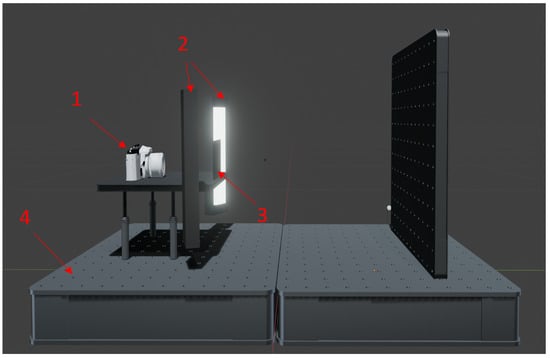
Accurate colorimetric quantification presents a significant challenge, as traditional imaging technologies fail to resolve metamerism and even hyperspectral imaging (HSI) is compromised by nonlinearities and specular reflections. This study introduces a high-fidelity colorimetric system using cross-polarized HSI to suppress specular reflections, integrated with a Support Vector Regression (SVR) model to correct the system’s nonlinear response. The system’s performance was rigorously validated, demonstrating exceptional stability and repeatability (average ΔE00<0.1). The SVR calibration significantly enhanced accuracy, reducing the mean color error from ΔE00=4.36 to 0.43. Furthermore, when coupled with a Random Forest classifier, the system achieved 99.0% accuracy in discriminating visually indistinguishable (metameric) samples. In application-specific validation, it successfully quantified cosmetic color shifts and achieved high-precision skin-tone matching with a fidelity as low as ΔE00=0.82. This study demonstrates that the proposed system, by synergistically combining cross-polarization and machine learning, constitutes a robust tool for high-precision colorimetry, addressing long-standing challenges and showing significant potential in fields like cosmetic science.