



By: Katharine Balbuena, Zakaria Abd Elmageed, Brittany E. Reid, Stephen Digiuseppe, Zakaria Y. Abd Elmageed, Mario Perez
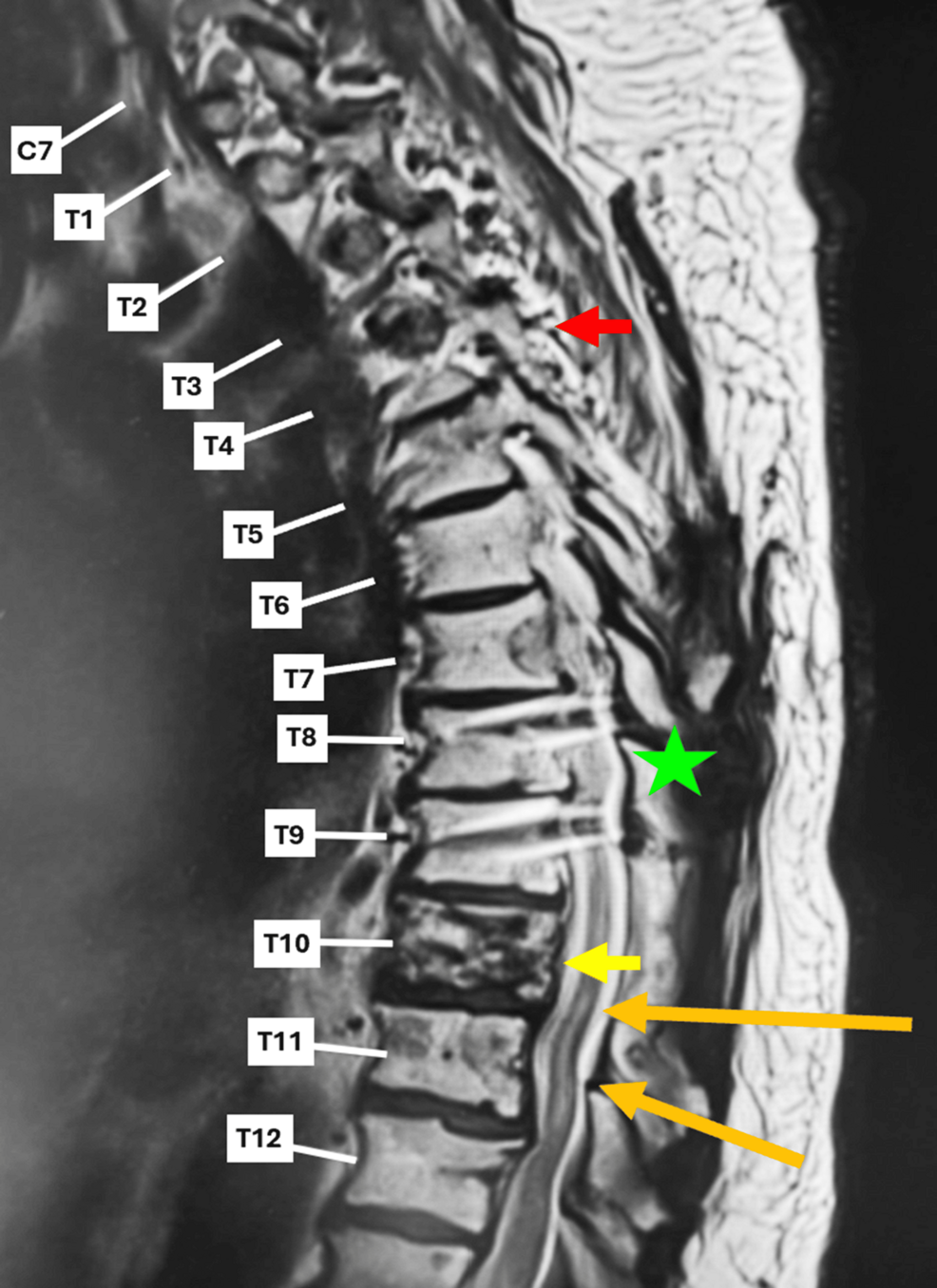
Spinal cord infarction is a rare but serious complication that can occur in the setting of metastatic disease, prior radiation therapy, and vascular compromise. We present a case of a 69-year-old male who was admitted to inpatient rehabilitation following an acute spinal cord infarction. Past medical history included metastatic prostate cancer, osteoporosis, deep vein thrombosis on apixaban, and a complex oncologic and spinal history. He experienced a sudden onset of back pain that progressed to bilateral leg paralysis and bowel and bladder dysfunction. His symptoms presented within 24 hours of receiving intravenous zoledronic acid for metastatic bone disease. Imaging revealed T2 signal changes suggestive of spinal cord infarction and new syringohydromyelia. Neurology suspected ischemia of the artery of Adamkiewicz in the context of metastatic disease, prior radiation, and bisphosphonate exposure. During inpatient rehabilitation, the patient demonstrated gradual motor recovery, improved sitting balance, and increased functional independence with therapy, despite experiencing persistent bowel and bladder incontinence. He developed a urinary tract infection and later hematuria, which required hospital readmission. He was then discharged to a skilled nursing facility for continued rehabilitation. This case highlights an uncommon but devastating neurologic complication in the context of complex oncologic care and prompts the consideration of potential vascular risks of bisphosphonates in patients with prior spinal metastases, radiation, and surgery. It also emphasizes the diagnostic complexity and the potential for rehabilitation in spinal cord infarction with multifactorial oncologic and vascular compromise.