
By: Neha Priya, Tausif Alam Sr., Tausif Alam, Mukesh Kumar, Manish Kumar, Vishwanath Kumar, Neha Priya Sr.
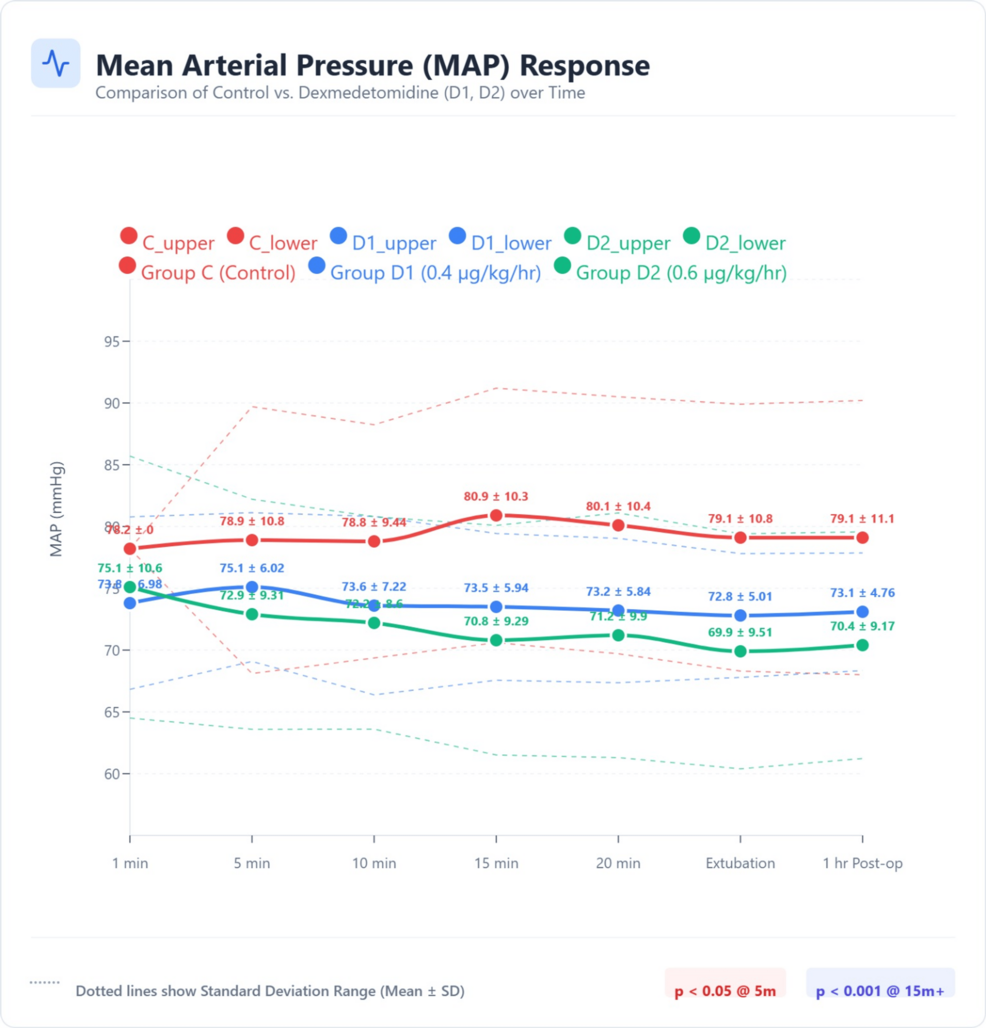
Background: Tracheal extubation is associated with significant airway and hemodynamic responses, which may be detrimental in neurosurgical patients. Dexmedetomidine, a selective α₂-adrenergic agonist, has been shown to attenuate these responses without causing respiratory depression. This study aimed to compare two infusion doses of dexmedetomidine for attenuation of stress responses during extubation.Methods: Ninety ASA I-II patients (ages 18-65) undergoing neurosurgery were enrolled in this double-blinded, randomized controlled trial. Patients were divided into three groups: Group D1 was administered dexmedetomidine 0.4 µg/kg, Group D2 was administered 0.6 µg/kg, and Group C was administered normal saline. The study drug was infused over 20 minutes prior to extubation. Hemodynamic parameters, extubation quality, emergence time, and adverse effects were recorded and analyzed.Results: Dexmedetomidine significantly reduced heart rate as well as mean arterial pressure compared to control during extubation and after extubation (p < 0.05). Extubation quality was significantly improved in Group D2 (1.8 ± 0.88) and Group D1 (2.5 ± 1.01) compared to Group C (3.47 ± 1.25) (p = 0.002). Sedation scores were higher in dexmedetomidine groups without respiratory compromise. Emergence and extubation times were slightly prolonged but not statistically significant. Bradycardia and hypotension were more frequent in Group D2, while breath-holding was significantly reduced in the dexmedetomidine groups.Conclusions: Dexmedetomidine effectively attenuates extubation-related stress responses in neurosurgical patients. The 0.4 µg/kg dose provides an optimal balance between efficacy and safety, whereas the 0.6 µg/kg dose offers smoother extubation with a slightly higher incidence of manageable adverse effects.