


By: Ramírez Barat, Irene, Bárbara, Nayra, Ruiz Zamora, Blanca, García-Patrón, Emilio, Culubret Worms, Llorente, María Teresa, Cano, Elena, Molina
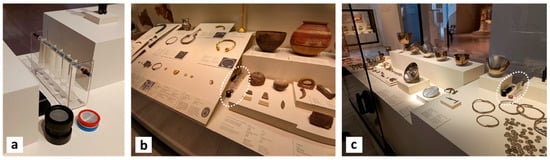
Silver tarnishing in museum environments depends on multiple, interacting factors that are not often studied in situ. With the aim of addressing the problem in real-world scenarios, this study presents a one-year assessment at the National Archaeological Museum of Spain, in Madrid, a museum that houses a significant collection of silver objects. Pure Ag coupons were placed in four display cases—two designs with different airtightness—and in an adjacent gallery. Tarnishing was quantified by colorimetry, gravimetry, and galvanostatic reduction, and analyzed in relation to environmental parameters (T/RH) and gaseous pollutants (H2S, SO2, HF, HCl, formic and acetic acids), measured with passive samplers. Coupons showed different degrees of tarnish, with annual corrosion rates ranging from IC1 (very low) to IC2 (low), without a straightforward relation to hydrogen sulfide concentrations. Electrochemical profiles and XPS on representative coupons identified Ag2S as the dominant product, with AgCl and minor Ag2SO4 in the coupons exposed outside the airtight cases, indicating different contributions inside and outside the cases. Findings highlight that sulfide concentration is not the sole driver; case airtightness, internal materials, cleaning products used on adjacent areas, and, possibly, other aspects influence silver tarnishing.