
By: José Manuel, Juan Manuel, Roger Emmanuel
Loading [MathJax]/jax/output/HTML-CSS/fonts/Gyre-Pagella/Normal/Regular/Main.js by Roger Emmanuel Sales-Pérez


Not enough data
Juan Manuel's coverage primarily focuses on scientific research and healthcare, with a specific emphasis on biotechnology, cell culture, dental procedures, pharmacology, and microbiology. His articles often cite data and provide in-depth analysis of industry-specific topics.
If you're looking to reach out to Juan for potential coverage or expert commentary, consider offering insights from reputable researchers or professionals within the fields of biotechnology, cell culture techniques, dental procedures (especially those involving innovative technologies like augmented reality), pharmacological studies focusing on natural compounds or new drug development processes. Additionally, experts in the field of microbiology with expertise in environmental applications such as metal recovery from wastewater may also find their contributions relevant to his work.
Given that Juan’s geographic focus is not specified but some titles reference Southern Spain indicates that he may have a regional interest alongside an international outlook within these scientific domains.
This information evolves through artificial intelligence and human feedback. Improve this profile .

By: José Manuel, Juan Manuel, Roger Emmanuel
Loading [MathJax]/jax/output/HTML-CSS/fonts/Gyre-Pagella/Normal/Regular/Main.js by Roger Emmanuel Sales-Pérez

By: Wang, Leah F., Juan Manuel, Yang, David, Yuejun, Rosin, Savanna F., Hernan A.
Background Three-dimensional genome organization is maintained in part by chromatin insulators, DNA–protein complexes that create boundaries between active and inactive chromatin and regulate enhancer-promoter interactions. In Drosophila, the Homing insulator at eve (Homie) sequence prevents repressive Polycomb (PcG) chromatin at even-skipped (eve) from spreading into the neighboring essential gene, TER94. The exact mechanisms controlling Homie barrier activity are understudied. Results Here, use of an in vivo reporter assay identified the requirement of the hnRNP M homolog, Rumpelstiltskin (Rump), for Homie barrier activity. Interestingly, Rump depletion resulted in no changes to chromatin insulator protein binding at Homie but extensive chromatin association changes to the Polycomb response element (PRE)-associated protein Crooked legs (Crol) at Crol-bound PREs. Furthermore, global chromatin association changes were detected for a subset of Polycomb repressive complex 1 and 2 (PRC1 and PRC2) components. Finally, we observed increased cis-compaction at Polycomb domains genome-wide including eve and increased distances between eve and other Polycomb domains in trans after Rump depletion. Conclusions These data identify Rump as a novel regulator of Homie barrier activity and suggest a regulatory role of Rump for both cis and trans interactions of PcG proteins. Importantly, this regulatory role likely helps to maintain Homie barrier activity independently of chromatin insulator proteins.
By: Gil Valencia, Clínica Medellín, Juan Manuel, Pablo Tobón Uribe, Clínica Las Américas, Clínica Universitaria Bolivariana
To evaluate the impact of early dynamic changes in immunological variables—IL-6, IL-10, CD4 + T cells, and CD8 + T cells—measured at days 1–3, 5–7, and
By: Universitat Pompeu Fabra, Juan Manuel, Ignacio Arganda
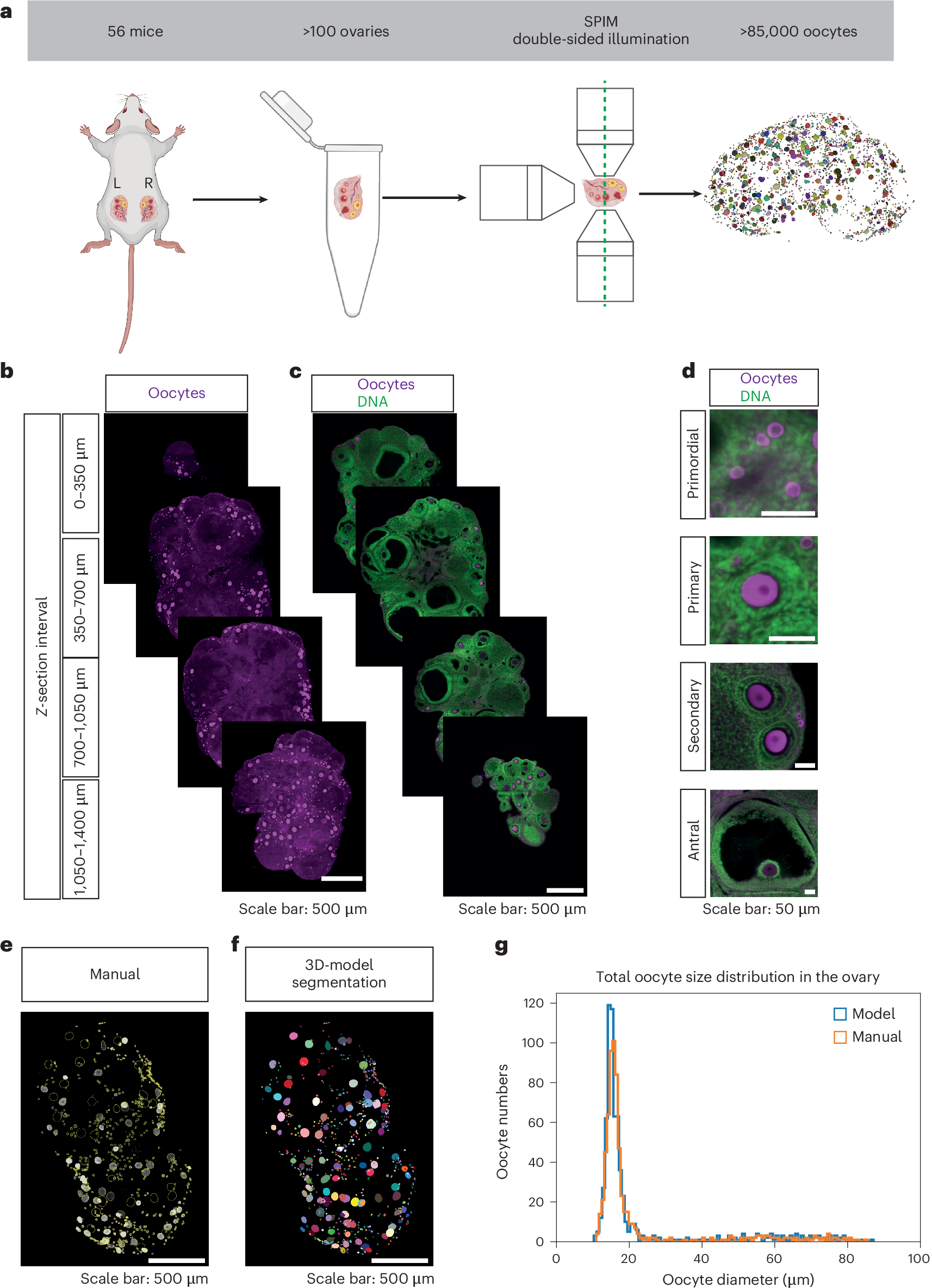
Female fertility depends on a finite pool of oocytes that depletes during aging , yet the spatiotemporal dynamics of this depletion remain poorly understood.

By: Andrés, Antonio, Ruiz, Balderas, Caballero-Hernández, Juan Antonio, Iván, Manuel, Juan Manuel, Muñoz, Dodero
Learning analytics increasingly draws on digital traces from learning management systems to understand how students engage with online courses. Educational process mining (EPM) derives process models from event logs, offering a process-oriented view of behavior, but...

By: Juan Manuel, José Alberto
Loading [MathJax]/jax/output/HTML-CSS/fonts/Gyre-Pagella/fontdata.js by Cristina Del Viso-Cudero and

By: Juan José Ríos, Alma Rosa, Ciências Agrárias, Subsede Culiacán, Juan Manuel
This is a preview of subscription content, log in via an institution to check access. Access this article Log in via an institution

By: Eva Luyufeng, Juan Manuel
by and Department of Preventive Medicine and Public Health, University of Santiago de Compostela, 15786 Santiago de Compostela, Spain

By: Manuel Restrepo, Juan Manuel, Murisi Pedroza Uribe, Mónica Sánchez Ortiz, Lourdes Patricia Valdés Abularach, Sebastián Lara, José Alberto Hachity Ortega
Autores: Mónica Sánchez Ortiz José Alberto Hachity Ortega J. Sebastián Lara Murisi Pedroza Uribe Manuel Restrepo Lourdes Patricia Valdés Abularach Juan Manuel Aparicio Rodríguez
By: Ana Boquete Castro, Andrea Martín Vacas, Juan Manuel, Ricardo Medina
Autores: Ricardo Medina Ana Boquete Castro Andrea Martín Vacas Juan Manuel Aragoneses Lamas Localización: