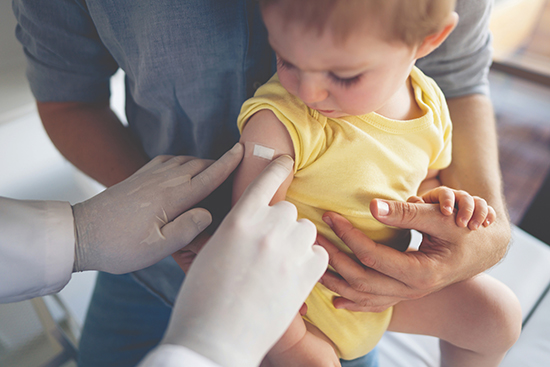


10.1542/6376245954112Video AbstractPEDS-VA_2025-0712336376245954112BACKGROUND AND OBJECTIVES. The 2017 US Addendum Guidelines for the Prevention of Peanut Allergy encourage clinicians to recommend early introduction of peanut-containing foods to infants’ diets to prevent peanut allergy (PA). However, clinician guideline adherence has been low. The Intervention to Reduce Early Peanut Allergy in Children (iREACH) Trial aims to increase pediatric clinicians’ adherence to the guidelines.METHODS. iREACH is a practice-based, cluster randomized trial of 30 pediatric practices. Intervention practices received clinician education, a clinical decision support (CDS) tool embedded into electronic health record (EHR) systems, and visual aids, while those in the control arm did not. The primary outcome was clinician adherence to guidelines, documented in EHR data from 4- or 6-month well-child care visits. Clinicians were adherent for low-risk infants (no/mild/moderate eczema and no egg allergy) if they recommended the introduction of peanut-containing foods and, for high-risk infants (severe eczema and/or egg allergy), if they ordered a peanut-specific immunoglobulin E test and counseled appropriately or referred to an allergist.RESULTS. Overall, 18 480 infants (intervention, n = 9290; control, n = 9190) were seen by 290 clinicians. Among low-risk infants (n = 18 182), intervention clinicians were adherent for 83.7%, while control clinicians were adherent for 34.7% (odds ratio [OR], 14.6; 95% CI, 7.0–30.5; P < .001). Among high-risk infants (n = 298), intervention clinicians were adherent for 26.8%, while control clinicians were adherent for 10.4% (OR, 3.1; 95% CI, 1.1–8.8; P = .03).CONCLUSIONS. A multifaceted educational intervention improved clinician guideline adherence. Wide dissemination of the intervention and implementation of the guidelines could reduce the incidence of PA.
The American Academy of Pediatrics (AAP) is the leading professional organization dedicated to promoting the health and well-being of infants, children, adolescents, and young adults. As a trusted authority in pediatric healthcare, the AAP serves as a valuable resource for pediatricians, parents, and caregivers.
Through its extensive publishing program, the AAP provides authoritative and up-to-date information on various aspects of child health and development. This includes peer-reviewed scientific journals like Pediatrics, consumer-focused books and magazines, and online platforms such as HealthyChildren.org, which offers evidence-based parenting advice backed by pediatricians.
The AAP's content covers a wide range of topics related to scientific research, healthcare practices, pharmaceutical developments, and general health and well-being concerns specific to children and families. Its publications feature data-driven insights, expert commentary, industry-specific analysis, reviews, and press releases, ensuring comprehensive coverage of the latest developments in pediatric medicine.
In addition to its print and digital publications, the AAP maintains an active online presence, including websites, social media channels, and video content, providing multiple avenues for disseminating vital information to its diverse audience of healthcare professionals, parents, and caregivers.
As the nation's leading advocate for children's health, the AAP plays a crucial role in shaping policies, promoting best practices, and educating the public on issues that impact the overall well-being of children and families.