




By: Maria-Arantzazu Ruescas-Nicolau, Jesus Gomez, Asier Salazar-Ramirez, Jose Luis Jodra, M. Luz Sánchez-Sánchez, Raquel Martinez
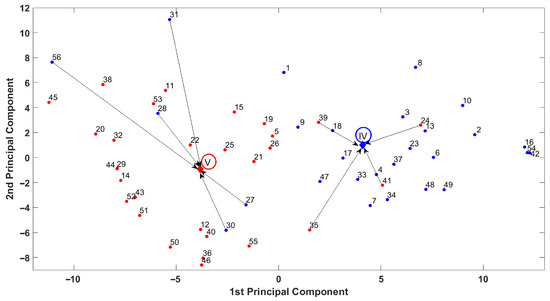
Cerebral palsy (CP) is a neuromotor disorder that affects movement and posture, causing functional limitations and musculoskeletal deformities that persist into adulthood. Variability in motor expression makes identifying the functional level a clinical challenge; achieving greater accuracy in this assessment enables detection of risk factors for postural deterioration. This study analysed a sample of 56 adults with CP to evaluate the ability of different machine learning (ML) models to discriminate between levels IV and V of the Gross Motor Function Classification System (GMFCS), using a total of 78 clinical variables such as spasticity, range of motion, deformities, and postural asymmetries. Different supervised learning models were compared, and a relabelling procedure was applied to improve classification consistency. The results indicate that there is valuable information in the collected standardised variables for classifying levels IV and V. The best performances were subsequently obtained by the neural network and the linear logistic regression, achieving the latter, which has explanatory properties interesting for clinicians, accuracy, F1-score and AUC metrics of 92.83%, 93.44% and 99.35%, respectively. These findings suggest that ML could emerge as a useful and explanatory tool for functional assessment of CP in adults and for the design of personalised rehabilitation strategies.