

By: Colak, Mohammed Temeiza, Sukru , Sana Jamal, Temeiza, Mohammed , Şükrü Çolak, Suad Jamal
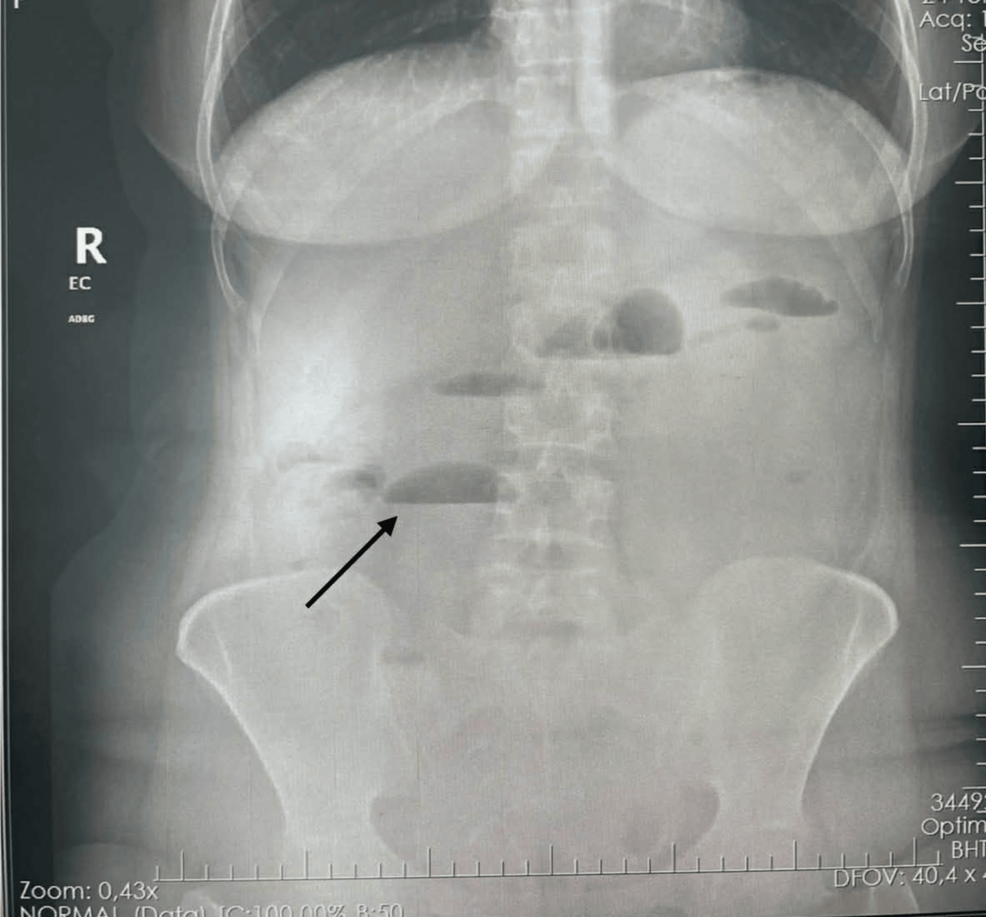
Abdominal cocoon syndrome (ACS), also known as sclerosing encapsulating peritonitis (SEP), is a rare cause of mechanical small bowel obstruction characterized by partial or complete encasement of the small bowel within a fibrocollagenous membrane. Owing to its nonspecific clinical and radiological presentation, preoperative diagnosis remains challenging.A 38-year-old woman with a history of four previous Caesarean sections presented with one week of progressive colicky abdominal pain, abdominal distension, and absolute constipation that worsened during the preceding 24 hours despite conservative management. She reported a five-year history of recurrent, self-limiting episodes of bowel obstruction beginning two to three months after her last Caesarean section. Contrast-enhanced computed tomography (CT) was initially interpreted as a 6-cm distal jejunojejunal intussusception with a characteristic target sign. Diagnostic laparoscopy, however, revealed partial encapsulation of the small bowel by a dense fibrocollagenous membrane, consistent with secondary type I ACS. Complete laparoscopic membrane excision and adhesiolysis were successfully performed. Retrospective postoperative review of the CT images demonstrated clustering of small bowel loops with partial fibrocollagenous membrane encasement that had been overlooked on the initial interpretation.The postoperative course was uneventful. Oral intake was resumed on postoperative day 3, and the patient was discharged on postoperative day 5. Histopathological examination demonstrated fibrocollagenous tissue with chronic inflammatory infiltrates. After excluding other recognized secondary causes, the patient’s history of four previous Caesarean sections was considered the most likely predisposing factor. At two-year follow-up, the patient remained asymptomatic with no recurrence of bowel obstruction.ACS may mimic intussusception on CT, creating an important diagnostic pitfall in patients with recurrent small bowel obstruction. This case highlights the importance of maintaining a high index of clinical suspicion and demonstrates the short-term technical feasibility of laparoscopic diagnosis and management in carefully selected patients when performed by experienced surgeons.