By: Bakar Computational, Tuhin Kumar

Sarah K. is a Reporter at Raw Story. She covers a diverse range of topics including biology, biotechnology, and environmental engineering, with a focus on the intersections of science, education, and healthcare. Sarah's work has been featured in notable publications such as MDPI, Nature Portfolio, JAMA, and the Sun Sentinel Media Group.
Preston is the artificial intelligence that powers the Intelligent Relations PR platform. Meet Preston
United States (National)

Not enough data
Sarah K. primarily focuses on government and politics in the United States, with a significant emphasis on legal policy regulation. Her coverage includes evolving political stories and expert commentary.
Given her focus on government and political issues, she would likely be receptive to pitches from experts who can provide insightful commentary or analysis related to ongoing political developments, legal matters, or public policy debates in the US.
Additionally, considering Sarah's coverage of specific organizations like NSWC Crane and topics such as science and technology alongside her focus on legal issues, it may be beneficial to approach her with relevant insights into these areas within the context of American politics.
This information evolves through artificial intelligence and human feedback. Improve this profile .




By: Bakar Computational, Tuhin Kumar
By: Imran, Ullah, Sharma, Khushu, Hartl, Erica, Martin, Shao, Mallick, Jeffrey D., Bopp, Selina, Anna Y., Hathaway, Wirth, Willett, Oliver, Harrigan, Dvorin, Absalon, Eva S., Daniel L., Shin, Farringer, Sarah K., Burkhard, Sabrina
PfCoronin is a stage-restricted regulator that links host-cell haemoglobin uptake to artemisinin action, showing how non-essential parasite proteins can strongly influence malaria drug response and shape the evolution of artemisinin resistance.

By: Mason, Erin, Whalen, Wade, Quest, Godfrey, Marie, Rachel, Dehon, Johnson, Sarah K., Allison, Murrell, Caroline E., Compretta, Scott, Breanna, Tess, Barnard
Project SCORE (Student-Centered Outcomes Research Experiences) is a community-engaged after school science education program designed to address persistent inequities in health, education, and biomedical career access among Mississippi youth. Grounded in youth participatory action research and leveraging near-peer mentoring (NPM), the program engages teens in public health education, research skill development, and mentored inquiry led by undergraduate and graduate health sciences students. Program components include weekly workshops during the academic year and a one-week residential summer campus experience focused on health literacy, scientific thinking, research communication, and college-readiness. An evaluation assessed implementation and short-term outcomes. Pre/post survey data indicate increases in STEM self-efficacy, career interest in STEM careers, and public health communication skills. Students reported strong engagement, belonging, and program satisfaction, and summer participants described an enhanced interest in college and health science careers. The lessons learned highlight the importance of robust NPM support, flexible program adaptation, and strong community partnerships. Early findings demonstrate that Project SCORE is a feasible, acceptable, and replicable model for engaging historically excluded youth in STEM and public health through community-based, student-centered research experiences.
By: Avdeeva, Maria, Alexander Y., Walker, Yuri, Sarah K.
Mapping cell dynamics from static data is a challenge in genomics. Here, authors introduce ArchVelo, a computational method for modeling transcription dynamics and trajectory inference using chromatin accessibility archetypes in single-cell multi-omics, and infer new T cell transitions in infection.
By: Collins K. Cheruiyot, Sarah Y. Kim, Juan Dubrot, Sarah K. Lane-Reticker, Alex Miranda, Ashwin V. Kammula, Jonathan J. Perera, Cun Lan Chuong, Rachel A. Fetterman, Nelson H. Knudsen, Aiping Jiang, Cong Fu, Seth Anderson, Audrey J. Muscato, Omar I. Avila
Tumor cells respond and adapt to environmental stresses that facilitate growth in hostile environments, including cytokine-mediated inflammation elicited by antitumor immunity and enhanced by immune checkpoint blockade (ICB). However, cytokine responses also induce transcriptional and cell-state changes that may predispose tumor cells to new vulnerabilities, which remain poorly explored. Here we performed in vitro genome-scale CRISPR loss-of-function screens in eight cancer models exposed to interferon-γ (IFNγ), interferon-β or tumor necrosis factor to map inflammation-induced genetic vulnerabilities. We identified members of the glycosylphosphatidylinositol (GPI) transamidase complex and the lipid phosphatase FITM2 as interferon-specific cancer dependencies. Tumor-specific deletion of GPI transamidase subunits or FITM2 markedly enhanced response to ICB in vivo. By integrating functional genomics, metabolomics and pharmacologic perturbation of downstream stress pathways, we found that loss of FITM2 predisposed cancer cells to IFNγ-driven endoplasmic reticulum and oxidative stress, culminating in paraptosis-like cell death. Collectively, these findings identify tumor-intrinsic dependencies governing responses to inflammatory cytokines.

By: Sarah K., Katanski, Pan, Noah, Ute, Richard P., Tao, Halucha, Kothe, Mateusz, Schultz, Fahlman, Peña, Christopher D.,
Almost all elongator tRNAs (Transfer RNAs) harbor 5-methyluridine 54 and pseudouridine 55 in the T arm, generated by the enzymes TrmA and TruB, res...
By: Zielinska, Melanie M., Brenna A. Y., Achuthan, Bernard, Goens, Elena S. B., Howard, Nielsen, Erin. L., Yuen, Arul, Nicole, Srinivas, Stevens, Zheng, Jeff L., Pei, Darren A., Dinghai, Gordon, Arroyo, Sarah K., Luis G., Alec A. K., Xu, Adithya, Asimov, Wootton, Arnold, Madison E., Caswell, Liqun
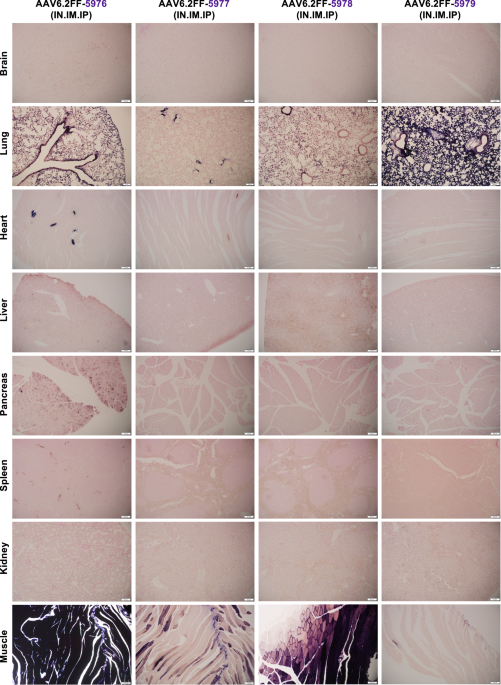
Recombinant adeno-associated virus (rAAV) platforms have achieved significant success in clinical gene therapy; however, many still rely on ubiquitous promoters. This robust and widespread transgene expression can cause off-target effects, immune activation, and systemic toxicity, limiting their suitability for diseases requiring tissue-specific expression, such as surfactant protein B (SP-B) deficiency. Here, we aimed to improve the precision of AAV-lung gene therapy by evaluating computationally predicted lung-specific promoters with AAV6.2FF, a capsid with strong lung tropism. Promoter strength and specificity were assessed following administration of AAV6.2FF encoding the human placental alkaline phosphatase (AP) reporter gene in mice. Cross-species activity was evaluated in precision-cut lung slices (PCLS) from ferrets and pigs. We identified promoter 5979 as lung-specific in mice, outperforming the ubiquitous CASI promoter (comprised of the cytomegalovirus enhancer, chicken β-actin promoter, and ubiquitin C regulatory elements) in transgene expression and specificity, independent of AAV capsid or route of administration. In a conditional SP-B knockout model, AAV6.2FF-5979-hSPB extended survival in SP-B-deficient mice and outperformed its CASI-driven counterpart. Promoter 5979 exhibited the highest activity among the four synthetic promoters in ferret PCLS, but demonstrated limited activity in pig PCLS, underscoring species-specific differences. This study demonstrates the therapeutic value of tissue-specific promoters in targeted gene therapy while emphasizing the importance of refining algorithmic prediction platforms to ensure reliable cross-species and clinical performance.

By: Lea A., Burak, Sarah K., Barny, Uzay, Plate, Houcek, Kim, Lars, Aiden J., Minsoo, Garcia, Kavalali, Ege T.
Proteostasis, or protein homeostasis, is a tightly regulated network of cellular pathways essential for maintaining proper protein folding, traffic...
By: Delgado, Christensen, Lipson, Jose A., Sarah K.
Purpose To report prevalence rates and examine associations between loneliness and mental health conditions by residency status among graduate students. Methods Participants were 29,944 graduate students (including 5,671 international graduate students) attending universities in the United States. Residency status was dichotomized as either international or domestic. Loneliness and mental health conditions (symptoms of depression, anxiety, and suicidal ideation) were self-reported measures using validated measures and established cutoff criteria. We performed descriptive analyses and used multivariate regression to examine associations between loneliness and mental health outcomes, stratified by residency status. Results International graduate students experienced greater symptoms of anxiety for each one unit increase of loneliness, compared to domestic graduate students (β: 0.14, 95% CI: 0.06–0.21). Additionally, each one-unit increase in loneliness was associated with 1.63 times greater odds of suicidal ideation among international graduate students (p < 0.001), and 1.60 times greater odds of suicidal ideation among domestic graduate students (p < 0.001). Conclusions These findings show loneliness is a significant correlate of mental health among graduate students and the relationship between loneliness and anxiety differs by residency status.