
By: Maria João
Grupo de Química Agrícola, E.T.S.I. Agronómica y de Montes y Biotecnología (ETSIAMB), Universidad de Castilla-La Mancha, Avda. de España s/n, 02071 Albacete, Spain

Portugal (National)

Not enough data
This information evolves through artificial intelligence and human feedback. Improve this profile .

By: Maria João
Grupo de Química Agrícola, E.T.S.I. Agronómica y de Montes y Biotecnología (ETSIAMB), Universidad de Castilla-La Mancha, Avda. de España s/n, 02071 Albacete, Spain
By: Maria João, Lages, Maria Antónia, Maria, Natacha, Ribeiro, Paes, Coelho, Joana, Filipa, Santos, São Braz
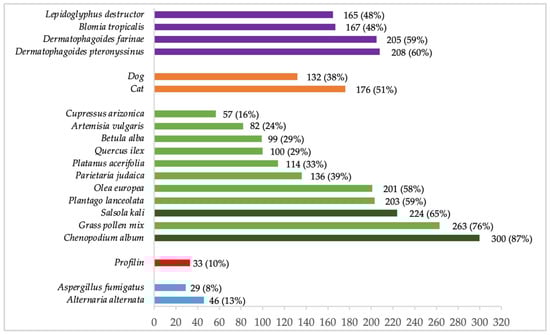
Exposure to airborne pollen allergens is a major trigger of respiratory allergy, whose prevalence continues to rise throughout Europe. In southern Portugal, the Mediterranean climate and extensive vegetation diversity promote high pollen loads, particularly from the Amaranthaceae family. This retrospective observational study aimed to characterise the sensitisation profiles of patients with positive skin prick tests (SPTs) to Chenopodium album and/or Salsola kali, the dominant Amaranthaceae species in the region. Data from 346 patients were analysed, including demographic and clinical characteristics, SPT results, and specific IgE sensitisation to molecular allergens. Of these, 35% were positive for C. album only, 13% for S. kali only, and 51% for both. In molecular testing, 54% of S. kali-sensitised patients were positive to Sal k 1, whereas only 4% of C. album-sensitised patients were positive to Che a 1. Sensitisation to panallergens such as profilins and Ole e 1-like proteins was frequent, suggesting extensive IgE cross-reactivity between these taxa. A significant correlation in wheal size (r = 0.53, p < 0.0001) further supports shared allergenic determinants. Despite higher SPT positivity to C. album, S. kali is likely the predominant sensitising source in this population. These findings highlight the importance of molecular-based diagnostics to distinguish genuine sensitisation from cross-reactivity in Mediterranean settings.

By: Feitor, Fonseca, André Marcelo Conceição, Meneses, Maria João, Joana Tavares, Paula Segura, Rodrigues, De Oliveira, Bárbara Durão
Antimicrobial resistance (AMR) is an increasing concern in veterinary medicine and may compromise empirical treatment of feline urinary tract infections (UTIs). This retrospective observational study evaluated antimicrobial resistance patterns and their association with multidrug resistance (MDR) in bacterial isolates obtained from urine cultures of cats presented to a feline referral practice in Lisbon, Portugal, between January 2023 and December 2025. A total of 174 cats with positive urine cultures were included, yielding 178 bacterial isolates. Escherichia coli was the most frequent pathogen (57.30%), followed by Enterococcus spp. (16.98%) and Staphylococcus spp. (14.61%). Antimicrobial resistance was detected in 107/178 isolates (60.11%), and 76/178 (42.70%) were classified as multidrug-resistant. Extended-spectrum beta-lactamase-producing Escherichia coli and methicillin-resistant Staphylococcus strains were also identified. Resistance to penicillins and fluoroquinolones was significantly associated with MDR (p < 0.001). These findings highlight the high burden of antimicrobial resistance in feline urinary isolates in this clinical setting and support routine urine culture and susceptibility testing to guide therapeutic decision-making, particularly in recurrent, complicated, or high-risk cases.
By: Maria Carmo, Lima, Andrade, Loureiro, Ramalho, Daniela Maria, Jorge, Maria João, Stéphanie, Sousa, Pereira, Joana Angélica
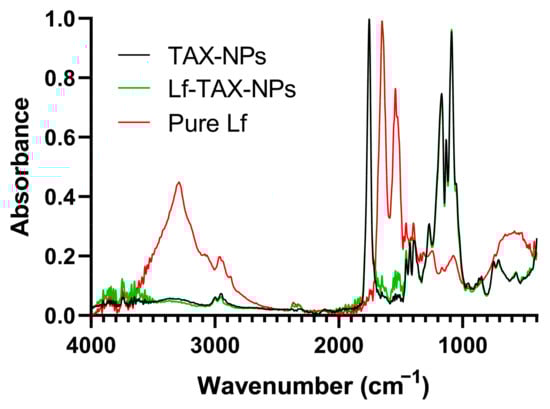
Glioblastoma (GB) classical treatment with the alkylating drug temozolomide (TMZ) is not effective mainly due to chemoresistance mechanisms, particularly those mediated by O6-methylguanine-DNA methyltransferase (MGMT). In this context, polyethylene glycol (PEG)-coated poly(lactic-co-glycolic acid) (PLGA) nanoparticles (NPs) were developed to deliver tamoxifen (TAX), a clinically approved non-alkylating drug with reported anti-GB activity. The NP formulation was optimized using a factorial design and subsequently functionalized with lactoferrin (Lf) to enhance GB targeting. The Lf-conjugated optimized formulation exhibited a mean diameter of 193 ± 6 nm, a polydispersity index (PDI) of 0.11 ± 0.04, a zeta potential of −18.2 ± 6.8 mV, and an encapsulation efficiency (EE) of 68.6 ± 1.8%. The NPs exhibited a sustained release profile for up to 23 days, and remained stable under physiological conditions. Cell uptake studies, conducted in human GB cells (U87, U251, and T98G) and healthy astrocytes, demonstrated enhanced internalization of Lf-NPs in GB cells compared with non-conjugated NPs, suggesting uptake through Lf-binding site-mediated endocytosis. Cytotoxicity assays further indicated that Lf-conjugation improved the antiproliferative efficacy of TAX-loaded NPs relative to non-functionalized formulations, particularly in GB cells. Moreover, combination studies with TMZ showed that the developed NPs were able to sensitize GB cells to treatment with this alkylating agent. In sum, this work supports the potential of the developed Lf-decorated TAX-loaded PLGA NPs as a nanoplatform for targeted delivery against GB.
By: Frederico, Gonçalves, Alves, Silva, Maria João, Ricardo Jorge, Sandra, Oliveira
Background Mucolipidosis type II (ML II) is a lysosomal storage disorder caused by deficiency of N-acetylglucosamine-1-phosphotransferase (GlcNAc-PT), which impairs the trafficking of lysosomal hydrolases. Of all ML II pathogenic variants, c.3503_3504del in GNPTAB exon 19 is the most prevalent, therefore constituting a compelling molecular target for the development of personalized therapeutic strategies. Here, we explored the feasibility of an innovative RNA based-therapeutic strategy using antisense oligonucleotides (ASOs) designed to induce exon 19 skipping in GNPTAB pre-mRNA. This approach was previously successfully tested at the mRNA level in fibroblasts from ML II patients, where it generated an in-frame mRNA. In the present study, our aim was to evaluate whether GNPTAB exon 19 skipping could increase GlcNAc-PT levels and consequently improve the cellular phenotype of ML II patients carrying this pathogenic variant. To address this, we designed a functional approach based on the overexpression of a GNPTAB construct carrying the exon 19 deletion enabling the indirect evaluation of the resulting protein´s functionality. Results Our first results demonstrated that in ML II fibroblasts, ASO treatment led to a modest increase in lysosomal hydrolase activity at 24 h and 48 h. Moreover, LAMP-1 expression remained elevated and comparable to untreated ML II cells, indicating that GlcNAc-PT activity was not restored. To further investigate the functional relevance of exon 19 skipping, overexpression studies were performed in HEK293T cells. Three constructs (pGNPTAB WT, pGNPTAB del_exon19 and pGNPTAB c.3503_3504del) were expressed. Both pGNPTAB WT and pGNPTAB del_exon19 constructs produced the α/β-precursor. However, only the WT construct generated the mature β-subunit, whereas the pGNPTAB c.3503_3504del construct showed no detectable expression. These findings indicate that exon 19 is essential for proper GlcNAc-PT processing and enzymatic activity. Conclusions Although ASO treatment corrected splicing at the mRNA level, it did not restore GlcNAc-PT activity in ML II patient cells. Nonetheless, our findings clarify the functional importance of exon 19 and demonstrate that overexpression of an exon-skipped construct provides a simple and effective strategy to indirectly assess protein functionality, supporting the prioritization of this kind of approach to test an exon-skipping ASO-based approach before advancing to studies in patient-derived cells.

By: Maria João, Lavoura, Joao, Jrc, Vinagre, Robert, Jungnickel
The typical offline protocol to evaluate recommendation algorithms is to collect a dataset of user-item interactions and then use a part of this dataset to train a model, and the remaining data to measure how closely the model recommendations match the observed user interactions. This protocol is straightforward, useful and practical, but it only provides snapshot performance. We know, however, that online systems evolve over time. In general, it is a good idea that models are frequently retrained with recent data. But if this is the case, to what extent can we trust previous evaluations? How will a model perform when a different pattern (re)emerges? In this paper we propose a methodology to study how recommendation models behave when they are retrained. The idea is to profile algorithms according to their ability to, on the one hand, retain past patterns -- stability -- and, on the other hand, (quickly) adapt to changes -- plasticity. We devise an offline evaluation protocol that provides detail on the long-term behavior of models, and that is agnostic to datasets, algorithms and metrics. To illustrate the potential of this framework, we present preliminary results of three different types of algorithms on the GoodReads dataset that suggest different stability and plasticity profiles depending on the algorithmic technique, and a possible trade-off between stability and plasticity.We further discuss the potential and limitations of the proposal and advance some possible improvements.

By: Maria João
Departamento de Química Orgánica, Facultad de Farmacia, Universidade de Santiago de Compostela, 15782 Santiago de Compostela, Spain

By: Silje Havrevold, May Linn Bokma, Maria João
Abstract Introduction Identifying relevant, measurable health indicators is essential for targeting interventions and monitoring outcomes.

By: Nuno Marques, Maria João
The company increased its stake in TV Cabo to 80% through the purchase of a 30% position held by the state-owned mobile operator TMCEL.
By: Maria João, António Pinto, São João, Pedro Diaz
Benign anorectal conditions—including fissures, lacerations, and fistulas—are common and often require precise imaging for adequate diagnosis and surgical planning.