The Modern Earned Media Strategy Guide for Enterprise B2B Tech Brands [Examples + Tips]
Press releases, pitches, and prayer are no longer the primary pathways to coveted earned media coverage. While major news announcements and personalized emails with interesting story ideas are still essential tools for securing coverage, a more strat...
- Home
- Intelligent Insights Blog
- The Modern Earned Media Strategy Guide for Enterprise B2B Tech Brands [Examples + Tips]

Press releases, pitches, and prayer are no longer the primary pathways to coveted earned media coverage. While major news announcements and personalized emails with interesting story ideas are still essential tools for securing coverage, a more strategic and integrated approach is needed for ongoing earned media strategy success.
For B2B tech companies at the enterprise level, credibility and trust-building are your bread and butter. Sure, paid ads and owned content are great for visibility. But when competitors are crowding your space, it’s earned media that packs an authoritative punch — a punch supercharged through paid and owned channels.
So, how do you get others to do the talking for you?
How do you tap into that third-party validation vein?
Well, top-tier coverage, expert commentary, and executive thought leadership often generate the organic mentions that shape market perception. But enterprise organizations shouldn’t treat these outcomes as isolated wins or rely on opportunistic outreach.
The most effective B2B tech companies approach earned media as a structured, long-term strategy — one built on authority, designed to influence industry conversations and sustain visibility.
This guide covers how to create earned media programs that scale. From strategic frameworks and media relationships to measurement and budgeting, we’ll break down how to build an earned media strategy that delivers lasting impact.
- The Earned Media Shift: From Outreach to Systems
- How to Structure Earned Media Programs
- The 5-Stage Earned Media Strategy Framework
- 4 Steps to Get Earned Media
- Enterprise Earned Media Budget Structure
- Earned Media Measurement and Reporting
- 6-Month Earned Media Strategy Template
- The Future of Earned Media for B2B Tech
The Earned Media Shift: From Outreach to Systems
Too many organizations are still treating earned media as a campaign-based activity that follows the same basic pattern:
- A product launches.
- A press release is issued.
- A round of media pitches follows.
While this approach does occasionally generate coverage, it doesn’t produce consistent visibility or lasting industry authority.
For enterprise B2B technology companies, the approach is a bit different. Rather than relying on periodic outreach, you need to build structured programs specifically designed to generate ongoing media engagement.
In this strategic model, earned media functions more like an intentional PR system (with larger business goals in mind) and less like a series of isolated campaigns.
The Shift in 3 Steps + Examples
The focus moves from single placements to long-term outcomes such as sustained SOV, thought leadership, and category positioning.
Follow these steps:
Step 1. Develop Messaging Frameworks in Advance
Know what you want to say and how you want to say it before you start. Make sure the same message is echoed clearly by all spokespeople. Don’t go off script in interviews or pressers — stick to pre-defined key points.
Let’s say you’re a cybersecurity startup that helps small businesses safeguard customer data.
Your core narrative might be something like, “Small businesses are facing more sophisticated cyber threats but lack the tools and knowledge for effective defense. Our mission is to provide enterprise-level protection that is both accessible and affordable.”
Prepare a media briefing sheet with:
- 3–5 Key Talking Points
- Supporting Stats
- Example Quotes
- Approved Thought Leader Perspectives
When a spokesperson is asked to comment on a story like “AI and Increased Cyber Attacks,” they’re ready to quickly deliver on-brand insights.
Step 2. Build Meaningful Journalist Relationships
Learn journalists’ beats, read their recent articles, and engage regularly with interesting angles and industry insights. Sticking with the cybersecurity example, identify 10-15 cybersecurity reporters who cover topics like:
- Cyber Attacks
- Data Breaches
- Phishing
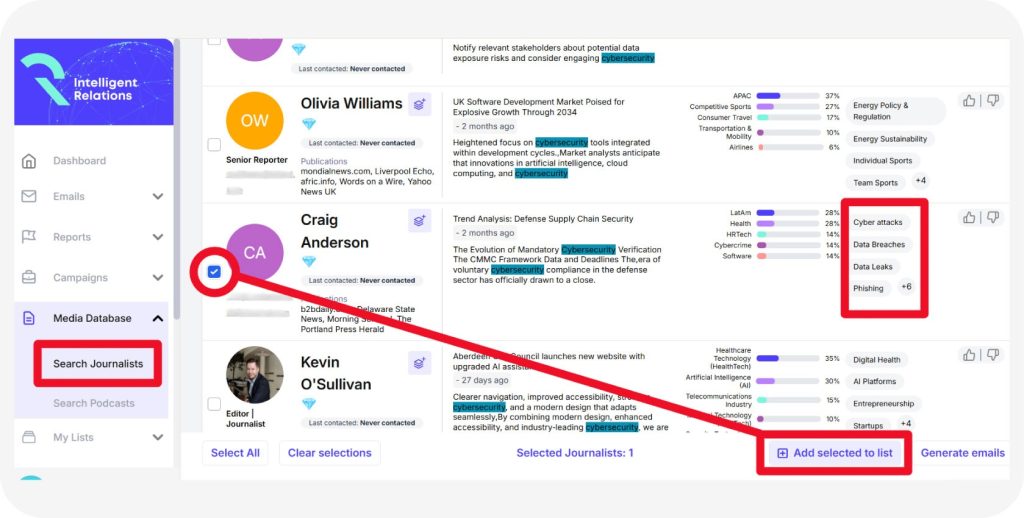
Offer value over time through helpful expertise — not hard pitches.
- Example: “Hi Craig, we’ve been following an uptick in AI phishing campaigns targeting drone startups. If you’re covering this soon, I’d be happy to share some data with you.”
Or just reach out to compliment their work and stay on their radar.
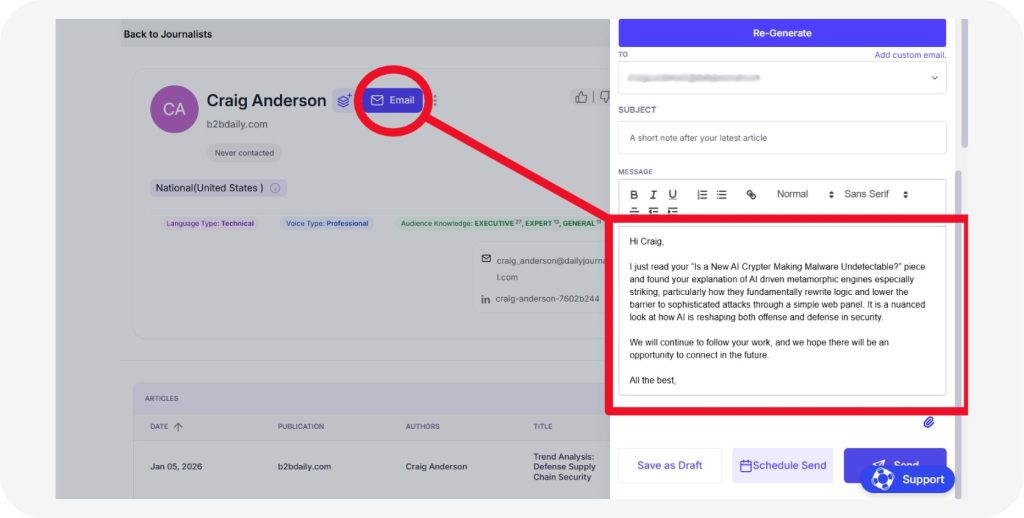
You may also want to comment thoughtfully on their social media posts or share their reporting (with additional insights) across owned channels.
This shows genuine interest and engagement with their work beyond self-promotion.
Step 3. Map Story Opportunities to Industry Trends and Editorial Calendars
Align timely, personalized pitches with what journalists are already planning to cover. If data privacy and AI-driven cyber attacks are trending, tech and business journalists will already be covering topics like:
- AI-enabled Phishing Attacks
- Rising Ransomware Threats
- New Consumer Data Privacy Regulations
Check editorial calendars for planned coverage. If data privacy and digital trust stories are on the agenda for November, plan a timely angle: “Top 5 Cybersecurity Mistakes Small Retailers Make During Spring Sales.”
Well-timed expertise tied to planned editorial themes is sure to grab attention. Just remember to keep your pitch short and sweet while answering the 5 Ws.
- Example Pitch: “With big spring sales events approaching, our CTO has been tracking a surge in AI-generated phishing attempts against small retailers. We analyzed over 42,000 attacks — a 225% increase since January.”
This aligns with current trends, fits an upcoming editorial calendar, and provides journalists with valuable data.
By following these steps in the earned media shift, you get a coverage machine that’s not only predictable and scalable but supports brand credibility, reinforces market leadership, and contributes to broader marketing and PR objectives.

Tactical PR vs Enterprise Earned Media
| Tactical Outreach | Enterprise Earned Media |
| Reactive Pitching Tied to Announcements | Planned Media Narratives Aligned with Strategy |
| Short-term Campaign Focus | Always-on Visibility Programs |
| Individual Placements | Sustained SOV |
| Mass Outreach to Media Lists | Targeted Journalist Engagement and Relationship Building |
| Press Release Distribution | Strategic Storytelling and Commentary |
The most successful B2B tech companies treat earned media coverage as an ongoing strategic plan integrated with marketing, brand, and executive visibility.
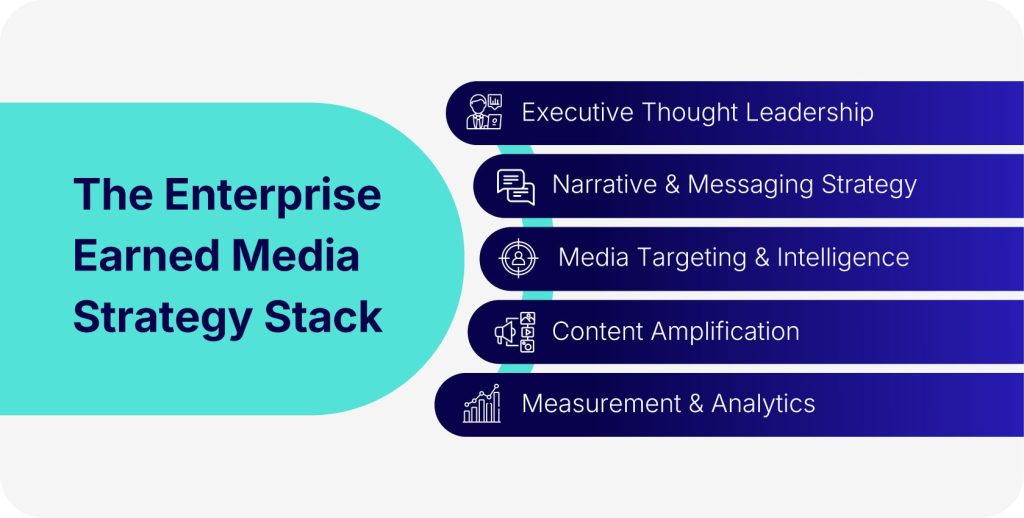
Pro Tip: For B2B tech brands, earned media is a strategic function — not a reaction tied only to company announcements. When your media outreach is guided by consistent narratives and long-term journalist relationships, coverage becomes more predictable and impactful.
Not sure what journalists want? Learn more here: What Journalists Want: What PR Pros Need to Build Relationships with Journalists
How to Structure Earned Media Strategies: The 4 Core Pillars
Rarely are enterprise-level earned media programs built around a single campaign or announcement. They operate as structured initiatives designed to:
- Build Authority
- Maintain Consistent Visibility
- Position the Company within Key Industry Conversations
Though the specific tactics employed in earned media strategy may vary, most successful programs follow a four-pillar approach.
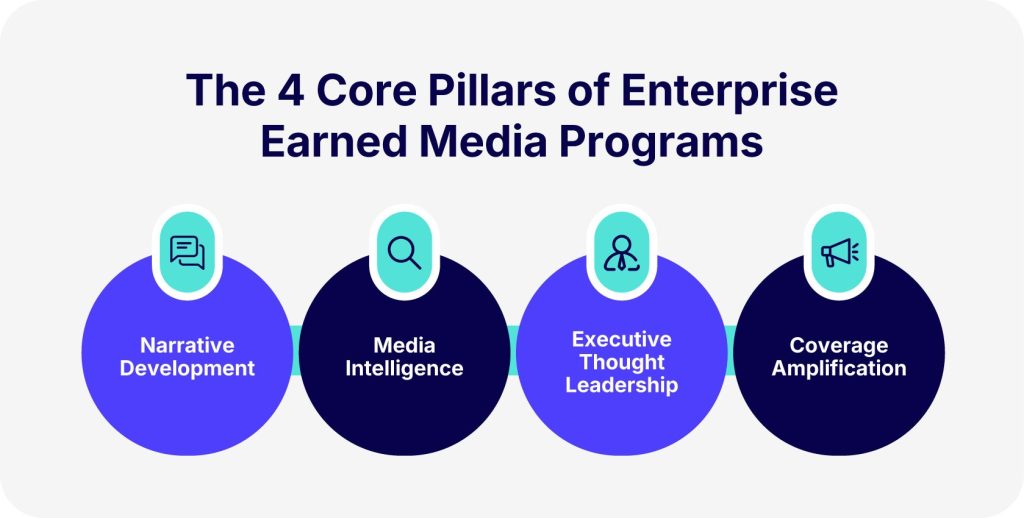
Pillar 1: Narrative Development
First thing’s first — you need a clear narrative. Define how you want your brand to be perceived within B2B tech. Align your outreach around that positioning.
This includes identifying:
- Core Messaging Themes
- Marketing Perspectives
- Areas Lacking Unique Insights
If your company is particularly adept at cybersecurity and fintech, offer some original data or insights into shifting digital wallet verification trends and its impact on the booming digital identity market as a whole.
Never focus solely on product announcements. Enterprise-level narratives should center on big-picture topics like:
- Market Trends
- Innovation
- Regulatory Changes
- Emerging Technologies
This approach makes journalists actually want to cover your news and engage with your brand as an expert source.
Pillar 2: Media Targeting and Intelligence
Instead of broad outreach, enterprise earned media strategy requires targeted media intelligence. Your teams should meticulously map out which publications and journalists best fit your news and audience.
This often includes:
- Tiered Publication Lists (Tier 1 national or global outlets, Tier 2 industry publications, and niche trade media)
- Continuous Journalist Beat Tracking
- Editorial Calendar Monitoring
- Identification of Recurring Coverage Opportunities
Our platform helps you manage these insights at scale, allowing you to identify the right journalists, track coverage trends, and maintain more strategic engagement.

Need to build a media contact list that gets results? Read our guide for more info: How to Build a Media List for Successful Outreach and Impact 2025 [Examples + Tips]
Pillar 3: Executive Thought Leadership
One of the best ways to build credibility in B2B tech is through executive visibility. Your earned media strategy must include structured thought leadership content that positions your company leaders as the top voices in the field.
Common formats include:
- Contributed Articles and Bylines
- Expert Commentary on Industry Developments
- Podcast and Webinar Appearances
- Data-driven Reports and Research Insights
Even podcast interviews cut into YouTube shorts, like this Masters of Scale short featuring Adobe CEO Santanu Ranayen, has tremendous industry impact in under 60 seconds.
When executives consistently participate in industry discussions, it not only boosts authority but makes it more likely journalists will value their perspective and future story angles.
Learn more about the power of executive thought leadership here: Executive Thought Leadership: A Comprehensive Guide
Pillar 4: Coverage Amplification
Earned media’s true value extends well beyond initial publication. To get the most out of your earned media coverage, integrate it into your broader marketing and PR efforts.
Repurpose coverage across:
- Company Blogs and Newsletters
- Social Media Channels
- Sales Enablement Materials
- Investor Communications
- Recruiting and Employer Branding Initiatives
Treat your earned media wins as foundational content assets. This ensures each placement supports your ultimate business goals.
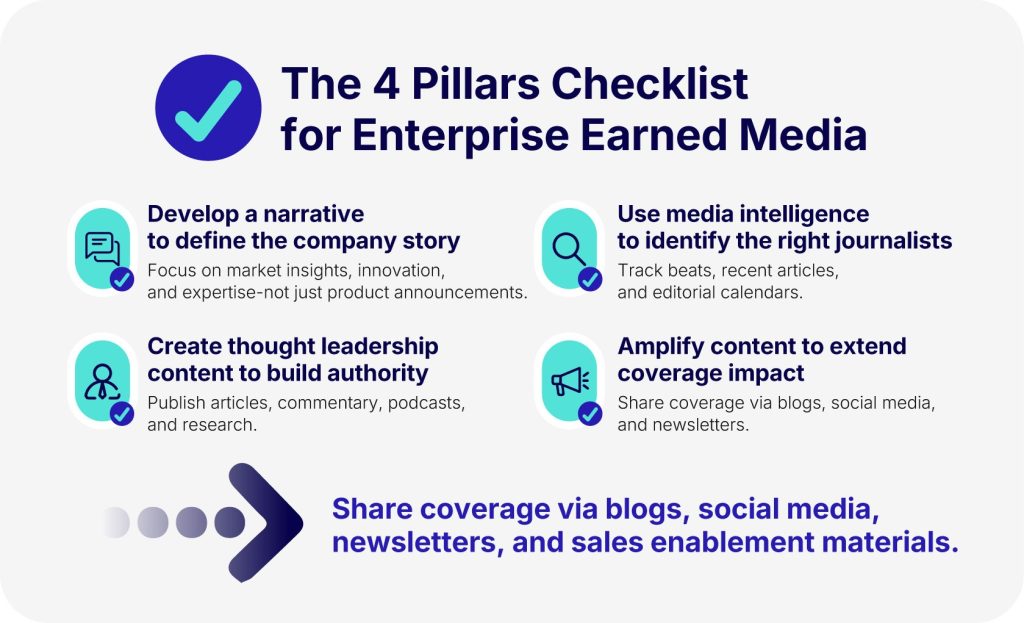
Pro Tip: Create a living media target list that includes journalist beats, recent articles, and editorial calendars — not just publication names. Updating this intelligence regularly helps your team pitch timely, relevant stories that are far more likely to earn coverage.
Want more pitching tips to secure better coverage? We’ve got you covered: 4 PR Pitching Tips for Pros to Land Better Media Coverage in 2025
The 5-Stage Earned Media Execution Framework
While the four pillars describe the core components of a strong enterprise earned media strategy, you also need a repeatable process that puts those components to work.
Without a clear, actionable framework, efforts quickly become reactive — driven by intermittent announcements or opportunistic pitches rather than a steady stream of strategic storytelling.
Top PR teams solve this by turning their earned media strategy into a structured workflow.
The following framework shows how to turn these pillars into consistent engagement and coverage over time.
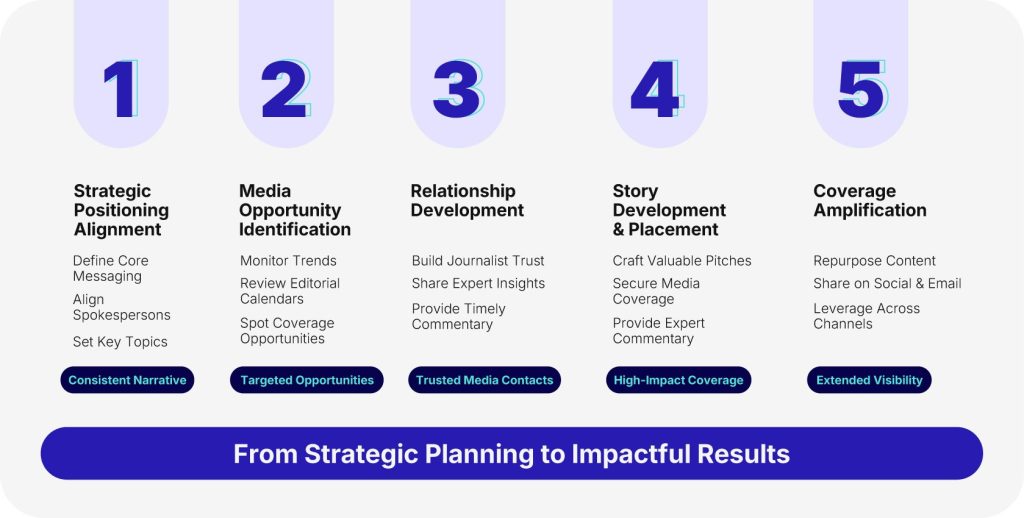
Stage 1. Strategic Positioning Alignment
Start by aligning PR teams with executives and SMEs around the company’s core narrative. This step makes sure everyone is on the same page and prevents straying from the messaging developed in the strategy phase.
At this stage, you should finalize:
- Core Messaging Pillars and Talking Points: If you’re a cloud security company, emphasize key themes like AI-driven defense or zero-trust identity architectures.
- Executive Spokesperson Positioning: Let the CEO lead on industry trends and market outlooks while the CTO tackles technical commentary on emerging cyber threats.
- Priority Industry Topics and Commentary Areas: If you’re a fintech platform, focus on digital identity verification, open banking regulations, and fraud prevention technologies.
- Supporting Insights, Data Points, and Statistics: Deliver hard numbers based on internal research: “Our studies show a 40% increase in account takeover attempts across digital wallets since last year.”
Every interview, pitch, and media interaction needs to reinforce your desired market positioning.
Stage 2. Media Opportunity Identification
Once your messaging is aligned, continuously monitor the media landscape to find the best opportunities for coverage. Remember, announcements alone won’t cut it — you need to actively track where your expertise fits into ongoing industry conversations.
This involves:
- Monitoring Coverage Patterns and Beat Shifts: A journalist who previously covered fintech funding rounds may switch focus to AI regulatory compliance and global fragmentation. You need to be aware of that.
- Reviewing Editorial Calendars and Planned Feature Themes: TechCrunch might be planning an October feature series for Cybersecurity Awareness Month. Pitch story ideas accordingly.
- Tracking Emerging Trends and Breaking News: A spike in ransomware attacks targeting digital wallet platforms may become a major news story. Employ newsjacking tactics to inject your narrative.
- Identifying Recurring Coverage Opportunities: Annual tech prediction articles, “state of the industry” reports, and year-end trend roundups offer openings for coverage. Follow these and pitch in a timely manner.
This stage transforms earned media efforts from occasional outreach into a proactive opportunity pipeline.
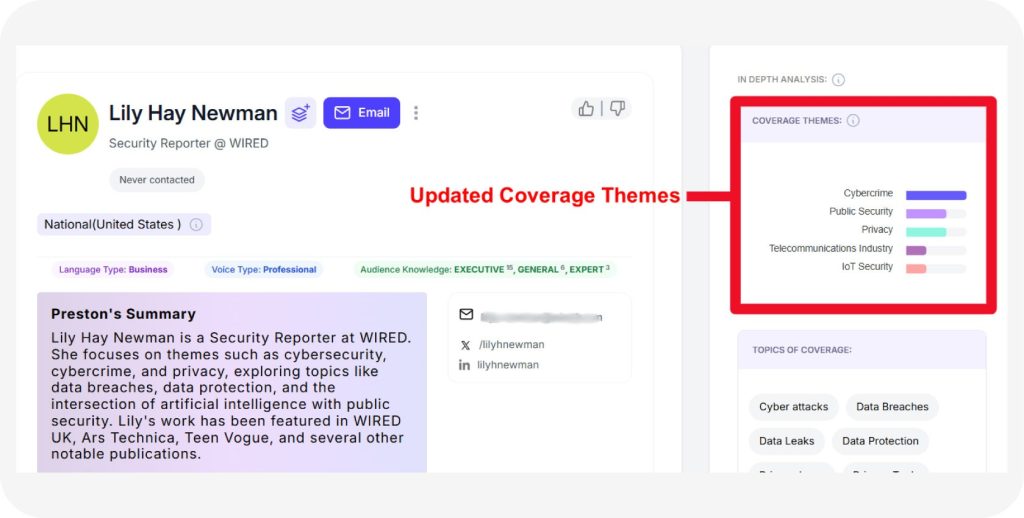
- Preston helps teams track journalists’ editorial focus and activity with updated coverage themes.
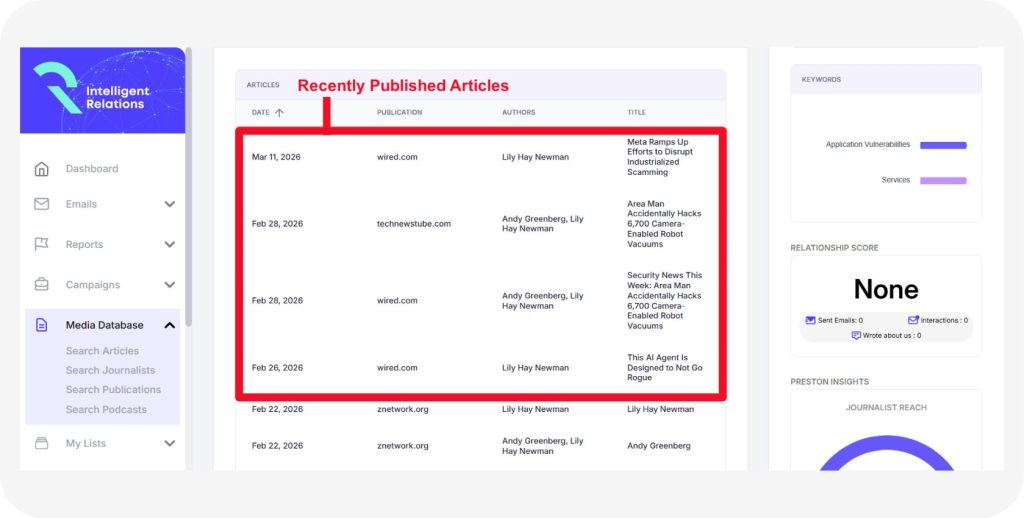
- And recently published work.
3. Relationship and Source Building
One of the most important aspects of earned media strategy is building meaningful, long-term media relationships. Your aim is to become the first thought in a journalist’s mind whenever news breaks.
Instead of reaching out only when you need to pitch a story, invest in continuous interactions that establish your spokespeople as go-to industry sources.
To achieve this, you need to:
- Share relevant data or research that supports their coverage. Send early insights from an owned cybersecurity threat report before it is publicly released.
- Offer expert insights on emerging industry developments. Provide a brief analysis on how a new data privacy regulation may affect SaaS companies.
- Engage thoughtfully with recent articles and reporting. If they just wrote a story about digital identity fraud, reach out with additional insights on synthetic identities.
- Make executives available for quick commentary when breaking news hits. Offer your CTO as a source within hours of a cyberattack affecting major financial institutions.
In time, these interactions position your company leaders as trusted contributors to industry coverage rather than random emails that only pop up during product announcements.
4. Story Development and Placement
With positioning established and strong media relationships in place, it’s time to focus on developing stories that match both company narrative and journalist editorial priorities.
Enterprise earned media strategy typically generates coverage through stories that provide thought leadership value to the industry rather than promotional messaging.
Examples include:
- Data-driven Research Reports: Create a “State of Digital Identity Security” report that analyzes fraud trends across millions of authentication attempts.
- Expert Commentary on Industry News: Explain how a new AI regulation could affect ML models used in fintech fraud detection.
- Trend Analysis and Market Predictions: Your CEO outlines five cybersecurity threats businesses should expect in the coming year.
- Executive Bylines and Contributed Articles: Your CIO publishes a bylined article on how generative AI is affecting enterprise software security.
- Interviews or Expert Insights for Feature Stories: Provide commentary for a WIRED feature on the future of digital payments.
These stories are more likely to earn coverage in tier 1 pubs because they add meaningful insights to ongoing industry conversations.
5. Coverage Amplification and Integration
The final stage focuses on getting the most out of earned media placements.
Coverage isn’t a one-time win, so don’t treat it that way. Integrate media results into broader marketing, PR, and sales initiatives. This is where the PESO Model® comes into play — weave earned media into the fabric of your paid and owned channels.
Extended your earned media coverage across:
- Blog Content and Educational Resources: Turn a media interview about the latest trends into long-form blog content.
- Social Media and Executive LinkedIn Commentary: Have an executive share key takeaways from the coverage with additional insights for followers.
- Sales Materials and Case Studies: Use coverage from a major tech publication in sales presentations.
- Newsletters and Customer Communications: Highlight recent press coverage in a monthly customer update.
- Investor and Employee Branding Initiatives: Feature top-tier media mentions in investor updates and recruiting campaigns.
Amplifying earned media coverage keeps every placement contributing to brand authority, lead generation, and long-term visibility.
Earned Media Workflow Overview
| Stage | Execution Focus | Outcome |
| Strategic Positioning Alignment | Operationalize messaging and spokesperson positioning | Consistent narrative across media interactions |
| Media Opportunity Identification | Monitor industry coverage and emerging story opportunities | Ongoing pipeline of relevant story angles |
| Relationship Development | Build trust and familiarity with journalists | Stronger media engagement and source credibility |
| Story Development & Placement | Pitch valuable insights and commentary | High-quality earned media coverage |
| Coverage Amplification | Extend and repurpose media placements | Increased visibility and long-term ROI |
When you consistently implement this 5-Stage framework, earned media becomes a well-oiled PR machine. Contribute to industry conversations consistently and build meaningful media relationships to compliment your lasting market authority.
Pro Tip: As legacy PR tactics lose effectiveness, B2B tech teams that treat earned media as a structured, relationship-driven process are far more likely to earn consistent coverage and credibility.
Learn more about the decline of legacy PR here: Legacy PR Tech Is Having Its CNN Moment — And We’re Here for It
4 Steps to Get Earned Media
Always keep in mind that journalists have busy schedules. They’re bombarded daily with promotional outreach, and most coverage opportunities go to those who provide genuine insight, expertise, or data that strengthens a story.
Effective earned media strategies create value for journalists while positioning the brand as a leading industry voice. The following four steps are commonly used by enterprise-level PR teams to generate consistent coverage.
Step 1. Create Newsworthy Industry Insights
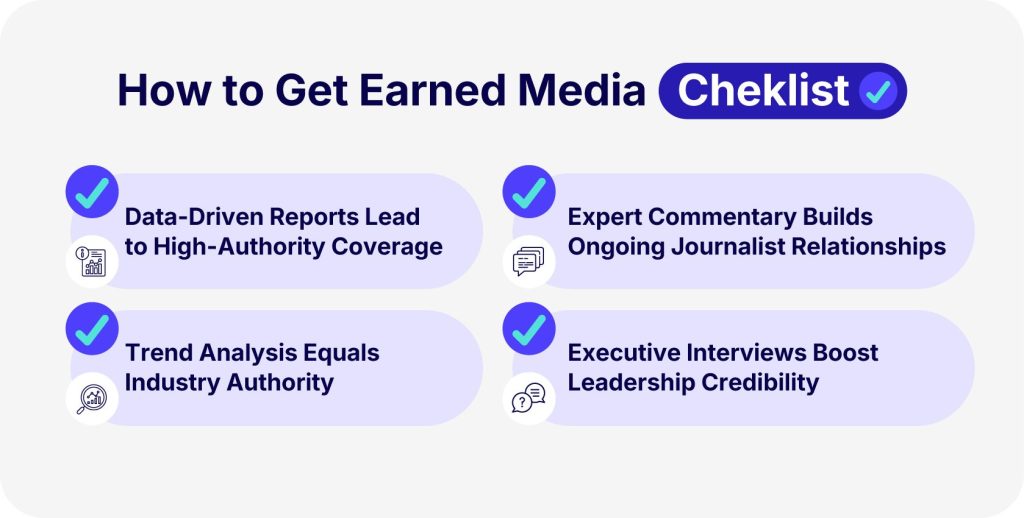
Journalists want original insights that help them explain trends or developments within their industry. If you provide meaningful data or analysis, your odds of securing earned coverage skyrocket.
Common examples include:
- Benchmark Reports (based on proprietary data): Analyze usage data from your platform and release an annual report that shows how customers are adopting new technologies or workflows.
- Market Trend Analyses: Collect and organize insights from customer adoption data or internal analytics to showcase emerging trends in specific areas — AI, cloud infrastructure, cybersecurity, etc.
- Customer Behavior Insights: Group anonymous data from your customer base to show how organizations are changing spending patterns, security strategies, or software adoption.
- Industry Forecasts: Ask executives and company leaders to publish annual predictions about the biggest changes expected in your industry over the next year.
These insights give journalists useful data to reference when covering industry developments.
Step 2. Build Relationships Prior to Coverage
Earned media is always more effective when outreach is built on existing relationships rather than cold pitches. Smart PR teams engage with journalists long before a specific story opportunity arises.
Here’s what to do:
- Engage with journalists’ content on social media. Share their article on LinkedIn and add your own take on the topic.
- Offer expert commentary when industry news breaks. When a major tech or business news breaks, reach out to journalists who are covering the story. Offer insights from your executives and SMEs.
- Provide background insights for developing stories. Offer data points or market insights that help journalists put larger industry trends into context.
Over time, these actions build familiarity and trust with journalists.
Step 3. Align Pitches with Editorial Timing
Timing is everything. It’s often a critical determiner of whether a story gains any traction at all. Most publications plan their content around editorial calendars, industry events, and seasonal trends.
Effective earned media outreach often aligns with:
- Major Industry Conferences: Pitch commentary or research related to the key themes being discussed at upcoming conferences in your industry.
- Regulatory or Policy Updates: Give expert analysis when new compliance requirements or regulations are announced.
- Emerging Tech Trends: Provide commentary when new technologies begin dominating industry headlines.
- Breaking Industry News: Offer rapid-response insights after a major event or funding announcement in your sector.
When you tie outreach to active news cycles, journalists are more likely to engage.
4. Develop Executive Media Voices
Executives who consistently provide thoughtful and valuable perspectives on industry issues become trusted sources. This establishes both the individual thought leader and the company as authoritative voices within the market.
Build executive visibility by:
- Publishing Contributed Articles in Industry Pubs: Write a bylined article explaining the projected impact of a major industry trend.
- Providing Expert Commentary for News Stories: Offer journalists quotes from your CEO or CTO about emerging tech and business trends.
- Publish Original Research or Insights: Release a report based on internal data that reveals how buyers evaluate tech solutions.
- Participate in Podcasts or Industry Panels: Get your executives featured guests spots on top tech and business podcasts or virtual panels to discuss market developments.
Journalists will begin to recognize your executives as top industry sources.
Pro Tip: There are currently 619 million podcast listeners worldwide. Securing guest spots on top-rated shows is a great way to build authority and become a leading industry voice.
Not sure how to get on a podcast? Learn more here: How to Get on a Podcast: 7 Easy Steps + Examples
Enterprise Earned Media Budget Structure
Earned media programs at the enterprise level are not one-size-fits-all. Budgets will obviously vary based on factors like:
- Company Size
- Market Competitiveness
- Growth Objectives
But most fall within a structured range, reflecting the shift from tactical outreach to strategic program design. Instead of funding isolated campaigns, invest in ongoing earned media systems that use a strategic combination of media intelligence, content creation, and PR support.
Here’s what the typical monthly investment tiers look like:
| Monthly Investment | Program Scope |
| $5K–$10K | Focused outreach + media intelligence |
| $10K–$15K | Thought leadership + regular placements |
| $15K–$25K+ | Full earned media ecosystem |
- Price ranges reflect the level of strategy, consistency, and access required to generate meaningful coverage in competitive B2B technology markets.
What Enterprise Earned Media Budgets Include
A complete earned media strategy often spans multiple components:
- Media Intelligence and Tools
- Strategic PR Support
- Content Development
- Executive Thought Leadership
- Performance Tracking and Reporting
Strategic Considerations for Budget Allocation
Prioritize consistency over short-term activity spikes. A sustained monthly investment helps teams:
- Build and Maintain Journalist Relationships
- Develop a Steady Pipeline of Story Opportunities
- Respond Quickly to Emerging Trends and News Cycles
- Strengthen Long-term SOV
Ultimately, you don’t want to view your earned media budget as discretionary spending, but as an investment in:
- Brand Authority
- Market Visibility
- Long-term Credibility
Pro Tip: Consistent monthly investment pays off over time — more than a campaign spike. When structured correctly, these programs deliver returns that compound and extend far beyond individual placements.
For more on how to budget for PR, read our guide: How Much of Your Marketing Budget Should You Really Spend on PR? It’s A Lot Less Than You Think
Earned Media Measurement and Reporting
In the enterprise B2B tech space, earned media success is more about high-quality placements and authority rather than volume. Traditional metrics like impressions or AVE offer limited insight into real business impact.
Today’s earned media strategies need a more nuanced approach — one that evaluates both visibility and influence.
Effective measurement looks at how consistent, high-quality coverage contributes to brand authority, market positioning, and downstream business outcomes.
Core Earned Media KPIs
Track a set of core metrics that indicate the quality and consistency of your earned coverage.
| Metrics | Why It Matters |
| SOV | Competitive positioning |
| Tier 1 placements | Authority signals |
| Message pull-through | Brand narrative adoption |
| Executive mentions | Thought leadership visibility |
These metrics help PR teams monitor not just coverage frequency but the efficacy of brand narrative communication.
Measuring Business Impact
Go beyond media-specific KPIs. Connect earned media to larger business goals through common indicators like:
- SEO Authority and Backlinks: High-quality placements generate more authoritative backlinks to boost search rankings.
- Brand Search Growth: Steady or increased coverage causes more users to search for your company directly.
- Analyst and Investor Perception: Consistent visibility in top-tier pubs strengthens market positioning.
- Sales and Pipeline Influence: Earned media coverage reinforces credibility with prospects, supporting sales conversations.
Treat earned media as a signal amplifier across paid and owned channels rather than a siloed boon to visibility and credibility.
How to Build an Earned Media Reporting System
Track performance effectively by implementing structured reporting processes.
This includes:
- Monthly or Quarterly Performance Reports
- Coverage Quality Scoring (based on publication tier and relevance)
- Narrative Tracking Across Media Mentions
- Integration with Marketing and Analytics Platforms
For a more holistic performance assessment, many dashboards already combine earned media metrics with broader marketing data.
[Tool Image – Earned Media Measurement Dashboard] For Example: charts showing share of voice, Tier 1 coverage, backlinks, and executive mentions over time
Going Beyond Vanity Metrics
A key shift in enterprise earned media is moving past surface-level metrics. Gaining a lot of low-quality coverage isn’t the best driver of meaningful results.
Instead, you need to prioritize:
- Relevance of Coverage
- Authority of Publications
- Alignment with Strategic Messaging
- Long-term Impact on Brand Perception
With this approach, your earned media efforts go beyond short-term spikes in visibility that are often misleading and add to your sustainable brand credibility.
Pro Tip: Don’t wait for secured coverage to start defining success metrics. Go ahead and tie KPIs to outcomes like SOV and narrative adoption. This will make your PR reporting far more meaningful — and actionable!
Read our guide for more info on effective PR reporting: PR Reporting – How to Use Data to Get Better Results [+ 3 Examples]
6-Month Earned Media Strategy Template
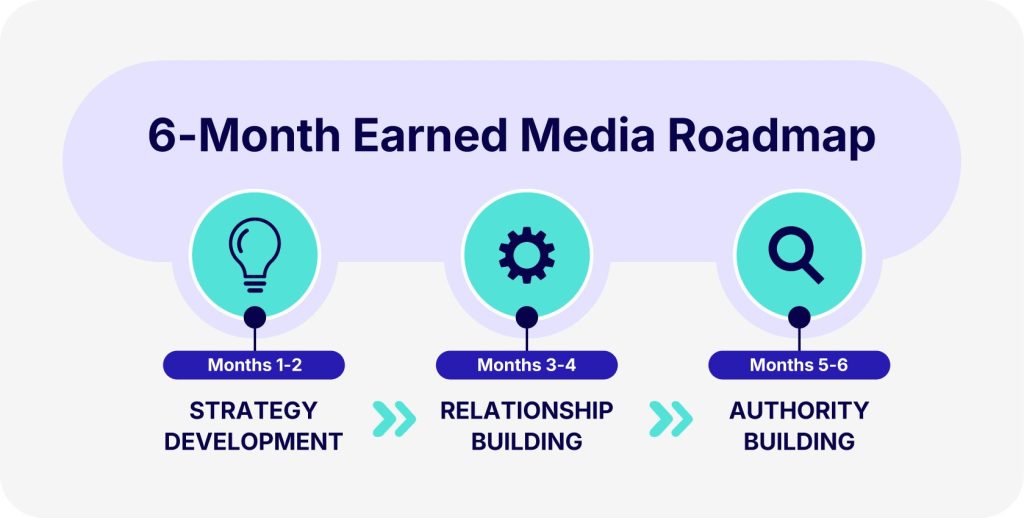
A well-rounded and effective enterprise earned media strategy for a B2B tech company is structured by multi-month initiatives rather than short campaigns. A six-month timeline gives you enough of a runway to:
- Develop Narratives
- Build Journalist Relationships
- Generate Meaningful Coverage
The following template outlines how to phase your earned media efforts for maximum impact:
Month 1–2: Strategy and Narrative Development
In the first phase, focus on building a strategic foundation for the earned media program. Without this step, your outreach efforts will be aimless and inconsistent.
You need to:
- Define core messaging and narrative themes.
- Identify priority industry topics and story angles.
- Map the media landscape (publications, journalists, beats).
- Build initial media lists and intelligence systems.
Outcome: Your program rolls out with a clear, aligned narrative and a targeted media strategy to guide all future outreach.
Month 3–4: Relationship Building and Initial Coverage
Once you have a solid program foundation, your focus should shift to engaging journalists and generating early coverage opportunities.
You need to:
- Initiate targeted outreach to priority journalists.
- Engage with media contacts through commentary and insights.
- Publish initial thought leadership content (bylines, expert quotes).
- Secure early placements in relevant industry publications.
Outcome: You’ll have established relationships with journalists and a jumpstart on visibility that proves the program’s direction.
Month 5–6: Authority Building
In the last phase, build on your early momentum to secure more impactful coverage and strengthen authority.
You need to:
- Launch data-driven reports or research initiatives.
- Expand executive thought leadership efforts.
- Pitch larger, trend-based stories to Tier 1 publications.
- Increase visibility through strategic commentary and interviews.
Outcome: This phase yields stronger brand authority, increased SOV, and top-tier media placements.
Sample Timetable
| Month | Primary Focus | Key Activities |
| M1 | Strategy Development | Messaging, narrative, and media research |
| M2 | Narrative Finalization | Story angles and media list building |
| M3 | Journalist Engagement | Outreach and relationship building |
| M4 | Initial Coverage | Thought leadership and early placements |
| M5 | Authority Expansion | Data reports and expanded outreach |
| M6 | Tier 1 media push | High-impact stories and increased executive visibility |
How to Use This Template
This is a repeatable and scalable design. After the initial cycle you should:
- Refresh narrative themes based on market trends.
- Expand journalist relationships and media targets.
- Introduce new data or research to support future stories.
- Refine outreach strategies based on performance insights.
In time, you’ll have a continuous earned media machine that gains momentum with each cycle.
Pro Tip: Resist the urge to accelerate outreach before your narrative and media targets are fully defined. Investing time in strategy upfront leads to stronger coverage and more efficient execution in later months.
Need help crafting the perfect pitch? Learn more here: A Comprehensive Guide to Crafting an Effective PR Pitch [Examples + Templates]
The Future of Earned Media for B2B Tech
For enterprise B2B tech brands, the future of strategic earned media success won’t lie in how much coverage you secure, it will be in the authority derived from its quality.
Data-driven PR
One of the most significant shifts in earned media is the rise of data-driven PR. These days, journalists are placing more emphasis on:
- Original Research
- Proprietary Data
- Expert Analysis
Companies that invest in unique, data-backed insights will have an edge in securing high-quality coverage.
AI-assisted Media Intelligence
As data-driven PR becomes more prominent, AI-assisted media intelligence is changing how brands spot opportunities and engage with journalists. Advanced tools perform real-time tasks like:
- Analyzing Journalist Behavior
- Tracking Emerging Trends
- Identifying Relevant Pitching Opportunities
Leveraging this trend leads to more precise and strategic outreach.
Integrated PR and Content Strategy
Another key trend is the integration of earned media with content (paid and owned) and demand gen strategies. Earned media isn’t a standalone function anymore — it plays a critical role in supporting:
- SEO
- Thought Leadership
- Sales Enablement
Organizations making the most impact are aligning PR efforts with broader marketing initiatives, taking visibility and influence to another level.
Executive Thought Leadership Ecosystems
Last but not least, executive thought leadership ecosystems are becoming increasingly important. Occasional media appearances are old hat. Forward-thinking companies are building consistent platforms for their leaders across:
- Pubs
- Podcasts
- Social Channels
This trend helps turn your executives into leading industry influencers.
Trends Takeaway
As these trends mold the future, earned media for B2B tech brands will become:
- More Strategic
- More Measurable
- More Tightly Integrated with Business Outcomes
If you invest in the right systems, insights, and expertise now, your brand will be positioned to lead industry conversations and maintain authority indefinitely.
Pro Tip: Start building internal capabilities for data-driven storytelling early — whether through proprietary research, customer insights, or market analysis. If you consistently provide original insights, you will dominate earned media in the years ahead.
Find more 2026 PR trends here: 5 Top PR Trends in 2026: GEO, AI-Native Tools, and the New Rules of Influence
From Coverage to Category Leadership
Earned media has become much more than just a PR function of part-time publicity — it’s an always-on engine that keeps your brand embedded in industry conversations.
The days of chasing coverage are over. Today’s leading B2B tech companies are building the infrastructure that makes high-quality coverage inevitable. So, approach earned media strategy as a structured system — one that combines data-driven insights with targeted outreach and rigorous performance measurement.
The brands that get this right won’t just gain visibility — they’ll define the next generation of industry leaders.
If you’re ready to build a scalable, enterprise-level earned media strategy, now is the time to act. Book a free consultation with us today and take earned media from occasional exposure to a fully operational authority amplifier!