
Paid vs. Earned Media: A Strategic Investment Guide for Scaling Companies
The real question isn’t paid vs. earned — it’s allocation efficiency. At the growth stage, you shouldn’t be asking which is better as both add value differently. You should be asking where each drives marginal ROI. A solid growth strate...
- Home
- Intelligent Insights Blog
- Paid vs. Earned Media: A Strategic Investment Guide for Scaling Companies

The real question isn’t paid vs. earned — it’s allocation efficiency.
At the growth stage, you shouldn’t be asking which is better as both add value differently. You should be asking where each drives marginal ROI.
- Paid media is fast, controllable, and predictable. Its speed lets you capture demand at cost while testing messaging and driving measurable pipeline impact in a relatively short period of time.
- Earned media, on the other hand, is a long-game strategy. Third-party validation culminates in a crescendo of credibility, authority, and visibility over time.
A solid growth strategy doesn’t force these channels to compete for investment. Instead, paid media is used to expedite reach while earned media is used to strengthen trust and reduce funnel friction.
This article looks at paid and earned media across cost structure, ROI, attribution, scalability, and long-term business impact while also outlining how growth-stage companies build more efficient and integrated media strategies.
Common Budget Allocation Mistakes
What is Paid Media?
What is Earned Media?
Paid vs. Earned Media: Core Differences
Cost Structure Comparison
ROI Comparison Framework
Short-Term vs. Long-Term Growth Impact
Credibility and Trust Signals
How Growth-Stage Companies Should Allocate Budget
Integrated PESO Strategy Model
What is Paid Media?
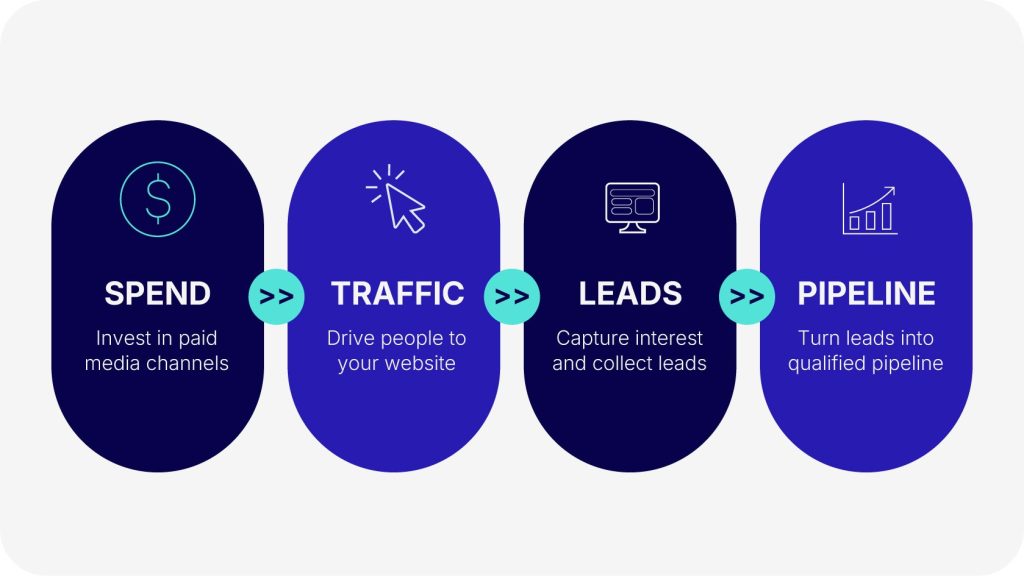
Paid media is all about controlled distribution. It gives you the power to put your message in front of highly targeted audiences at speed and scale.
And it’s not dependent on third-party validation, so visibility is guaranteed through direct investment across channels like:
- Search
- Social
- Display
- Sponsorships
- Programmatic ads
If you’re a B2B company that needs to quickly drum up some pipeline growth, paid media’s speed and control is clutch.
Where is Paid Media Most Effective?
Paid media is particularly effective for:
- Capturing Existing Demand
- Testing Positioning
- Accelerating Product Launches
- Driving Short-term Acquisition Goals
It also offers attribution clarity — a major advantage over most other channels. With relative precision, marketers are able to track:
- Impressions
- Clicks
- Conversions
- CAC
- ROAS
- Pipeline Contribution
Is Paid Media Hard to Scale?
Because paid media’s scalability is closely tied to budget, marginal efficiency often declines as spend increases due to:
- Audience Saturation
- Competition
- Rising Platform Costs
In most cases, paid performance slows down as soon as investment drops off.
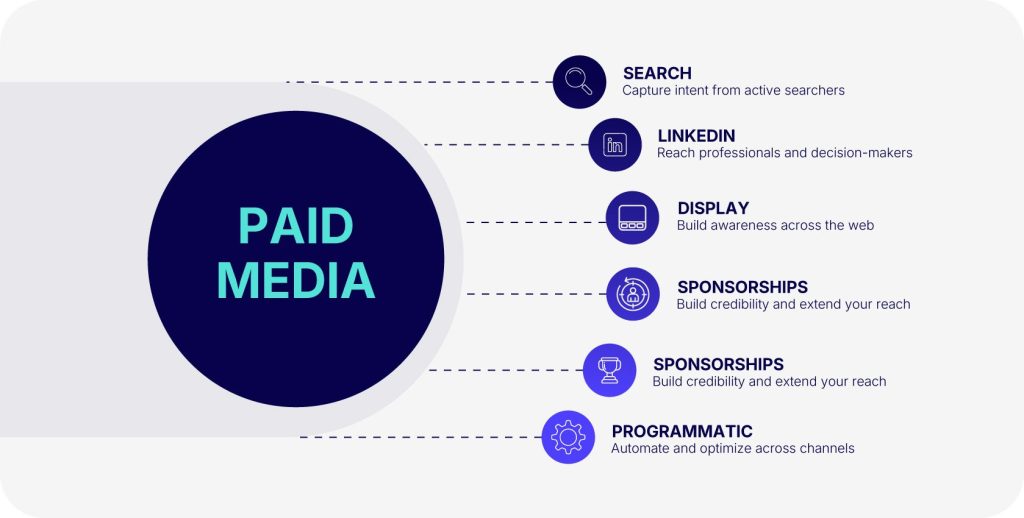
Think of it like a town crier. As long as he’s getting paid, he’ll shout your news through the town square all day. But as soon as you tighten the purse strings, he goes silent — and the villagers stop hearing about you.
Key Insight
Paid media is operationally intensive. The best paid strategies aren’t just optimized for immediate conversions — they’re integrated into broader efforts that improve efficiency over time.
Pro Tip: Use paid media to validate messaging and audience resonance before scaling larger brand or PR initiatives.
For more on PR + marketing, read our guide: PR Marketing – How to Do Both for the Best Results
What is Earned Media?
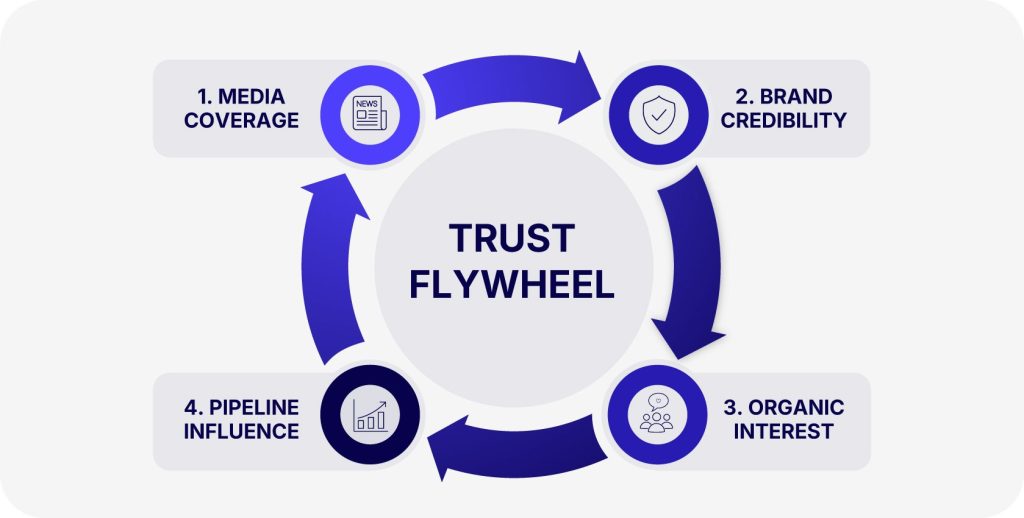
Earned media is all about authority and credibility through third-party validation. Instead of paying for visibility, you’re company is gaining recognition from things like:
- Media Coverage
- Executive Thought Leadership
- Analyst Mentions
- Podcast Appearances
- Industry Commentary
- Organic Brand Discussions
If you’re a growth-stage B2B company, earned media’s main value doesn’t lie in immediate demand capture — it’s in long-term trust amplification.
As credibility from earned media compounds over time, your brand achieves and sustains category influence based on what people actually think rather than what they’re being told.
Where is Earned Media Most Effective?
A strong earned media strategy improves:
- Brand Perception
- Branded Search Volume
- SEO Authority (through high-quality backlinks)
- Investor Confidence
- Funnel Friction
Earned media assets continue working (often with no direct effort) to generate value long after publication whereas visibility from paid campaigns stops when the money.
Is Earned Media Hard to Scale?
Because earned media is harder to control and attribute than paid media, results are more gradual and outcomes are harder to connect to a single conversion event.
This means setting expectations is paramount for leadership evaluating efficiency and performance. You need to tightly align earned media strategy with broader business objectives — not vanity metrics.
Beyond securing press coverage, your goals are to:
- Increase Market Trust
- Strengthen Positioning
- Amplify Sales and Marketing Efforts
Key Insight
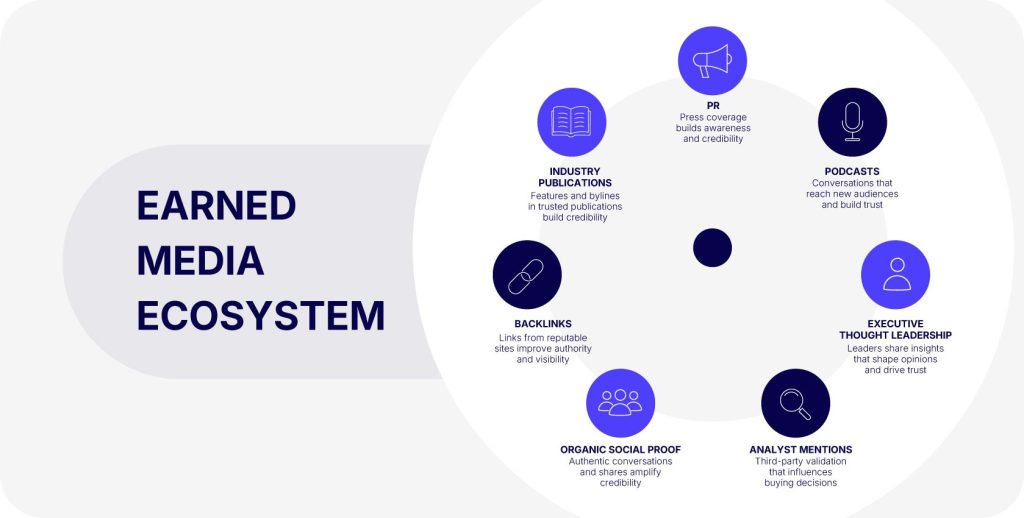
As you scale, competition grows and buyers become numb to traditional ads. This is where a strong earned media strategy becomes increasingly valuable.
Pro Tip: The best earned media strategies focus less on “getting coverage” and more on building sustained market authority around specific business narratives. Track branded search lift after major placements — it’s one of the clearest signals of earned media impact.
Learn more about earned media strategy here: The Modern Earned Media Strategy Guide for Enterprise B2B Tech Brands [Examples + Tips]
Paid vs. Earned Media: Core Differences
Paid and earned media support growth very differently:
- One buys attention directly.
- The other builds trust through third-party validation.
Understanding these key distinctions is crucial when it comes to making the right decisions on budget allocation.
Speed and Control
Paid media provides instant visibility. Plus, you control the:
- Targeting
- Messaging
- Timing
- Campaign Scale
It’s a go-to for predictable pipeline generation and short-term growth initiatives. However, that performance is inextricably tied to ongoing spend.
When campaigns press pause, visibility and traffic often freeze with them.
Authority and Credibility
Earned media exposure comes from third parties rather than direct advertising, so it carries more weight — especially in complex B2B buying environments.
Impact compounds over time through:
- Stronger Brand Perception
- Organic Discovery
- Increased Market Authority
Measurement and Scalability
Here’s where the biggest differences between paid vs earned media lie.
Measuring paid media is typically more straightforward through metrics like:
- CAC
- ROAS
- Conversion Rates
Earned media is trickier to attribute because its pipeline influence is often indirectly through:
- Awareness
- Trust
- Branded Search Growth
- Accelerated Sales Conversations
The cost structures also differ:
- Paid media scales linearly with budget.
- Earned media generates compounding returns over time.
At the end of the day, one channel isn’t inherently better than the other. They solve different business problems at different growth stages.
Comparison Table
| Factor | Paid Media | Earned Media |
| Control | High | Low |
| Speed | Immediate | Slower build |
| Cost Model | Linear | Front-loaded, then compounding |
| Credibility | Low (self-funded | Higher (third-party validation) |
| Attribution | Clear | Less direct |
| Scalability | Budget-dependent | Momentum-dependent |
| Longevity | Stops when spend stops | Persists and compounds |
The bottom line: Paid media scales input. Earned media scales perception. Use this table internally to align leadership expectations before budget discussions — misalignment kills ROI.
Pro Tip: Paid media performs best when buyers already trust your brand. Earned media helps build that trust before the click ever happens.
Need to write a PR plan that gets results? We’ve got you covered: How to Write an Effective PR Plan [Tips + Examples]
Cost Structure Comparison
Paid vs earned media also comes down to fundamentally different cost structures. It’s important to understand those differences for short-term performance and long-term efficiency evaluation.
Paid Media Cost Structure
The paid media cost structure is pretty straightforward — it scales with spend. As you increase investment, you increase visibility, traffic, and lead volume. That predictability is one of the biggest benefits of paid media.
But over time, scaling gets more expensive. There are more hurdles — fiercer competition, audience saturation, creative fatigue, etc. — to stifle efficiency, particularly in competitive B2B markets.
Paid media costs include:
- Ad Spend
- Creative Production
- Campaign Management
- Landing Page Optimization
- Retargeting Infrastructure
- Platform and Analytics Tools
For example: Let’s say you’re a Series B SaaS company investing in LinkedIn and Google Ads. You might spend:
- $40,000/month on ad spend
- $8,000/month on creative and design
- $7,000/month on campaign management
- $3,000/month on landing page optimization and tools
That $58,000/month spend generates predictable demo requests and pipeline volume — but as soon as campaigns are reduced or paused, visibility plummets.
Earned Media Cost Structure
Earned media compounds over time but requires an initial investment. Its cost structure is more front-loaded with spend going toward:
- PR Retainers or Internal Teams
- Media Outreach
- Thought Leadership Development
- Executive Positioning
- Content Support
- Research and Narrative Strategy
Unlike paid media, earned media assets keep on trucking even if the budget’s out of gas. It’s a perpetual authority machine. For months (even years) after publication, earned media contributes to:
- SEO Authority
- Brand Recognition
- Buyer Trust
And to top it off, the marginal cost of more exposure typically decreases as authority builds.
For example: Let’s say you’re a growth-stage B2B cybersecurity company. You might invest:
- $18,000/month in PR support
- $5,000/month in executive thought leadership content
- $4,000/month in research and media assets
Over time, that $27,000/month investment generates:
- Tier-1 Media Coverage
- Executive Interviews
- Backlinks From Industry Publications
- Increased Branded Search Volume
- Higher Conversion Rates (from existing paid traffic)
The best part? These assets will continue to influence discovery and buyer trust beyond the initial investment.
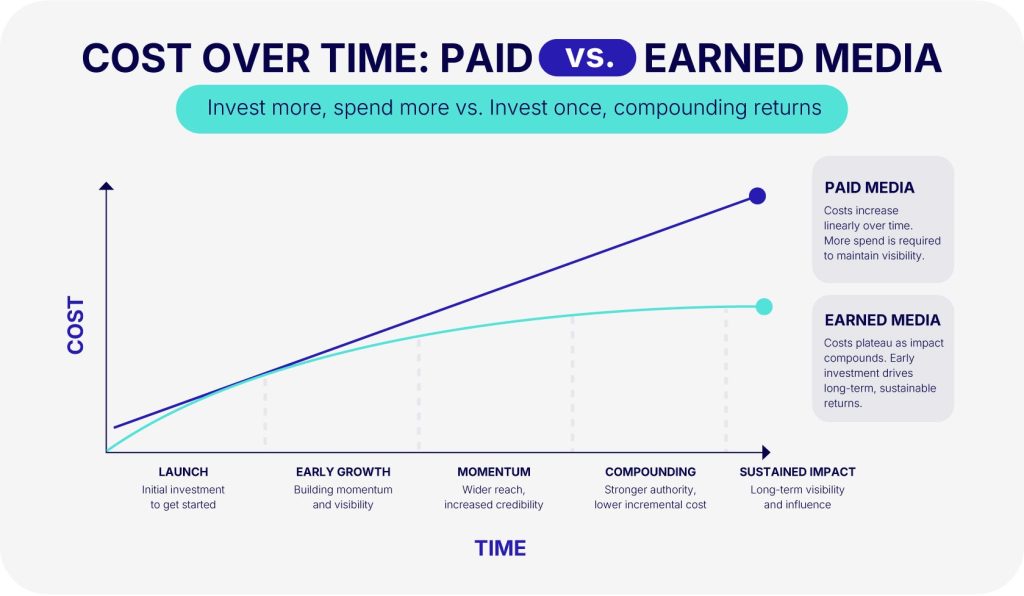
The Efficiency Question Changes Over Time
Short-term: Paid media produces faster and more measurable results.
Long-Term: Earned media improves overall marketing efficiency by strengthening brand credibility and reducing friction across acquisition channels.
For example: A prospect clicks a paid ad, then decides to research your company. They find a ton of media coverage, executive commentary, and analyst mentions. Discovering pre-existing trust makes them convert faster.
This is why many growth-stage companies stop asking:
- “Which channels drive feeds faster?”
And start asking:
- “Which investment improves efficiency across the entire growth system?”
Cost Structure Comparison Table
| Cost Factor | Paid Media | Earned Media |
| Upfront Investment | Lower initial barrier | Higher strategic investment |
| Ongoing Costs | Continuous spend required | Retainer/resource driven |
| Scalability | Linear budget | Compounding over time |
| Longevity | Depends on spend | Persists after investment |
| Efficiency Over Time | Declines at scale | Improves with authority |
The bottom line: Paid media is renting attention. Earned media is building equity.
Pro Tip: Evaluate media investment based on cost per incremental growth impact—not just cost per lead. That’s often where earned media creates long-term leverage.
Are you a Series B–D startup scaling your PR budget? Here’s what you need to know: PR for Startups: A Scalable Budgeting Blueprint for Series B–D [Examples + Tips]
ROI Comparison Framework
A true paid vs earned media ROI comparison is tricky because the channels generate value in different ways.
- Paid media is designed for direct attribution and short-term performance measurement.
- Earned media creates broader influence across brand perception, trust, and conversion efficiency over time.
You need to evaluate paid vs earned media channels using the metrics each impacts most directly.
How to Measure Paid Media ROI
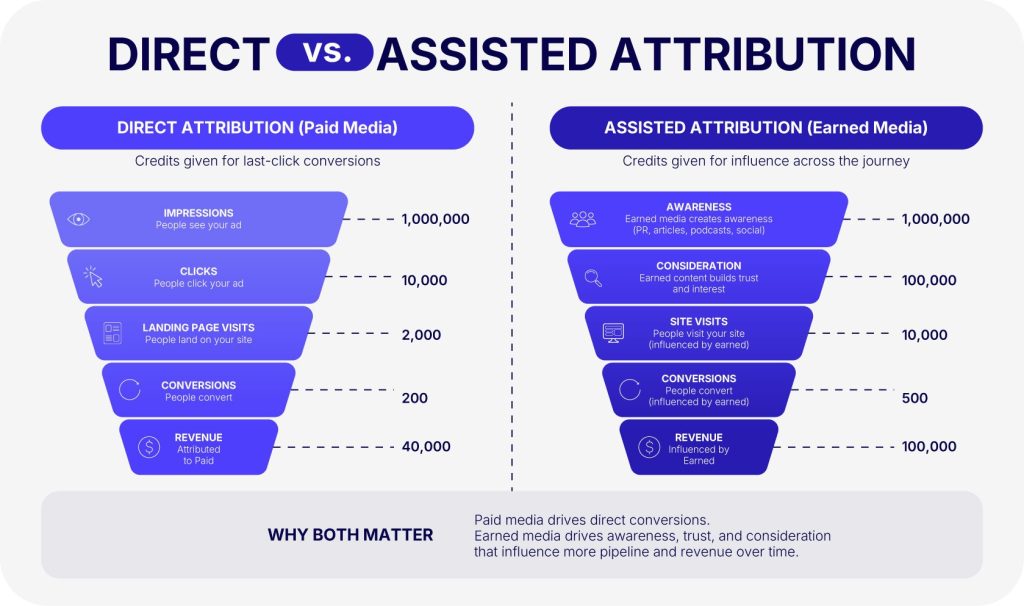
It’s usually easier to quantify paid media ROI because attribution is built into the channel infrastructure. Performance is tied directly to spend, clicks, conversions, pipeline, and revenue.
Common paid media metrics include:
- CAC
- ROAS
- Cost per Lead
- Conversion Rate
- Pipeline Influenced
- Revenue Generated
For example: Your B2B SaaS company spends $100,000 on paid acquisition. From that investment, you generate 500 demo requests, convert 40 customers, and produce $400,000 in ARR — creating a relatively clear ROI model tied directly to campaign spend.
How to Measure Earned Media ROI
Earned media ROI isn’t quite as direct as paid — but that doesn’t make it less valuable. Its impact often gets distributed across multiple stages of the buyer journey.
Common earned media indicators include:
- SOV
- Branded Search Growth
- Referral Traffic
- Backlink Authority
- Executive Visibility
- Assisted Conversions
- Sales Cycle Acceleration
Earned media improves the efficiency of existing acquisition channels rather than generating immediate conversions.
For example: Your cybersecurity company secures Tier-1 media coverage. Your founder goes on podcasts, analysts mention you, and you receive high-authority backlinks.
After six months, the company sees:
- Increased Branded Search Volume
- Higher Organic Traffic
- Improved Paid Ad Conversion Rates
- Faster Enterprise Sales Conversations
That kind of influence may not appear in a last-click attribution model, but the business impact is still substantial.
The Attribution Challenge
A major difference regarding paid vs earned media is attribution clarity.
Paid media is measured through direct-response metrics, whereas earned media influences:
- Brand Familiarity
- Buyer Confidence
- Market Trust
- Internal Stakeholder Validation
In B2B environments with long sales cycles and several decision-makers, those factors have a big effect on conversion efficiency — even if they’re difficult to pinpoint.
The Most Effective ROI Models Combine Both
As a high-performing growth-stage company, you rarely evaluate channels independently. Instead, you look at how earned media boosts the efficiency of paid acquisition — and how paid distribution amplifies high-performing earned content.
For example:
- Earned media increases trust.
- Paid media captures demand more efficiently.
- CAC decreases over time.
- Conversion rates improve across the funnel.
This results in a stronger and more scalable growth system.
ROI Modeling Example
| ROI Factor | Paid Media | Earned Media |
| Attribution Clarity | High | Moderate to low |
| Speed of Results | Immediate | Gradual |
| Conversion Influence | Direct | Assisted |
| Scalability | Spend-dependent | Authority-dependent |
| Long-term Value | Limited after spend | Compounding over time |
| Measurement Focus | CAC, ROAS, CPL | Trust, visibility, influence |
Pro Tip: If earned media is only being measured through last-click attribution, its actual business impact is probably being underestimated.
For more on key PR metrics you need to measure, read our guide: 10 Best PR Metrics to Measure for Increased Success
Short-Term vs. Long-Term Growth Impact
The growth creation timelines of paid and earned media are very different.
- Paid media is optimized for immediate visibility and demand capture.
- Earned media is designed to build authority and efficiency over time.
As a growth-stage company balancing both, it’s the difference between short-term pipeline gains and sustainable long-term growth.
Paid Media
Speed is your biggest advantage when it comes to paid media.
- Campaigns launch quickly, generate traffic almost immediately, and produce measurable pipeline impact within days or weeks.
This makes paid media especially effective for:
- Product Launches
- Pipeline Acceleration
- Demand Capture
- Market Testing
- Quarterly Growth Targets
But because paid performance is tied to continuous investment, when campaigns slow or budgets shrink, visibility declines with them.
For example: Your SaaS company is launching a new product category. You use LinkedIn Ads and Google Search campaigns to rapidly generate demo requests and validate positioning within a competitive market.
Earned Media
Earned media takes time to reveal its true value. Like tending a garden, you’re cultivating sustenance that yields continuous impact through:
- Media Coverage
- Thought Leadership
- Analyst Mentions
- Executive Visibility
As authority grows, earned media contributes to:
- Higher Branded Search Volume
- Stronger Organic Visibility
- Increased Referral Traffic
- Improved Conversion Efficiency
- Greater Market Credibility
And unlike paid media, the value generated by earned media doesn’t stop with spend — it’s ongoing.
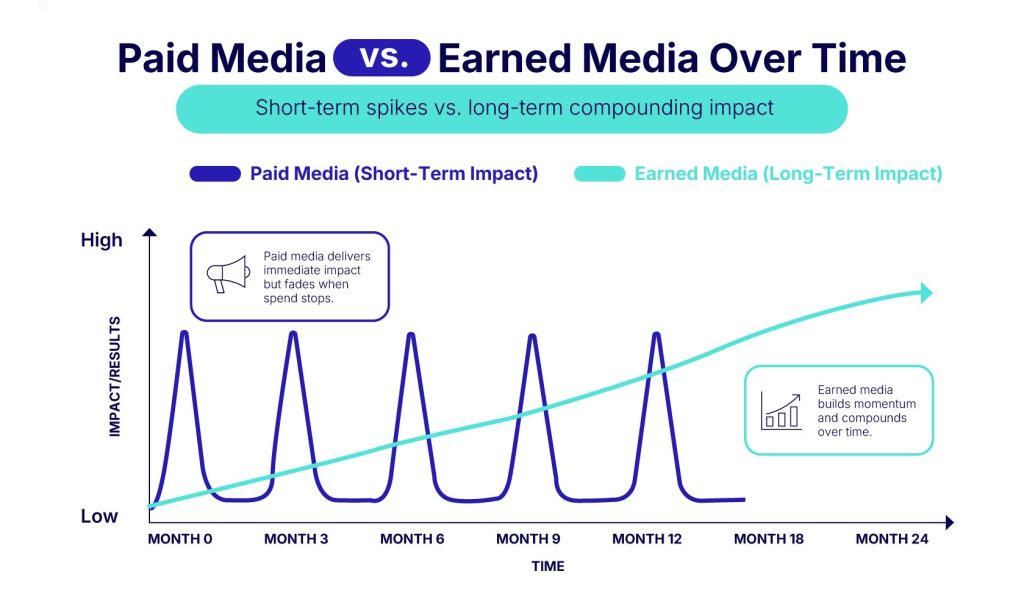
For example: Your fintech startup is consistently featured in top-tier industry pubs. You notice an increase in inbound interest and higher conversion rates months after the initial coverage because buyers already know and trust your brand.
The Strongest Growth Strategy
Combine both. Companies that implement both channels toward one strategic goal get better results. Use paid media to deliver attention on demand and earned media to build trust and reduce acquisition friction over time.
In most cases:
- Paid media drives initial discovery.
- Earned media validates credibility.
- Owned channels convert and nurture demand.
The mixture creates a more malleable and durable growth system.
Short-term vs. Long-term Impact
| Factor | Paid Media | Earned Media |
| Time to Impact | Immediate | Gradual |
| Primary Value | Demand capture | Trust and authority |
| Longevity | Ends with spend | Compounds over time |
| Scalability | Budget-driven | Reputation-driven |
| Best for | Short-term growth | Long-term efficiency |
Paid media fuels now. Earned media builds later and arrives cheaper.
Pro Tip: Use paid media to create momentum while earned media builds the credibility that improves conversion efficiency over time.
Want to leverage brand thought leadership? Read our strategy guide for more info: Leveraging Brand Thought Leadership: The Ultimate Strategy Guide [+ Examples and 2024 Trends]
Credibility and Trust Signals
An often hidden variable behind conversion rates in B2B markets is trust. Buyers don’t just evaluate products — they evaluate credibility, authority, and perceived market legitimacy.
That’s where paid and earned media create very different signals.
Paid Media Limitations
Paid media creates visibility but not always trust. While it’s highly effective for generating awareness and capturing attention quickly, audiences understand that advertisements are self-funded and fully controlled by the brand.
As competition fiercer, buyers become more resistant to traditional advertising due to:
- Ad Fatigue
- Oversaturation
- Growing Skepticism (toward promotional messaging)
So paid media may generate the click, but that click doesn’t necessarily reflect confidence.
For example: A prospect may click your sponsored LinkedIn ad but still research the company extensively before booking a demo or involving additional stakeholders.
Earned Media Advantages
Earned media trust is so valuable because it’s derived from voices outside of the company. All earned coverage acts as external validation signals.
For B2B companies at the growth stage, these signals influence:
- Vendor Shortlisting
- Investor Perception
- Enterprise Buying Confidence
- Sales Velocity
- Executive Credibility
Earned media is often responsible for friction reduction across the buying process. Before even speaking to sales, prospects already perceive the company as established and trustworthy.
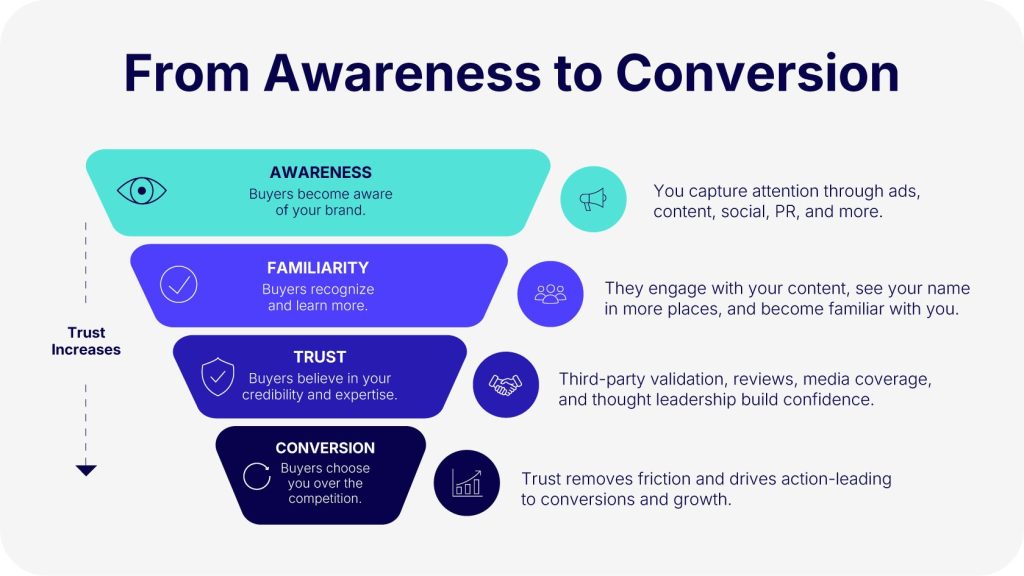
For example: Your SaaS company is consistently featured in respected industry publications. You experience higher conversion rates from both organic and paid traffic because buyers recognize your brand before entering the funnel.
Trust Signals Compound Across Channels
A major earned media advantage is that its credibility improves the performance of other channels.
For example:
- Paid ads convert better when prospects recognize the brand.
- Sales outreach becomes warmer when executives are visible publicly.
- Website conversion rates improve when media logos and coverage are featured prominently.
This is why credibility isn’t just a vanity PR metric — it’s a growth efficiency factor.
Visibility vs. Credibility Comparison
| Factor | Paid Media | Earned Media |
| Primary Signal | Visibility | Trust |
| Audience Perception | Promotional | Third-party validated |
| Influence on buyers | Awareness | Confidence |
| Longevity | Campaign-dependent | Reputation-driven |
| Funnel Impact | Top-of-funnel attention | Full-funnel trust acceleration |
Pro Tip: Repurpose earned media into paid campaigns, sales enablement, and website messaging. Third-party credibility often improves conversion performance across every channel.
Interested in upping your media relations game? Learn more here: From Pitch to Publication: How Media Relations Drives PR Success [Examples + Tips]
How Growth-Stage Companies Should Allocate Budget
While there’s no universal formula for media allocation, the right blend depends on:
- Growth Stage
- Sales Cycle Complexity
- Market Maturity
- Brand Recognition
- Pipeline Goals
The challenge for most growth-stage B2B companies is balancing short-term acquisition pressure with long-term efficiency and market positioning.
When to Lean on Paid Media
Paid media becomes a priority when you need fast visibility and predictable pipeline generation.
It’s especially useful during:
- New Product Launches
- Market Expansion
- Aggressive Revenue Growth Periods
- Demand Capture Initiatives
- Early-stage Positioning Tests
Paid media generates awareness quickly in these situations while also validating messaging and audience targeting.
For example: You’re a Series B SaaS company entering a competitive category. You allocate heavily toward paid search and LinkedIn campaigns to establish market presence and generate demos rapidly.
When to Lean on Earned Media
As competition rises and differentiation becomes harder through paid ads alone, earned media becomes increasingly valuable.
Increase your investment in earned media when you need to:
- Strengthen Market Credibility
- Support Enterprise Sales
- Improve Brand Authority
- Accelerate Trust with Decision-makers
- Reduce Long-term Acquisition Friction
This is especially important during long sales cycles, high ACV offerings, and multi-stakeholder buying processes.
For example: You’re a cybersecurity company selling into enterprise accounts. You invest more heavily in executive thought leadership, analyst visibility, and media coverage to improve buyer confidence before sales conversations begin.
Most Growth-Stage Companies Need Both
The best allocation models aren’t “paid-first” or “earned-first” — they’re stage-aware and focused on efficiency.
In many cases:
- Paid media generates immediate pipeline.
- Earned media improves conversion efficiency.
- Owned channels nurture and convert demand.
As your company matures, budget allocation should gradually shift from pure acquisition to building authority and optimizing efficiency.
Example Allocation Model (Series B–D)
| Channel Type | Example Allocation |
| Paid Media | 40–60% |
| Earned Media | 20–30% |
| Owned Media | 10–20% |
| Shared Media | 5–10% |
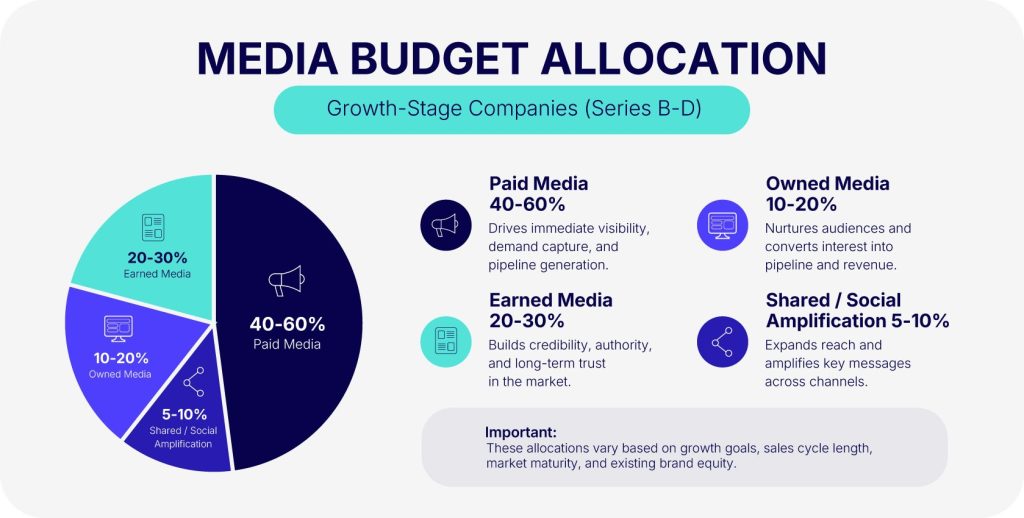
Percentages vary depending on:
- Growth Goals
- Market Conditions
- Existing Brand Equity
But they still illustrate how scaling companies diversify beyond paid acquisition alone.
The Goal is Allocation Efficiency, Not Channel Dominance
If you rely too heavily on paid acquisition, you’ll struggle with rising CAC and declining efficiency over time.
If you overinvest in earned media without sufficient distribution infrastructure, you’ll struggle to generate timely measurable results.
Your goal isn’t to maximize one channel — it’s to build a balanced system where:
- Paid accelerates reach.
- Earned strengthens trust.
- Shared expands visibility.
- Owned converts attention into revenue.
The right budget allocation mix evolves as efficiency — not just growth — becomes the priority.
Integrated PESO Strategy Model
At the growth-stage, never rely on a single media channel. You need to build an integrated system where paid, earned, shared, and owned media reinforce one another.
This is the foundation of the PESO Model® — a framework that aligns visibility, credibility, engagement, and conversion into a single growth entity.
Visual Opportunity:
- PESO flywheel diagram
- Funnel diagram (Paid + Earned + Shared + Owned interactions)
Paid Media
This is your amplification layer. Its immediate reach and predictable visibility help companies:
- Capture demand quickly.
- Promote high-performing content.
- Retarget engaged audiences.
- Accelerate awareness campaigns.
Paid media is most effective when amplifying assets that have already demonstrated trust and engagement.
For example: You promote a high-performing media placement or executive interview through LinkedIn Ads to extend reach among target buyers.
Earned Media
This is your credibility layer. It strengthens trust and establishes authority through third-party validation. That kind of organic recognition comes from:
- Media Coverage
- Analyst Mentions
- Podcast Appearances
- Speaking Opportunities
- Thought Leadership
Integrated strategies use earned media as the trust engine behind conversion efficiency.
For example: Your founder is featured in major industry publications. This improves both inbound lead quality and paid campaign performance because buyers already recognize and trust the company.
Shared Media
This is your distribution and engagement layer. It includes:
- Social media amplification
- Community engagement
- Organic + algorithmic distribution
There’s some paid vs earned overlap overlap with shared media. Its role is simple — expand visibility and extend the lifespan of content and earned coverage.
Shared media also creates feedback loops that boost:
- Brand Familiarity
- Audience Engagement
- Organic Amplification
- Community Trust
For example: An executive podcast interview is shared by employees, customers, and industry influencers, generating significantly more exposure than the original placement alone.
Owned Media
This is your conversion layer. It includes channels that your company fully controls, such as:
- Website Content
- Blogs
- Email Newsletters
- Webinars
- Resource Hubs
- Case Studies
Attention generated by paid, earned, and shared media are converted into pipeline and customer relationships through owned channels.
For example: A prospect discovers your company through media coverage, engages with social media posts, clicks a retargeting ad, and ultimately converts through a webinar or resource page on the company website.
Integration is the Advantage
The PESO Model® works because the channels support and strengthen each other.
For example:
- Earned media builds credibility.
- Shared media amplifies visibility.
- Paid media scales reach strategically.
- Owned media converts and nurtures demand.
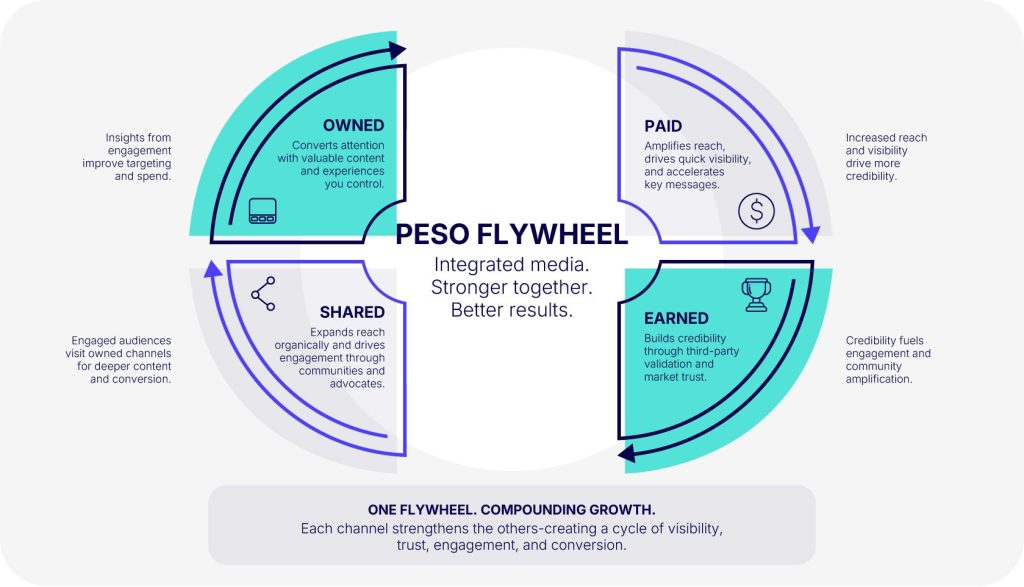
When effectively integrated, they make a compounding growth machine more resilient and efficient than siloed strategies.
PESO Funnel Alignment
Align each channel to specific funnel stages to get the most out of the PESO model. Media types influence buyers differently depending on the goal:
- Awareness
- Consideration
- Conversion
| Funnel Stage | Buyer Focus | Primary PESO Drivers |
| TOFU | Awareness and discovery | Paid + Earned + Shared |
| MOFU | Education and evaluation | Earned + Shared + Owned |
| BOFU | Conversion and decision-making | Owned + Paid Retargeting |
| Post-sale / Advocacy | Retention and amplification | Owned + Shared |
Common Budget Allocation Mistakes
For many growth-stage companies, problems arise not from lack of investment but rather how that investment is allocated. Their spend strategy is either too imbalanced, overly reactive, or only focused on short-term metrics.
The best media strategies strike a balance between immediate pipeline needs, long-term market positioning, and efficiency.
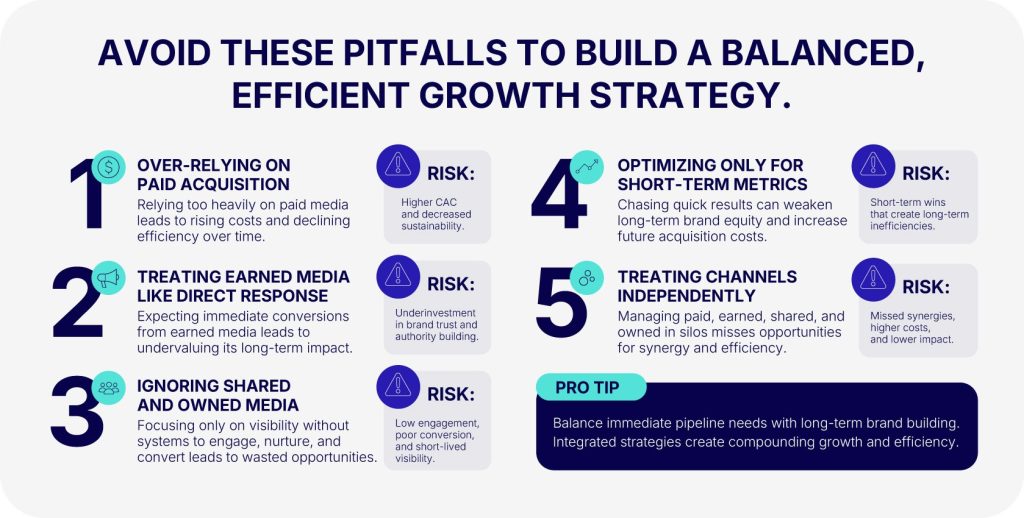
Here are five of the most common allocation pitfalls:
1. Relying Too Much on Paid Acquisition
While paid media generates immediate pipeline, overdependence creates long-term efficiency problems. Competition increases and CPCs rise, making customer acquisition costs difficult to sustain.
Without the support of trust and authority, you may end up paying more just to maintain the same performance levels.
For example: You’re a SaaS company scaling aggressively through paid search. You see conversion rates decline over time because buyers don’t recognize or trust your brand.
2. Treating Earned Media Like Direct Response
Earned media gets undervalued when leadership teams want the immediate attribution of paid campaigns.
Unlike paid media, earned media usually influences:
- Buyer Confidence
- Brand Familiarity
- Sales Velocity
- Organic Discovery
- Conversion Efficiency
Trying to measure earned media exclusively through last-click conversions leads to an undeserved underinvest in building long-term authority.
For example: Your company pauses PR investment because it can’t tie coverage directly to demos — even while branded search volume and enterprise inbound interest are increasing.
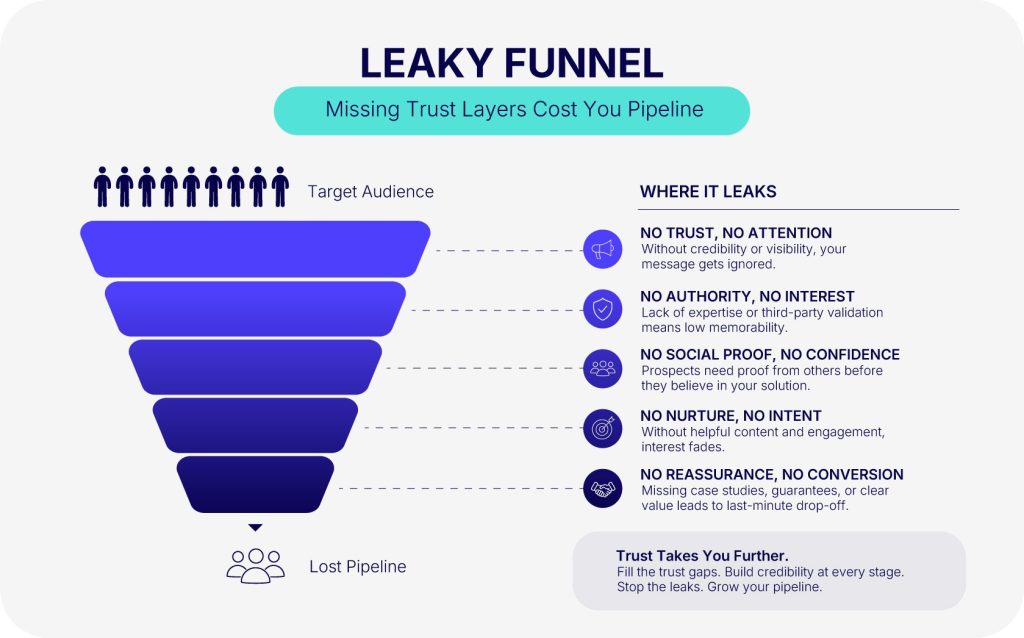
3. Ignoring Shared and Owned Media
A lot of companies mistakenly place all their focus on visibility while forgetting to build systems that nurture and convert attention.
Without a strong shared and owned infrastructure:
- Earned coverage loses momentum quickly.
- Paid traffic converts less efficiently.
- Audience engagement remains shallow.
Visibility alone isn’t enough. You need mechanisms for education, retention, and ongoing engagement.
For example: You secure strong press coverage but fail to:
- Amplify it across social channels.
- Repurpose it into content.
- Integrate it into sales enablement and retargeting campaigns.
4. Only Optimizing for Short-term Metrics
Quarterly pipeline pressure is no stranger to companies at the growth stage. And as a result, investment becomes heavily skewed toward immediate attribution channels.
The problem here is that excessive short-term optimization gradually weakens long-term brand positioning while increasing future acquisition costs.
The most resilient marketing organizations balance:
- Immediate Demand Gen
- Long-term Trust Building
- Sustainable Acquisition Efficiency
5. Treating Channels Like Independent Functions
Paid, earned, shared, and owned media are most effective when they work together. If you manage each channel in isolation, you miss opportunities to improve overall efficiency.
For example:
- Earned media improves paid conversion rates.
- Shared media extends the lifespan of PR coverage.
- Owned content converts traffic generated from every other channel.
The goal is efficient, system-wide growth — not siloed optimization.
Flexible Strategies are the Most Successful
There is no “perfect” allocation model.
Markets shift, competition increases, and brand authority grows. So the ideal PESO balance must change as well.
The strongest growth-stage companies continuously evaluate:
- CAC trends
- Conversion efficiency
- Brand visibility
- Sales cycle friction
- Pipeline quality
- Market positioning
Adjust allocation accordingly. Most inefficiencies come from misaligned expectations, not poor channel performance.
Pro Tip: If CAC continues rising despite increased ad spend, targeting may not be the issue. Instead, reevaluate brand trust and market authority.
Find more resources on common PR mistakes to avoid here:
The Best Strategy Isn’t Either/Or — It’s Compounding Efficiency
For growth-stage B2B companies, it’s not a competition between paid vs earned media — it’s an opportunity to build a system of reciprocity where each channel improves the efficiency of the others.
- Paid media delivers speed, scale, and predictable demand generation.
- Earned media strengthens credibility, trust, and long-term conversion efficiency.
- Shared and owned media extend visibility and turn attention into pipeline.
Together, they create a machine of mutual benefit that’s more durable and scalable than any lone channel.
Companies that treat media allocation as a strategic efficiency decision — not a budgetary PR chore — outperform over time and lead their category with balance of trust, authority, and sustained visibility.
That’s where partners like Intelligent Relations help you optimize earned media as a strategic layer that amplifies existing marketing performance rather than competing with it.
Ready to get started? Book a free consultation with us today for a strategic PR allocation review.