From Pitch to Publication: How Media Relations Drives PR Success [Examples + Tips]
The multi-faceted practice of PR often gets summed up in a single catch-all term — but not all PR is created equal. Media PR, or media relations, is one of the most misunderstood and powerful arms in your PR arsenal. It’s the part of ...
- Home
- Intelligent Insights Blog
- From Pitch to Publication: How Media Relations Drives PR Success [Examples + Tips]

The multi-faceted practice of PR often gets summed up in a single catch-all term — but not all PR is created equal. Media PR, or media relations, is one of the most misunderstood and powerful arms in your PR arsenal.
It’s the part of your PR strategy that gets your brand featured in the publications, podcasts, broadcasts, and online outlets people know and trust. Nearly 85% of PR pros today say media PR is a primary function of their overall PR strategy.
Our world has become a deluge of ads, sponsored posts, and paid placements. But earned media is the unsinkable lifeboat that still carries unmatched credibility.
That’s where strong media PR comes in.
But how is media PR different from PR as a whole — and why does that distinction matter?
In this article, we’ll break down what media PR is, how it fits into a broader PR strategy, and why it remains essential for brands that want visibility, authority, and trust.
- What is Media PR?
- Media PR vs. PR: Key Differences Explained
- Why Media PR Matters
- How Media PR Works + Examples
- How Media PR Fits Into a Strong PR Strategy
- 6-Step Modern Media Relations Workflow
- How to Measure Media PR Success
- 5 Common Media PR Mistakes to Avoid
- The Future of Media Relations
What is Media PR?
Media PR a specified PR practice that focuses on building and maintaining relationships with:
- Editors
- Producers
- Journalists
- Media Outlets
The goal is to secure earned media coverage for a brand, organization, or individual.
The core of media relations is compelling storytelling through trusted third parties. Rather than paying for placement, media relations helps your brand get noticed by offering:
- Expert Insights
- Newsworthy Info
- Timely Perspectives
It also involves building long-term relationships with journalists in your industry. This means deep research. Become a fan. Learn reporters’ beats, respect their deadlines, and be a consistent and trusted source.
Media PR is strategic, targeted, and rooted in mutual value. When done right, it results in:
- News Articles
- Online Features
- Podcast Interviews
- Broadcast Segments
Remember, earned coverage carries far more credibility than paid or self-published content. And that credibility is exactly what makes media relations such a powerful part of any PR strategy.
What is PR? The Bigger Picture
PR is the broader strategic practice of managing how an organization communicates with its audiences to build and maintain:
- Relationships
- Credibility
- Trust
While media relations focuses on earning coverage through journalists and outlets, PR takes a wider view. It shapes reputation across every touchpoint where a brand interacts with the public.
The core of PR is intentional communication. It ensures that messaging is consistent, accurate, and aligned with an organization’s values and goals.
That messaging may be directed at:
- The General Public
- Customers
- Employees
- Investors
- Partners
Beyond chasing attention, effective PR efforts create understanding, influence perception, and develop goodwill over time.
Pro Tip: Remember, PR doesn’t operate in a silo. When done well, it should be closely aligned with marketing, leadership, and overall business goals.
Not sure about the differences between PR, marketing, and PR + marketing? We’ve got you covered: PR Marketing vs. PR vs. Marketing – What’s the Difference?
Media PR vs. PR: Key Differences Explained
While media relations and PR are closely connected, they’re not interchangeable. Understanding how they differ — and work together — helps organizations use each more effectively.
Scope and Focus
The most glaring contrast between PR and media relations is scope. Media relations is a specialized function within PR that focuses specifically on engaging with journalists and media outlets.
- Its primary goal is to earn coverage that enhances credibility and visibility through third-party validation.
PR, on the other hand, is broader and more strategic. It encompasses all communication efforts designed to shape perception, manage reputation, and build relationships with a wide range of audiences — not just the media.
- Media relations supports PR objectives but represents only one — albeit mighty — cog in the PR machine.
Channels and Audiences
Media relations targets a very specific audience comprised of reporters, editors, producers, and media organizations. The communication is tailored to:
- Deadlines
- Newsroom Needs
- Editorial Standards
PR communicates with multiple audiences at once, including customers, employees, investors, partners, community members, and regulators. It’s far more expansive in reach and responsibility with messages delivered through a mix of channels:
- Earned
- Owned
- Shared
- Internal
Tactics and Deliverables
Media relations tactics are typically press-facing and news-driven. These include:
- Pitching Story Ideas
- Arranging Interviews
- Developing Media Kits
- Distributing Press Releases
- Responding to Journalist Inquiries
PR tactics extend beyond media outreach and include:
- Social and Community Engagement
- Brand Messaging Development
- Internal Communications
- Executive Positioning
- Content Creation
- Crisis Planning
- Event Strategy
While media relations focuses on getting coverage, PR ensures that all communications are consistent, strategic, and aligned with organizational goals.
Goals and Metrics
Media relations success is often measured through coverage-based metrics such as:
- SOV
- Reach
- Sentiment
- Placements
- Message Pull-through
It emphasizes visibility and credibility earned through trusted outlets.
PR success is measured more holistically. In addition to media coverage, PR looks at:
- Alignment with Business Objectives
- Long-term Brand Perception
- Stakeholder Engagement
- Reputation
- Trust
Media PR delivers the headlines. PR ensures those headlines support the larger vision.
Pro Tip: Don’t rely on media coverage alone to measure PR success — combine qualitative and quantitative metrics. The most meaningful PR metrics tie directly to business goals, so always ask how coverage or engagement supports awareness, credibility, or growth — not just visibility.
For more info on metrics you need to measure, read our guide: 10 Key PR Metrics You Must Measure to Gauge Success
Why Media PR Matters
We are living in an age of nonstop content, sponsored posts, and paid ads. Getting attention is easier than ever — earning trust is not.
That’s where media PR delivers real value. By securing trusted, third-party coverage, it helps brands build authority, visibility, and long-term reputation in ways other channels can’t touch.
Builds Credibility and Trust
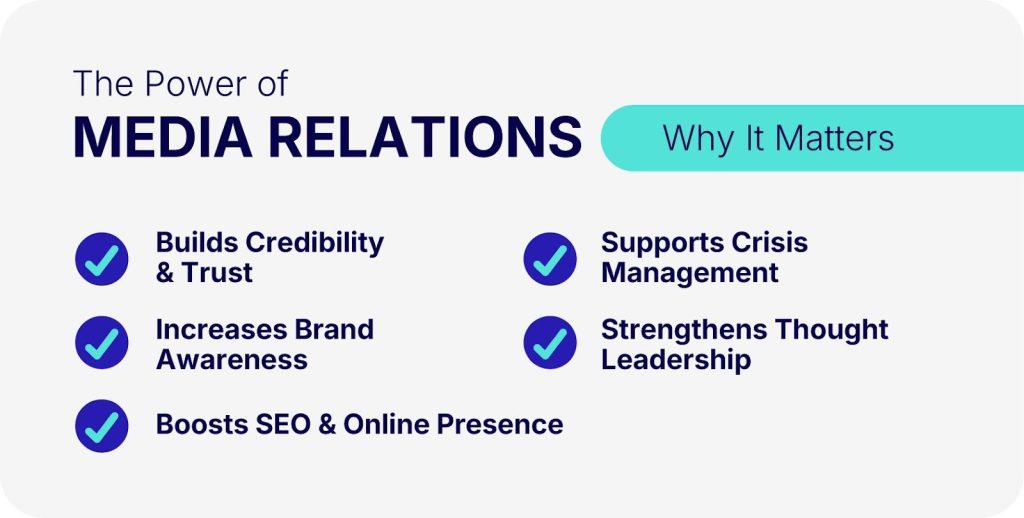
Earned media carries more weight because it comes from trusted independent sources. When journalists feature your company or quote your thought leaders, it signals to audiences that you’re legit in a way paid advertising can’t.
- Media relations provides third-party validation that reinforces trust and positions your brand as a newsworthy authority.
Increases Brand Visibility and Awareness
Media coverage introduces your brand to new audiences who haven’t encountered your owned or paid channels. A single article, broadcast segment, or podcast appearance extends reach — especially when picked up or shared across multiple platforms.
- Consistent coverage strengthens brand recognition and awareness over time.
Supports Reputation and Crisis Management
Strong media relationships become especially valuable during crises. When issues arise, organizations with established media credibility are better positioned to:
- Share Accurate Information
- Provide Context
- Manage Narratives
Proactive media PR reduces misinformation and protects reputation when it matters most.
Need to send a crisis press release? Learn how here: Crisis Press Release Guide: Start PR Crisis Management [9 Examples + Tips]
Strengthens Thought Leadership
Media relations helps organizations and executives contribute expert insights, commentary, and perspectives to industry conversations. By being quoted as a knowledgeable source, brands:
- Elevate Their Authority
- Influence Discussions
- Stand Out as Leaders
For more on leveraging brand thought leadership, read our guide: Leveraging Brand Thought Leadership: The Ultimate Strategy Guide [+ Examples and 2024 Trends]
Enhances SEO and Digital Presence
Beyond visibility, earned media delivers lasting digital value. Coverage from reputable outlets extends the impact of media relations efforts well beyond the initial story by:
- Generating High-quality Backlinks
- Improving Search Visibility
- Supporting Long-term SEO Performance
Learn more about how PR and SEO work together here: PR SEO: Synergy for Success [Tips, Tactics, and Best Practices]
When Media PR Matters Most
While media relations adds value year-round, certain key moments make it particularly crucial.
- Product launches and company announcements benefit from media coverage that builds awareness and credibility from day one.
- Rebrands, mergers, acquisitions and leadership changes depend on media PR to clearly explain the “why” behind change and start shaping public perception early.
- During Crises or high-risk situations media PR is critical to delivering accurate, timely communication that helps control narratives and reduce misinformation.
- Industry trends and expert commentary opportunities use media PR to position leaders as trusted sources in ongoing conversations.
- Community involvement and CSR initiatives rely on media PR to share purpose-driven stories that resonate with media and the public.
Pro Tip: Having media-ready messaging and trained spokespeople in place before major announcements or high-risk situations is the difference between clear coverage and missed opportunities.
Need to build a comprehensive thought leadership strategy? We’ve got you covered: Thought Leadership Strategy: 14 Steps to Balancing Authority and Authenticity (+ Examples)
How Media PR Works + Examples
Media PR is most effective when it’s both strategic and hands-on. While it sometimes sounds simple — send a pitch, get coverage — the real work happens long before a story gets picked up.
Truly successful media PR is built on:
- Preparation
- Relevance
- Relationships
Research and Media Targeting
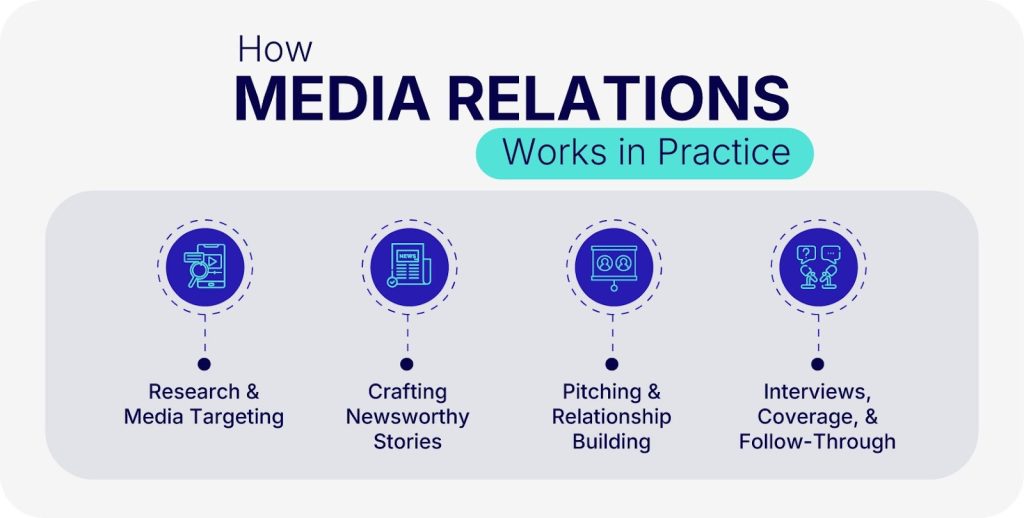
The research process starts with identifying the right media outlets and relevant journalists. This means finding publications that align with your industry, audience, and goals.
Make an effort to really learn about individual reporters you want to contact:
- Understand their beat.
- Read their recent articles.
- Familiarize yourself with their preferred angles.
Example: If you’re a B2B software company launching a new cybersecurity feature, target tech and business publications, along with reporters who regularly cover data privacy and enterprise security — not general lifestyle outlets.
Crafting Newsworthy Stories
After picking the best journalists for your news, the focus shifts to developing an interesting angle. Journalists look for stories that are timely, relevant, and valuable to their audience — not promotional copy.
This includes:
- Original data
- Industry Insights
- Trend Commentary
- Unique Takes on Current Events
Example: Instead of pitching “CyberBudz launches a new app,” a more effective angle might be “New data shows small businesses are underestimating cybersecurity risks — and how one company is filling the gap.”
Pitching and Relationship Building
An effective PR pitch is concise and tailored. It should clearly explain why the story matters and why it’s relevant to that specific outlet. Over time, consistent and thoughtful outreach builds trust and meaningful media relationships.
Example: When your company leaders regularly provide expert commentary, especially when it doesn’t directly promote the brand, they’re seen as valuable voices for reporters who cover that topic.
Interviews, Coverage, and Follow-Through
After making solid media connections, media PR continues through interview preparation, spokesperson coordination, and follow-up.
This includes:
- Briefing Executives
- Providing Background Materials
- Responding Quickly to Additional Questions
Example: After an executive interview runs, share that coverage across owned channels, monitor sentiment, and use insights to inform future media outreach.
Pro Tip: In practice, media PR is an ongoing cycle — not a one-time effort. And it should always deliver value to both the media and your brand.
Pitching in a disaster area? Here’s what to avoid: 5 PR Mistakes to Avoid When Pitching in Disaster Areas
How Media PR Fits Into a Strong PR Strategy
Media relations is a powerful PR tool, but it’s most effective when it’s part of a broader, integrated strategy. Rather than operating in a silo, media PR should reinforce and strengthen other PR efforts to keep messaging consistent across all channels.
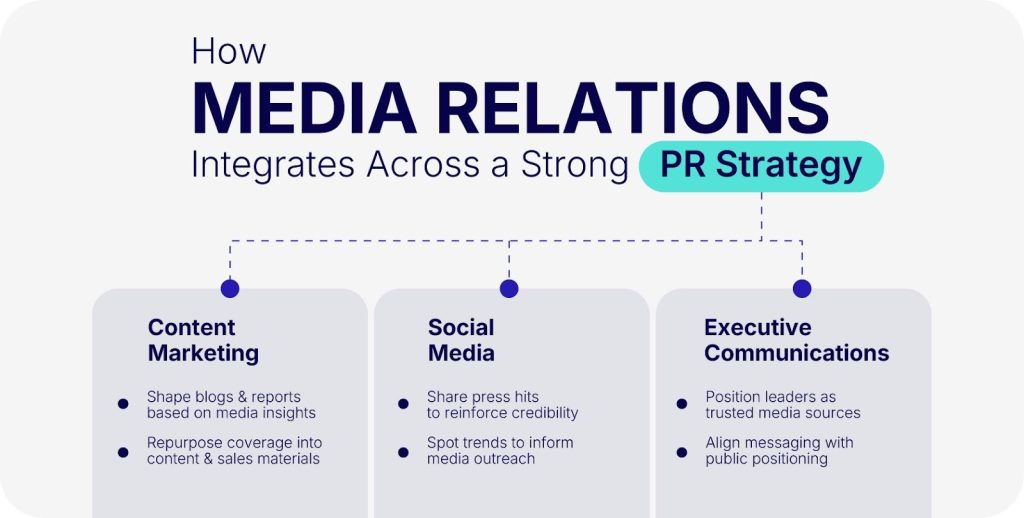
Within a solid PR strategy, media relations supports brand positioning by translating key messages into trustworthy third-party coverage. Insights gained from media outreach, such as which messages resonate most or which topics gain traction, inform:
- Content Marketing
- Executive Communications
- Social Media
In this way, earned media doesn’t just boost visibility — it strengthens the overall communication ecosystem.
Content Marketing
Media PR and content marketing feed off of each other.
- Media PR identifies timely topics, trending angles, and journalist pain points used to shape blog posts, reports, and whitepapers.
- Long-form content — data studies, thought leadership articles, case studies — gives PR teams stronger, more credible stories to pitch.
Extend reach by repurposing coverage into blog content, landing pages, sales enablement materials, email campaigns, etc.
Social Media
Social media also extends the reach and lifespan of earned media.
- When press coverage is shared across social channels, it reinforces trust and third-party validation.
- Media mentions provide credible content for continued storytelling without sounding promotional.
- Social listening helps PR teams spot trends and breaking news for perfectly timed outreach.
Executive Communications
Media PR elevates leaders into accessible expert voices.
- Executives are positioned as leading sources for interviews, bylines, and industry commentary.
- Media PR keeps leadership messaging consistent with company values, strategy, and public positioning.
- Coverage featuring execs supports internal communications, investor relations, recruiting, and speaking opportunities.
Pro Tip: Media relations doesn’t compete with these efforts. When integrated properly, it strengthens them, amplifying every message within the larger PR plan.
For more on social media PR, read our guide: Social Media PR – 6 Easy Ways to Connect with Your Target Audience
6-Step Modern Media Relations Workflow
A compelling story equals high-quality coverage. That high-quality coverage equals authority. And your new authority leads to more coverage. Repeat!
Forget one-off pitches — successful media PR teams follow a structured, repeatable workflow that turns ideas into consistent, high-quality coverage. When done right, this process ensures every story is relevant, targeted, and aligned with broader PR and business goals.
Step 1: Identify Newsworthy Angles
Start by identifying stories journalists actually want to cover. This means focusing on relevance, timeliness, and audience value — not internal priorities.
Common angles include:
- Industry trends
- New research or proprietary data
- Executive insights and commentary
- Product innovations with a clear market impact
Example: Instead of pitching “We launched a new feature,” a stronger angle would be “New data shows 60% of SMBs are unprepared for cyber threats — here’s how companies are responding.”
Step 2: Build Targeted Media Lists
Once the story is defined, identify the right journalists and outlets to target. In this step, precision matters more than volume.
This involves researching:
- Recent Articles: What are they covering right now?
- Editorial Focus: Do they write news, analysis, or opinion?
- Audience Relevance: Does their readership match your target audience?
Example: If you’re a fintech company, prioritize reporters covering digital payments and financial regulation rather than general business writers.
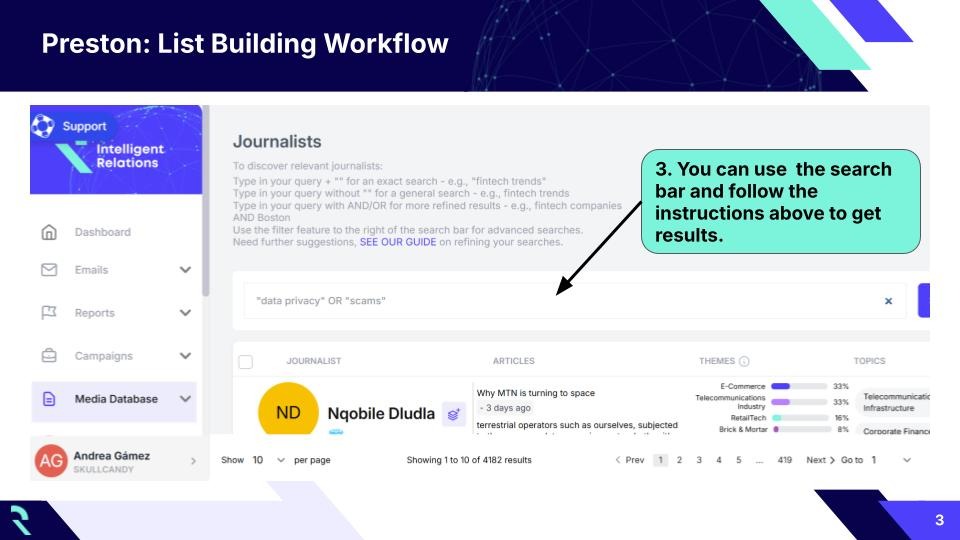
Use our tool to find the most relevant journalists and add them to a curated media contact list for streamlined outreach
- Go to Search Journalists under Media Database on your dashboard.
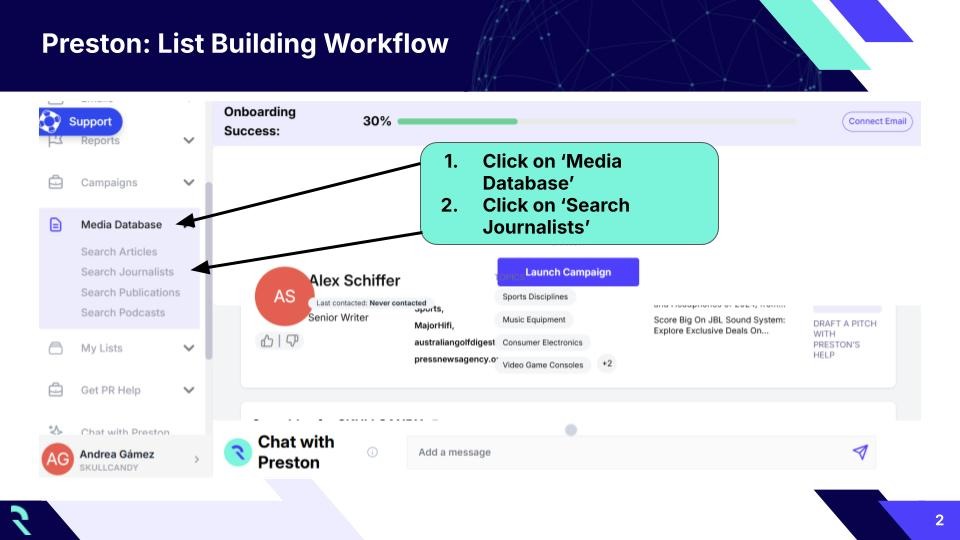
- Search keywords in your industry to find the most relevant journalists for your news.
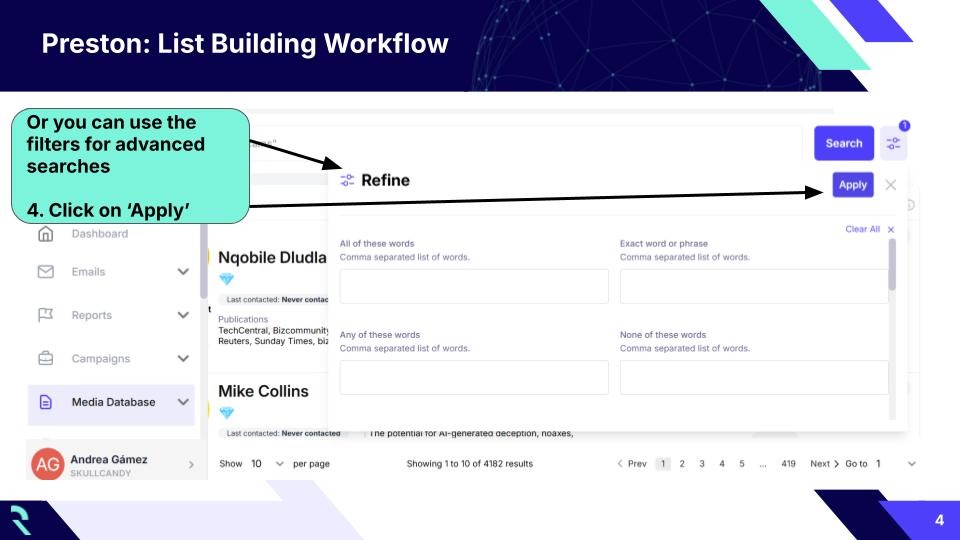
- Refine your search for more targeted results.
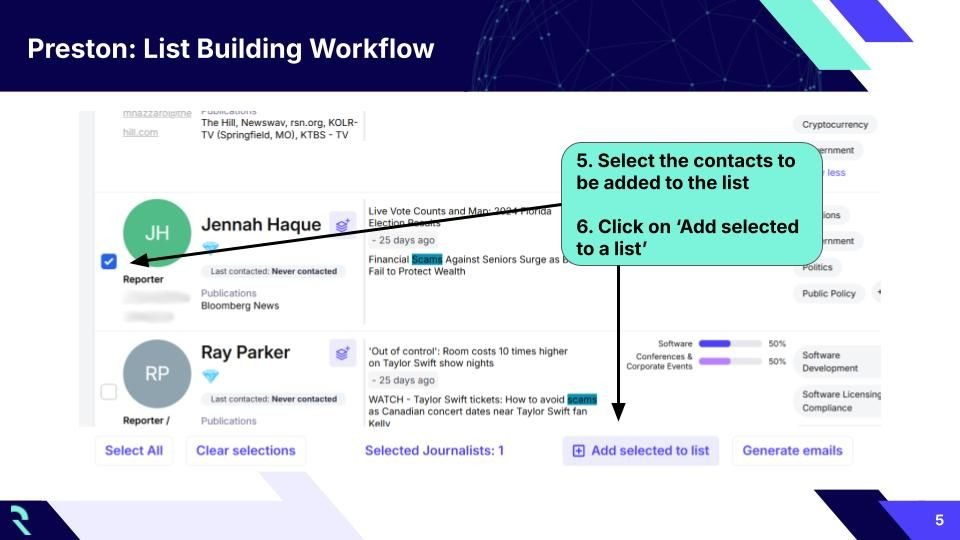
- Select journalists whose coverage themes and attributes match your news, and add them to a curated media list for future outreach.
Learn more about building a targeted media contact list here: How to Build a Media List for Successful Outreach and Impact 2025 [Examples + Tips]
Step 3: Craft targeted Pitches
Effective pitches are clear, concise, and focused on why your news matters now. You want journalists to immediately understand your story’s value.
Strong pitches include:
- Clear and Compelling Angles
- Supporting Data or Unique Insights
- Available Spokespeople for Commentary
Example: “Hi [Name], I saw your recent piece on rising SaaS costs — our new dataset shows 40% of companies are consolidating tools in response. Our CTO is available to share what’s driving this shift.”
This pitch works because it’s personalized, to the point, and offers data-backed value with expert insights.
Step 4: Reach Out
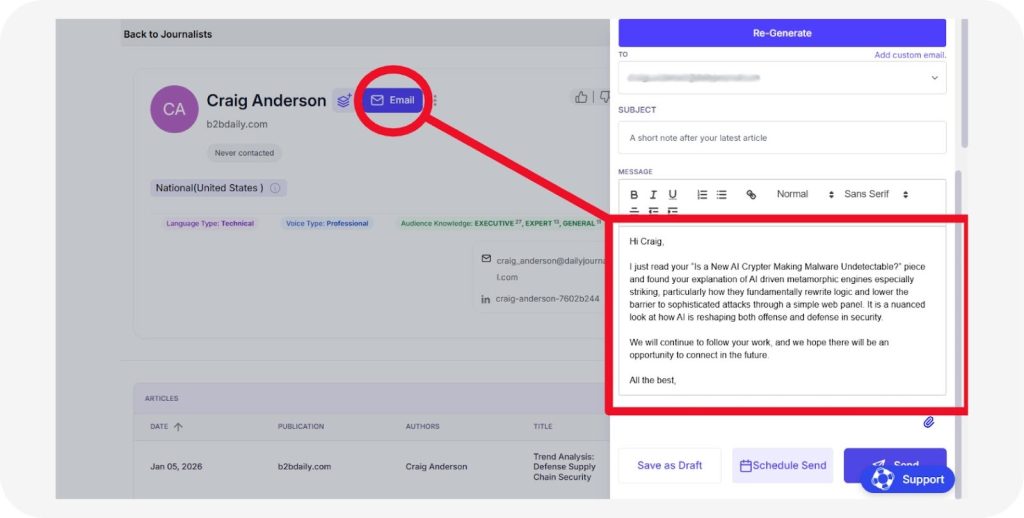
Reaching out to journalists is where strategy finally meets execution. You need to send pitches that are not only personalized but timely and tailored to each individual journalist beats and preferences.
Mass emails rarely work — customization is key:
- Reference their recent work.
- Tie your story to their coverage.
- Remember to keep it short and relevant.
Example: Mentioning a journalist’s recent article and offering a follow-up angle increases the likelihood of engagement.
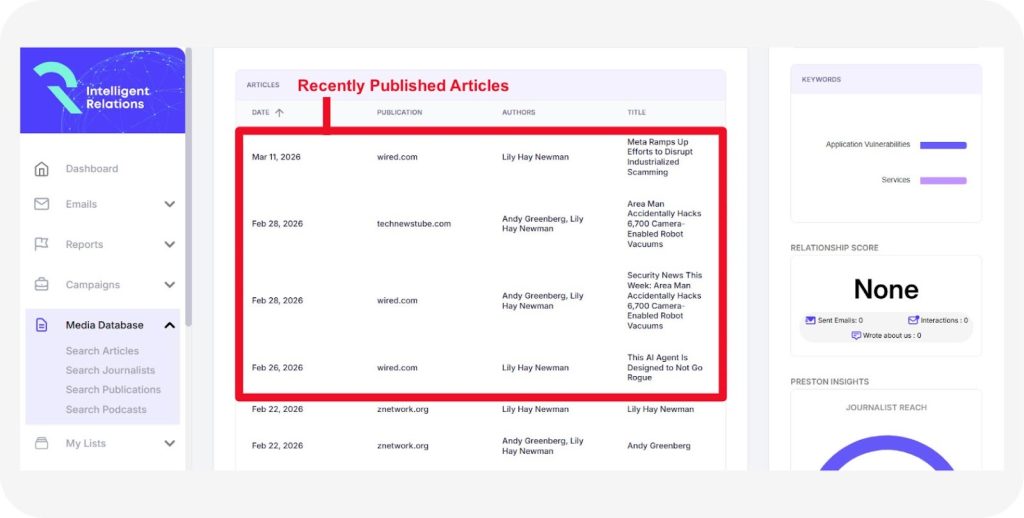
Visit the profile of journalists you’ve added to your curated media list. From there, craft a perfect pitch email and view their recently published work.
Step 5: Manage Interviews and Follow-ups
When a journalist is interested in your pitch, speed and preparation are critical. Coordinate interviews, brief spokespeople, and provide supporting materials.
This includes:
- Media Training and Talking Points
- Background Information and Data
- Timely Follow-up Responses
Example: After an interview request, provide a one-page briefing doc with key messages, stats, and potential questions to ensure consistency.
This saves journalists time and adds value to their story — and they will love you for it!
Not sure what to do when a media interview goes wrong? We’ve got you covered: What to Do (and Not to Do) When a Media Interview Bombs [+3 Tips]
Step 6: Amplify Coverage
Getting a story published isn’t the media relations finish line. You must amplify that coverage to extend its value across other channels.
You need to:
- Share coverage across social media with tailored captions for each platform.
- Feature the article in email newsletters to customers and prospects.
- Embed coverage on your website (homepage, press page, or landing pages).
- Equip sales teams with media mentions as credibility assets.
- Repurposing key quotes or insights into additional content (blogs, graphics, videos).
Example: Turn a single feature article into a LinkedIn post, an email campaign, and a credibility asset for the sales team.
From One Article to a Multi-Channel Asset
Let’s say you’re a B2B SaaS company, and you’ve just been featured in a major industry publication for insights on AI adoption.
Here’s how that single piece of coverage gets amplified:
- Social Media (Day1-3): An executive shares the article with personal commentary to add perspective, and a short quote graphic is pulled from the article highlighting a key stat or insight.
- Website and Content (Week1): Add the article to your “In the News” or press section, and turn key takeaways into a blog post: “What Our Latest Media Feature Reveals About AI Adoption.”
- Email Marketing (Week 1-2): Feature the article in a customer newsletter: “In Case You Missed It: Our CEO in [Publication].” Also, include it in a nurture sequence for prospects to reinforce authority.
- Sales Enablement (Ongoing): Sales team uses the article in outreach: “We were recently featured in [Publication] discussing this exact challenge…” They even add it to pitch decks and one-pagers as third-party validation.
- Executive and Brand Positioning (Ongoing): Use the article to secure speaking opportunities (“As seen in…”), and reference it in future media pitches to build credibility with journalists.
If you do this effectively, you’ll turn a single media win into a perpetual media relations machine — one that supports marketing, sales, and executive visibility long after the story’s initial publication.
The Media Workflow at a Glance
| Step | Focus | Key Output |
| Identify Angles | Relevance and timing | Newsworthy story |
| Build Media Lists | Targeting and research | Qualified media list |
| Craft Pitches | Clarity and value | Personalized pitch |
| Outreach | Timing and relationships | Journalist engagement |
| Interviews | Preparation and speed | High-quality coverage |
| Amplify | Distribution and reuse | Extend reach and ROI |
Pro Tip: Treat media relations like a system, not a series of tasks — each step should build on the last to create momentum, consistency, and measurable impact over time.
How to Measure Media PR Success
Measuring the success of media PR efforts is more than just counting press mentions. While coverage volume is one indicator, meaningful measurement focuses on:
- Quality
- Relevance
- Impact
These media PR metrics show exactly how earned media supports broader PR and business goals.
Core Media PR Metrics
Traditional media PR metrics evaluate visibility and reach, including:
- The Number of Placements
- Publication Quality
- Audience Reach
- Share of Voice (SOV)
- Message Pull-through
- Sentiment Analysis
Digital and SEO Impact
Media PR contributes to digital performance now more than ever.
- Backlinks from trusted outlets strengthen domain authority and improve search rankings.
- Referral traffic shows how media coverage drives website engagement.
Relationship and Influence Indicators
Influence and access are also key measures of strong media relations. There’s no better evidence of growing credibility than:
- Repeat Coverage by Trusted Outlets
- Inbound Journalist Inquiries
- Being Quoted as an Expert
Over time, these metrics signal that your brand or spokesperson is becoming a legitimate industry thought leader respected within the media landscape.
Aligning Metrics With Business Goals
The most effective measurement connects media relations outcomes to organizational objectives.
For example, coverage tied to a product launch may be evaluated by:
- Awareness Lift
- Website Traffic
- Demo Requests
Thought leadership coverage may be measured by:
- Speaking Invitations
- Executive Visibility
When you align metrics with purpose, media PR becomes easier to optimize and scale.
Pro Tip: Set realistic expectations and timelines. Remember, the goal isn’t just more coverage — it’s better coverage that moves reputation, trust, and business results forward.
If an interview goes wrong, don’t panic. Here’s what you need to know: What to Do (and Not to Do) When a Media Interview Bombs [+3 Tips]
5 Common Media PR Mistakes to Avoid
Even the biggest brands will struggle with media relations if they approach it the wrong way. Avoiding common pitfalls is often the difference between being ignored by journalists and becoming a go-to source.
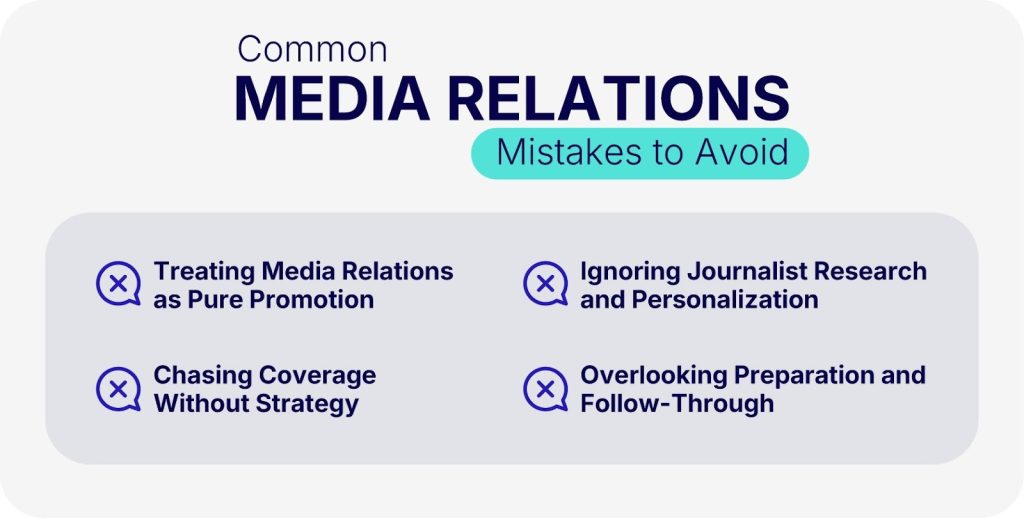
1. Don’t Treat Media PR as Pure Promotion
A major mistake brands often make is treating journalists like advertisers, reaching out with purely promotional pitches. Reporters want stories that inform, educate, or provide value to their audience — not ads.
- Media relations works best when brands focus on relevance and insight, not self-promotion.
2. Don’t Skimp on Research and Personalization
Mass pitches and generic press releases are easy to spot — and easier to delete. Learning a journalist’s work and audience before reaching out signals respect for their time and efforts.
- Failing to do basic research is a major media relationship red flag.
3. Don’t Chase Coverage Without a Set Plan
Aimlessly pitching every possible story often leads to scattered coverage and messaging that doesn’t support brand goals. It’s not a numbers game.
Media relations should align with:
- Timing
- Key Messages
- Broader PR Objectives
4. Don’t Wait Until the Last Minute
Reaching out only when a deadline is near or an announcement is imminent is limiting. Strong media isn’t reactive — it’s proactive
- Allow time to build interest, context, and long-term relationships.
5. Don’t Forget to Prep and Follow Through
Poor spokesperson preparation, jumbled messaging, or slow-to-no follow-up damage your credibility. Simply sending out a pitch isn’t a media PR finish line.
These post-pitch best practices are essential:
- Provide Additional Info
- Respond in a Timely Manner
- Follow-up Respectfully
Avoiding these mistakes helps you build stronger media relationships, earn higher-quality coverage, and maximize the long-term impact of your overall media PR efforts.
Pro Tip: Think like a journalist. Lead with relevance, timing, and audience value in every pitch. Preparation, personalization, and consistency will always outperform quick coverage wins.
Learn more about what not to do here: 4 Biggest PR Nightmares 2024: What Went Wrong and What You Can Learn
The Future of Media PR
In the age of digital dominance, media PR, and PR as a whole, must keep pace with an exponential media evolution.
- Newsrooms are shrinking and news cycles are getting faster.
- Digital-first and niche publications are more prominent than ever.
- Data analytics and AI integration are taking center stage.
Changing Newsrooms
Newsrooms are more streamlined and digitally focused than ever. Journalists are often expected to:
- Cover Multiple Beats
- Publish at a Rapid Pace
- Produce Content Across Platforms
This means media PR pros must be more precise and respectful of journalists’ time. Targeted pitches with interesting angles and well-prepared sources are a must.
Audience Fragmentation
Traditional media still matters, of course, but digital-first pubs, podcasts, and niche outlets have established spacious and permanent residencies. These platforms reach highly engaged, specialized audiences and are invaluable avenues for brands looking to connect with hyper-specific industries or communities.
Effective media PR now means understanding where audiences actually consume information and tailoring outreach accordingly.
The Role of Data and Tech
Data analytics and AI are playing a larger role in modern media PR strategies.
- PR analytics provide deeper insight into what messaging resonates and where opportunities exist to change course or make real-time adjustments.
- AI-powered tools help identify media trends, optimize targeting, and measure coverage impact more efficiently.
It’s important to remember that while AI is becoming more central to PR efforts, it’s most effective when it supports — not replaces — strategic thinking and human judgment.
Why Relationships and Storytelling Still Matter
Despite all the advances in tech, the foundation of media PR hasn’t changed. Journalists still value the things that best serve their audiences:
- Reliable Sources
- Authentic Expertise
- Compelling Stories
Strong media relationships and thoughtful storytelling are still king — because trust, once earned, can’t be automated.
Pro Tip: Use technology to work smarter, but remember to invest time in relationships and storytelling. Tools help open doors — trust and relevance keep them open.
Using AI in your PR efforts? Here’s what to avoid: 7 Top Pitfalls to Avoid When Using AI in PR
Wrapping Up
Media PR is not separate from PR — and it’s certainly not optional in any serious PR strategy. It’s often the driver that brings any well-rounded strategy to life.
While PR is the hive that houses the larger plan, defines the message, and aligns communication, it’s media relations that generates buzz and makes that sweet earned coverage honey. When paid content feels passé and nonstop ad noise is splitting your brain, it’s earned media that stands out as the trust-building champion of PR strategy.
And when integrated effectively with content marketing, social media, and executive communications, media PR’s impact extends far beyond a single headline.
At the end of the day, brands that succeed won’t be the ones seeking any and all coverage — it’ll be the ones out there building genuine relationships, telling meaningful stories, and communicating with intention. By treating media relations as a strategic PR pillar rather than a lone tactic, organizations create lasting influence, credibility, and trust.
Not sure where to start? Book a free consultation with us for expert insights to get your media PR plan up and running!