Event PR 2026: A How-To Guide + Examples and Tips
Throwing an event is a great way to take your brand from the shadows to the spotlight. But how do you drum up that coveted media coverage and generate a brand-bolstering buzz worthy of the time and effort events require? Effective event PR is h...
- Home
- Intelligent Insights Blog
- Event PR 2026: A How-To Guide + Examples and Tips

Throwing an event is a great way to take your brand from the shadows to the spotlight. But how do you drum up that coveted media coverage and generate a brand-bolstering buzz worthy of the time and effort events require?
Effective event PR is how.
It’s a tried-and-true tool for brands, businesses, and individuals looking to make a lasting impact. PR for events encompasses a range of strategies that stir excitement, increase visibility, and engage audiences before, during, and after an event.
Whether it’s a product launch, corporate conference, or charity fundraiser, a well-executed event PR plan is the difference between a forgettable gathering and an unforgettable experience. In this guide, we’ll walk you through everything you need to know about event PR, from crafting the perfect message to nailing your media outreach.
Here’s what’s covered:
- What is Event PR?
- The Importance of Event PR
- How to Do Event PR
- Types of PR Events
- PR Event Planning
What is Event PR?
Event PR refers to the strategic promotion and communication efforts designed to amplify an event’s visibility, attract media attention, and engage key stakeholders. The goal is to create positive awareness, drive attendance, and ensure the message of the event aligns with an organization’s broader brand objectives.
Event PR integrates various media channels, including:
- Traditional Press Coverage
- Social Media Outreach
- Influencer Collaborations
- Community Engagement
What are the Characteristics of Event PR?
Successful event PR campaigns share several key characteristics:
- Strategic Planning: Effective PR begins with a well-defined strategy that aligns with the event’s objectives and target audience.
- Compelling Storytelling: Creating a strong narrative around the event generates interest and media coverage.
- Multichannel Promotion: A mix of digital, print, and social media ensures a wider reach.
- Audience Engagement: Encouraging participation through contests, teasers, and interactive content boosts interest.
- Media Relations: Building relationships with journalists and influencers enhances credibility and coverage.
- Measurement & Adaptability: Analyzing PR performance and adjusting tactics as needed leads to future success.
Pro Tip: Measuring key PR metrics — media impressions, social media engagement, and attendee feedback — provides valuable insights into an event’s success. Tracking these helps refine future strategies, ensuring each event is more impactful than the last.
For more information on key PR metrics to measure, read our article: 10 Key PR Metrics You Must Measure to Gauge Success
Why is Event PR Important?
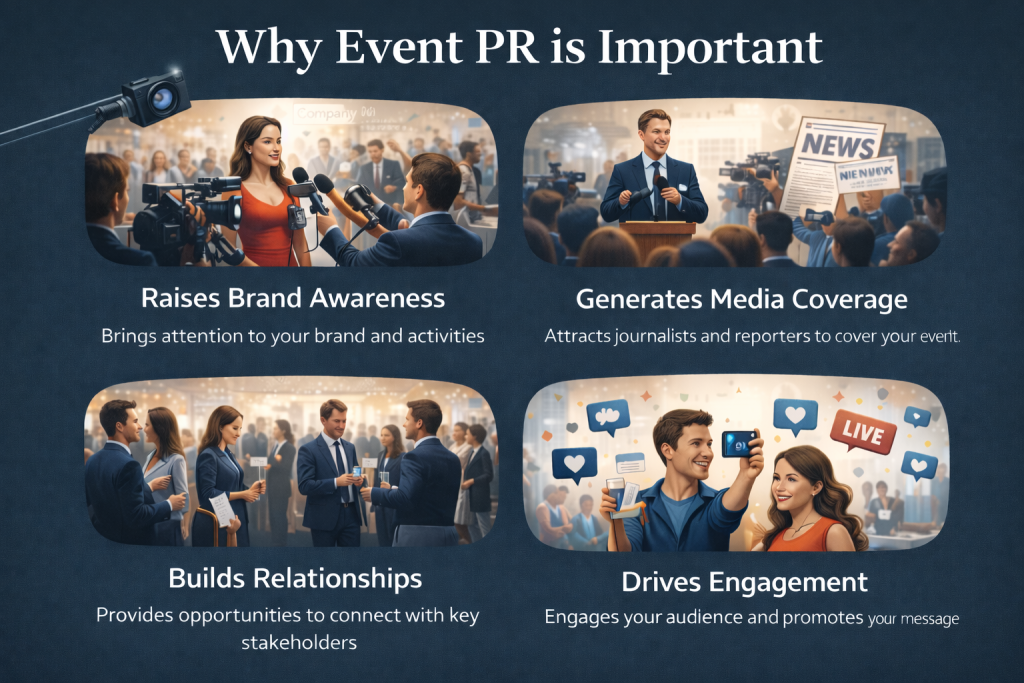
Event PR plays a crucial role in ensuring an event achieves its desired impact.
Here’s why it’s essential:
- Builds Brand Awareness: A well-promoted event introduces a brand to a broader audience and strengthens its reputation.
- Increases Attendance: Effective PR generates excitement, leading to higher participation and engagement.
- Attracts Media Attention: Strong media relations results in valuable press coverage, further amplifying the event’s reach.
- Enhances Credibility: Positive PR enhances an organization’s credibility and fosters trust among stakeholders.
- Drives Business Growth: Well-executed events often lead to new business opportunities, partnerships, and customer loyalty.
Types of PR Events + Examples
PR events are categorized into several types, depending on the goal, audience, and message a company or organization wants to communicate.
Here are the main types along with examples:
1. Press Conferences
A press conference is a formal media event where an organization makes an announcement and answers questions from journalists.
They’re best used for things like:
- Major Company Announcements (new CEO, mergers, rebranding)
- Product Launches
- Crisis Communication
Some examples include:
- Apple Keynote Events: Apple holds press conferences to unveil new iPhones, iPads, and software updates.
- White House Press Briefings: Government officials hold daily briefings to address national issues and field questions from reporters.
Pro Tip: Invite key journalists and provide a press kit (fact sheets, quotes, visuals). Also, prepare a Q&A session to address media inquiries.
2. Product Launch Events
A product launch event showcases a new product or service to the media, influencers, and potential customers.
They’re best used for things like:
- Tech Gadgets
- Fashion Collections
- Car Unveilings
Some examples include:
- Tesla’s Cybertruck Launch: Elon Musk attempted to demonstrate the vehicle’s durability. The window famously cracked, but this blunder probably generated more buzz than if it didn’t.
- Nike’s Sneaker Releases: Nike hosts regular launch parties with celebrity endorsements.
Pro Tip: Include live demos and hands-on experiences. Use social media teasers and live streams to maximize reach.
3. Media Previews and Inclusive Events
These PR events are typically invite-only. They give journalists and influencers an exclusive first look at a product, service, or experience.
They’re best used for things like:
- Fashion Shows
- Movie Previews
- Product Sneak-peeks
Some examples include:
- New York Fashion Week (Media-Only Shows): Designers invite top fashion editors for first access.
- Disney’s Movie Press Screenings: Disney screens films for critics before public release.
Pro Tip: Create a VIP experience complete with swag bags and meet-and-greets). Also, consider offering embargoed content to control the news cycle.
4. Trade Shows and Industry Expos
Expos and trade shows are large-scale, multi-day events that bring businesses, media, and professionals in a specific industry together.
They’re best used for things like:
- B2B Marketing
- Networking
- Industry Announcements
Some examples include:
- CES (Consumer Electronics Show): Tech companies showcase their latest innovations.
- E3 (Electronic Entertainment Expo): Gaming companies reveal new consoles and games.
Pro Tip: Have a booth with interactive elements like VR demos and giveaways, then host side events like panel discussions and networking dinners.
5. Charity and Fundraising Events
These PR events support a cause while generating positive PR for the host organization.
They’re best used for things like:
- Nonprofit Awareness Campaigns
- Corporate Social Responsibility (CSR) Initiatives
Some examples include:
- Red Cross Benefit Galas: These events raise funds for disaster relief.
- Amazon Smile Donations Program: These events encourage shoppers to contribute to charities.
Pro Tip: Partner with celebrities or influencers for higher visibility, and use live auctions or donation matching activities to increase engagement.
6. Award Ceremonies
Award events celebrate industry achievements and create media buzz.
They’re best used for things like:
- Recognizing Valued Employees
- Celebrating Partnerships
- Highlighting Industry Leaders
Some examples include:
- The Oscars: The Academy recognizes top films and creates global PR.
- Forbes 30 Under 30 Gala: This PR event showcases young innovators, entrepreneurs, artists, etc.
Pro Tip: Offer winners interview opportunities with journalists, and create behind-the-scenes content for social media.
7. Influencer and Brand Collaboration Events
These PR events invite influencers to exclusive events for product promotion.
They’re best used for things like:
- Consumer Product Marketing (fashion, beauty, tech, food).
Some examples include:
- Sephora Beauty Insider Events: VIP members get early access to new products.
- Adidas x Kanye West (Yeezy Launch Parties): Exclusive sneaker drops attract influencers.
Pro Tip: Provide Instagrammable moments with aesthetic backdrops and lighting setups, and offer exclusive perks (free products) for influencers.
8. Community Engagement Events
These events build local brand awareness and strengthen relationships with the community.
They’re best used for things like:
- Local Store Openings
- Environmental Initiatives
- Public Outreach
Some examples include:
- Starbucks’ Community Cleanup Days: Employees and customers clean up neighborhoods.
- IKEA’s Home Design Workshops: These PR events engage customers in interior design trends.
Pro Tip: Partner with local organizations for credibility, and use geo-targeted social media ads to attract nearby attendees.
9. Stunts and Guerilla PR Events
Though unconventional, these events are attention-grabbing and designed to go viral.
They’re best used for things like:
- Brand Awareness
- Viral Marketing
Some examples include:
- Red Bull Stratos Jump: Felix Baumgartner’s space dive broke records and garnered a ton of media attention.
- Coca-Cola’s ‘Happiness Machine’: Vending machines dispensed free Coke and surprises to unsuspecting consumers, generating buzz and excitement.
Pro Tip: Make it shareable on social media, and capture high-quality video content for post-event PR.
10. Grand Opening and Ribbon-Cutting Ceremonies
These are launch events for businesses, offices, or venues.
They’re best used for things like:
- Amusement Parks
- Retail Stores
- Corporate HQs
- Hotels
Some examples include:
- Disneyland’s New Park Openings: These PR events feature celebrity guests and performances.
- Google’s Office Openings: These events are used to showcase workplace innovations.
Pro Tip: For credibility, invite local media and government officials. Provide exclusive discounts or giveaways to attract attendees.
How to Choose the Right PR Event
The right type of PR event depends on your goals, target audience, and industry. Combining traditional PR (media outreach) with digital strategies (social media, influencer marketing) ensures maximum impact.
Want to learn more about successful PR campaigns? Read our article: 4 Successful PR Campaign Examples 2023 and Why They Worked + Tactics
How to Do Event PR
Event PR is all about creating buzz, managing communications, and making sure your event gets maximum visibility among your target audience.
Here’s a detailed breakdown of the eight steps involved, along with examples and expert tips:
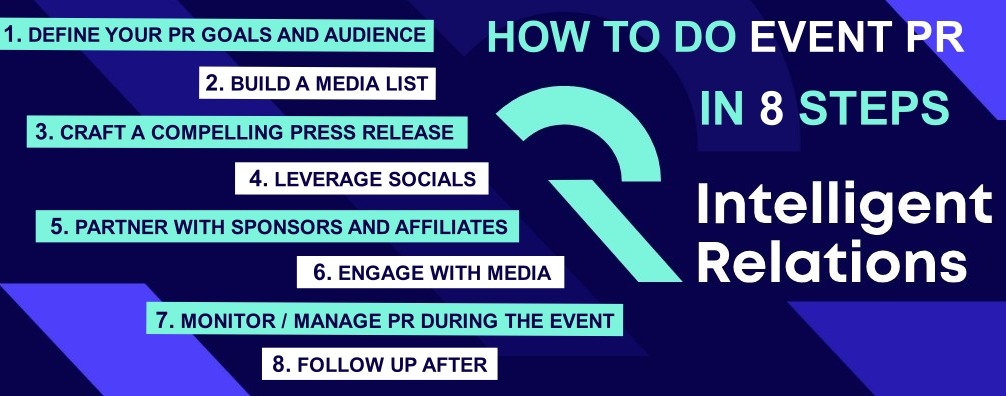
Step 1: Define Your PR Goals and Audience
Before you start promoting your event, clarify what you want to achieve and who your target audience is.
To determine your PR activities going forward, answer these key questions:
- What is the main objective of the event? (Brand awareness, lead generation, product launch, etc.)
- Who is your target audience? (Tech professionals, journalists, customers, industry influencers, etc.)
- What message do you want to convey?
For example, if you’re organizing a tech conference, your goal might be to attract developers and media coverage. If it’s a charity gala, you might aim for donor engagement and press exposure.
Pro Tip: Create an event messaging document with key talking points, event highlights, and branding elements. This ensures consistency in communication.
Step 2: Build a Media List
Your media list should include journalists, bloggers, influencers, and publications that cover your industry.
How to Build a Media List
- Research Relevant Outlets: Look at past coverage of similar events.
- Find the Right Contacts: Use tools like Muck Rack, Cision, or HARO to find journalist emails.
- Segment the List: Separate media into categories (mainstream, industry-specific, bloggers, influencers).
For example, For a startup event, you might reach out to:
- TechCrunch (Tech media)
- Wired (Industry thought leaders)
- Local Business Journals (Regional coverage)
- YouTubers/Podcasters (Who cover startup culture)
Pro Tip: Personalize your media outreach — don’t send a generic email. Mention previous articles they wrote to show you’ve done your research.
For more resources on how to build a media list and pitch journalists, read our articles:
Step 3: Craft a Compelling Event Press Release
A strong event press release should grab attention and provide essential event details.
Event Press Release Structure
- Headline: Your headline should be concise, engaging, and informative.
- Lead Paragraph: This covers The 5Ws (who, what, when, where, why, and how). Keep it between 2-3 sentences.
- Event Details: The body of the press release will include important details like the speaker lineup, special highlights, and other unique event aspects.
- Quotes: Use quotes from organizers, speakers, or sponsors to add credibility to your event.
- Call to Action: For an event, the CTA will include things like a ticket sales link, RSVP details, or media contact info.
- Boilerplate: Your press release boilerplate should be under 100 words and cover key information about your company, including its history and mission.
- Contact Info: Provide names and email addresses of the individuals handling press queries leading up to the event.
For example, a short and sweet headline might look like this: Tech Disrupt 2026 Brings Silicon Valley’s Top Innovators to NYC on August 15
Pro Tip: After crafting the perfect event press release, you need to submit it. Use a press release distribution service for a wide reach, or contact journalists directly for a more personalized touch.
Learn more about press release submission, distribution, and how to craft an impactful event press release from our articles:
- The Ultimate Press Release Submission Guide How to Send a Press Release 2025: The Ultimate Guide (+ Examples)
Step 4: Leverage Social Media and Influencers
Leveraging social media is a crucial PR activity for building anticipation and engagement.
Employ these social media event PR strategies:
- Create an Event Hashtag (e.g., #TechDisrupt2026).
- Share Behind-the-scenes Content (speaker interviews, venue sneak peeks).
- Engage with Industry Influencers (offer them free passes in exchange for promotion).
- Host Countdowns & Contests (e.g., “Win a free VIP pass by retweeting!”).
For example, CES uses social media to:
- Showcase Product Demos
- Host Live Q&A Sessions
- Run Twitter Polls to Drive Engagement
Pro Tip: Choose social platforms strategically — LinkedIn for professional events, TikTok for younger audiences, and Instagram Stories for interactive Q&A sessions.
Step 5: Partner with Sponsors and Affiliates
Sponsors and partners amplify your reach by promoting the event to their audience.
How to Involve Them
- Co-branded Content: Implement things like webinars, blog posts, and giveaways into your event PR activities.
- Sponsor Shoutouts: Reference and tag sponsors on event materials and social media posts.
- Affiliate Programs: Work out a deal where partners earn a commission for ticket sales.
For example, a fintech conference could collaborate with Stripe or PayPal to get financial industry exposure.
Pro Tip: Provide partners with marketing toolkits (pre-written social media posts, email templates) to make sharing easy.
Step 6: Engage with Traditional and Digital Media
Beyond press releases, consider other media engagement tactics.
Effective Media Strategies
- Invite journalists & bloggers to attend — offer exclusive interviews.
- Pitch guest articles to industry publications — something like 5 Trends to Watch at Your Event.
- Secure TV & radio spots on local news if relevant.
For example, SXSW hosts media-only preview nights where members of the press get first dibs on event experiences.
Pro Tip: Offer media passes or “VIP access” to journalists for exclusive behind-the-scenes coverage.
Step 7: Monitor and Manage PR During the Event
On the day of the event, your PR efforts should be in full swing.
Follow these live event PR activities:
- Live-tweet key moments and post real-time updates.
- Monitor media coverage (Google Alerts, Mention, or Brand24).
- Encourage attendees to share their experience with the event hashtag.
- Have a media liaison on-site to assist journalists.
For example, Apple’s product launches have designated PR reps who provide press kits and answer journalist questions.
Pro Tip: Use a social media command center to track engagement and respond quickly.
Learn more about social media PR here: Social Media PR – 6 Easy Ways to Connect with Your Target Audience
Step 8: Post-Event PR and Follow-Up
Events end. PR efforts DO NOT.
After the event, keep the momentum going with these post-event strategies:
- Send a follow-up press release with event highlights.
- Publish recap content (blog posts, videos, attendee testimonials).
- Thank media partners and influencers for coverage.
- Survey attendees for feedback.
For example, TEDx events release post-event talks on YouTube, extending their reach beyond the event day.
Pro Tip: Repurpose event footage into snackable content (reels, YouTube Shorts, Twitter clips) to keep engagement high.
Bonus Tips for a Winning Event PR Strategy
Measuring key PR metrics — such as media impressions, social media engagement, and attendee feedback — provides valuable insights into an event’s success.
Tracking these metrics before, during, and after an event helps refine future strategies, ensuring each event is more impactful than the last.
Takeaways
- Start Early: Begin PR efforts months in advance to build momentum.
- Leverage Influencers: Partner with industry influencers to amplify reach.
- Create Shareable Content: Encourage attendees to post about the event using branded hashtags.
- Engage with Attendees: Use live interactions, Q&A sessions, and follow-up communications to maintain engagement.
- Be Ready for Crisis Management: Have a plan to address any potential PR crises swiftly and effectively.
Wrapping Up
Ready to build buzz, attract media attention, and guarantee event success?
Just remember these event PR cornerstones:
- Define Clear PR Goals
- Craft a Compelling Message
- Leverage Media Relationships
- Use Digital Platforms Strategically
If you stick to this, you won’t miss!
Whether it’s a product launch, press conference, or influencer event, the right event PR strategy enhances credibility and audience reach. Remember to personalize media outreach, create shareable content, and maintain post-event momentum with follow-ups and recaps.
A well-executed PR campaign doesn’t just promote an event — it strengthens brand reputation and fosters long-term relationships with the audience. With careful planning and execution, your event will leave a lasting impact and generate valuable media coverage.
Ready to amplify your next event? Book a demo with us for AI-assisted outreach, expert PR guidance, and access to our extensive media database!