Beyond Media Coverage: The Real Value of PR for PE-Backed Companies
When private equity enters the game, the rules change. PR transforms from a brand function to a performance function. What was once measured by media placements and SOV is now evaluated through lenses of: PR in a PE-backed company is like...
- Home
- Intelligent Insights Blog
- Beyond Media Coverage: The Real Value of PR for PE-Backed Companies

When private equity enters the game, the rules change.
PR transforms from a brand function to a performance function. What was once measured by media placements and SOV is now evaluated through lenses of:
- Growth Efficiency
- Operational Discipline
- Measurable Business Impact
PR in a PE-backed company is like moving from a pickup game to the NBA finals.
Every investment dollar spent is under a microscope. Every initiative is expected to contribute to broader objectives. Every quarter brings new questions from performance-focused leadership.
With investor capital at work and clearly defined growth targets to achieve, every budget line is expected to support value creation, whether through:
- Revenue Acceleration
- Market Positioning
- Exit Readiness
Now, that doesn’t mean earned media loses value. It actually becomes more accountable — the expectations simply change.
In this article, we’ll dive into the demands PR for PE-backed companies must meet, including how to effectively evaluate performance and the frameworks needed to earn PR a permanent seat at the executive table.
- How PR Changes After Private Equity Investment
- What PE Operators Expect From Marketing & PR
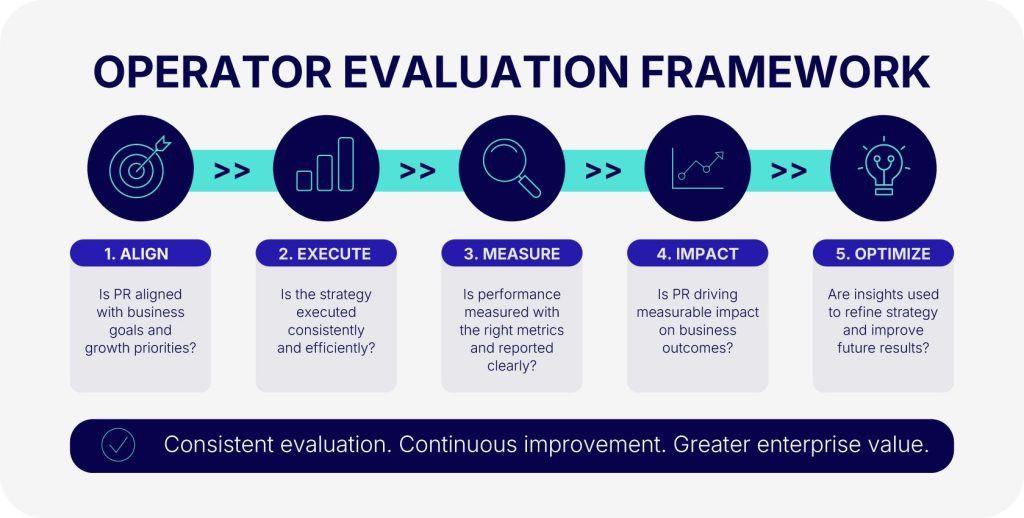
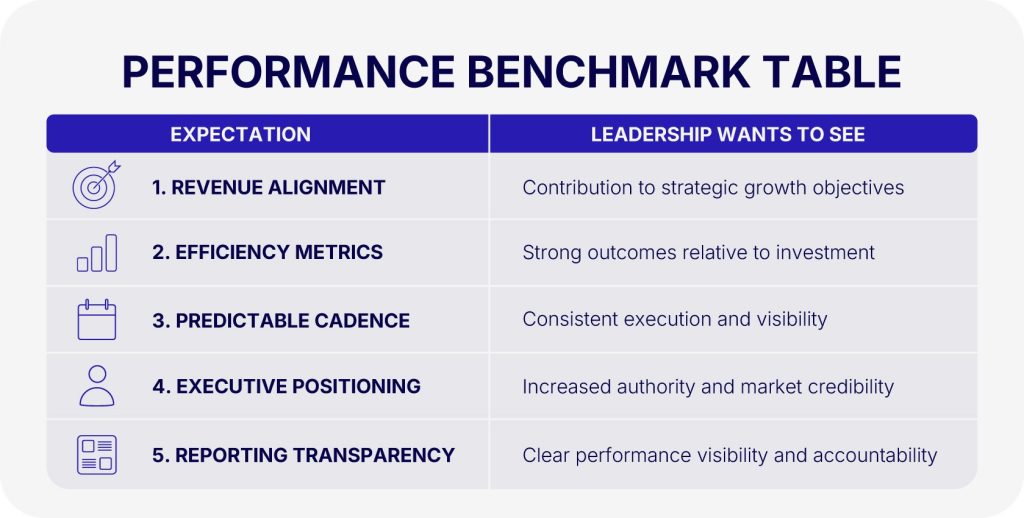
- The 5 Performance Expectations for PE-Backed PR Programs
- Earned Media in a PE Environment
- Board-Level Reporting Requirements
- Common PR Mistakes in Portfolio Companies
- How to Build an Operator-Ready PR Program
- Preparing PR for Exit (M&A or IPO)
How PR Changes After Private Equity Investment
PE investment doesn’t eliminate the need for PR — but it does change how success is measured. The introduction of investor capital comes with high-performance forecasts.
With revenue growth, EBITDA performance, and enterprise value under constant evaluation, communications programs are expected to:
- Support Growth Objectives
- Withstand Executive Scrutiny
- Demonstrate Clear Business Value
The Shift From Marketing Activity to Business Outcomes
PR for PE-backed companies is evaluated on contribution to company performance more than activity.
Key changes include:
- Greater Emphasis on Revenue Alignment
- Increased Focus on Market Positioning Against Competitors
- Stronger Connections Between PR, Sales, and Marketing
- More Scrutiny Around Budget Allocation and Results
- Higher Expectations for Measurement and Accountability
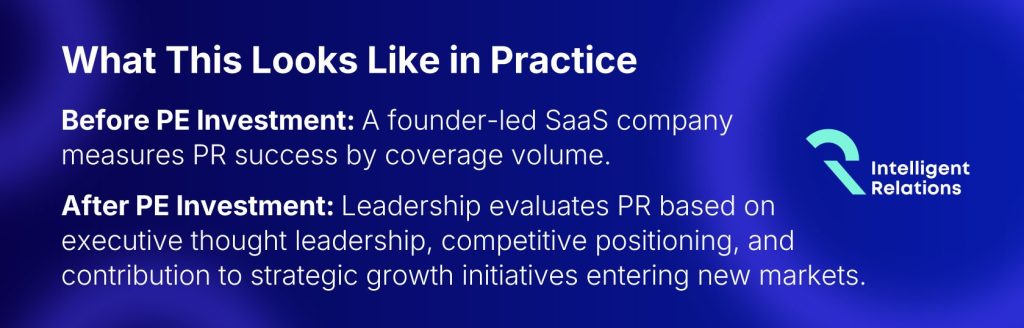
Coverage quantity isn’t the priority — it’s how that coverage helps advance the business.
Example: A feature in a major industry publication has PR value, but company leaders want answers (in the form of actionable data) to questions like:
- Did it support a product launch?
- Did it strengthen a sales narrative?
- Did it improve executive visibility?
- Did it help the company gain credibility in a target market?
Why Portfolio Companies Face Different PR Pressures
Timelines are tighter and growth expectations are more pressing for PE-backed companies. Communications teams must support:
- Quarterly Growth Targets
- Market Expansion Initiatives
- Executive Visibility Goals
- Competitive Differentiation
- Long-term Value Creation and Exit Readiness
At the same time, leadership has to regularly relay progress to boards, investors, and operating partners. This puts greater demand on performance metrics linked to outcomes.
The Rise of Operator-Led Marketing Discipline
Operating partners help portfolio companies streamline execution and supercharge growth. They do this by evaluating specific campaigns the same way they evaluate other business functions — through performance, efficiency, and accountability.
As a result, PR programs are increasingly expected to have:
- Clearly Defined Objectives
- Consistent Reporting Frameworks
- Measurable KPIs
- Predictable Execution Processes
- Direct Alignment with Company Priorities
Pro Tip: The strongest earned media programs start with business objectives — not media targets. When PR is aligned with revenue goals, market expansion plans, and executive positioning priorities, measurement becomes significantly more meaningful.
Link to: The Modern Earned Media Strategy Guide for Enterprise B2B Tech Brands [Examples + Tips]
What PE Operators Expect From Marketing & PR
PE operators aren’t the PR police. They just evaluate PR and marketing the same way they evaluate other growth functions. While specific metrics may differ from sales or finance, the expectation is the same — demonstrate value and support growth.
The Same Expectations Applied Across Functional Teams
Rather viewing PR in isolation, operating partners assess whether efforts support the company’s strategic goals and fuel other growth functions.
That means evaluating PR’s contribution to:
- Revenue Growth Initiatives
- Market Expansion Efforts
- Category Leadership Positioning
- Executive Credibility and Visibility
- Competitive Differentiation
- Exit-readiness Objectives
The expectation isn’t that PR is directly responsible for every outcome, but that it proves its supporting role.
What Makes PR Credible in a PE Environment
When PR demonstrates the same discipline that’s expected across the entire organization, it earns credibility.
Characteristics of a credible PR program include:
- Clearly Defined Objectives
- Consistent Execution and Reporting
- Alignment with Company Priorities
- Meaningful Performance Metrics
- Data-informed Decision-making
- Executive-level Visibility into Results
When your program is stacked with these crucial elements, it’s easier to defend, scale, and integrate PR into broader growth discussions.
Top Questions Operators Commonly Ask
The questions operators ask aren’t meant to undermine PR, but they often reveal how they view performance.
Some examples include:
- What business objective does this support?
- How are we measuring success?
- What trends are improving quarter over quarter?
- How does our visibility compare to competitors?
- What insights are we learning from the data?
- Where should we allocate budget next quarter?
These questions are designed to ensure that PR efforts are contributing to business objectives and to be certain resources are going where they will have the most impact.
Pro Tip: If PR cannot be explained in the same language as revenue operations, it risks being viewed as a discretionary budget line rather than a strategic growth function.
Link to: How to Write an Effective PR Plan [Tips + Examples]
The 5 Performance Expectations for PE-Backed PR Programs + Examples
While PR for PE-backed companies isn’t expected to generate revenue directly, it is expected to:
- Support Growth
- Operate Efficiently
- Demonstrate Real Value
High-performing programs deliver across these five core areas:
1. Revenue Alignment
Revenue alignment is one of the most important expectations of marketing and PR teams because the purpose of PE investment is to create value. Now, this isn’t a demand that every placement must generate leads, but PR does need to support broader growth initiatives and contribute to outcomes leadership cares about.
Examples include:
- Supporting Product Launches
- Strengthening Category Positioning
- Increasing Visibility Among Target Buyers
- Reinforcing Sales Narratives
- Building Credibility in New Markets
Common KPIs:
- Branded Search Growth
- Referral Traffic from Earned Media
- SOV in Target Markets
- Influenced Pipeline Opportunities
- Engagement with Executive Thought Leadership
Example: Let’s say your cybersecurity company is entering a new vertical market. You use executive thought leadership and industry media coverage to build credibility before expanding sales efforts.
- So, PR isn’t directly responsible for revenue generation, but it’s reducing market friction and supporting growth objectives.
2. Efficiency Metrics
Operators want results. They also want efficiency.
And Because EBITDA is a core performance metric in many PE-backed organizations, operators often evaluate whether investments in PR are generating meaningful outcomes in relation to their cost.
Evaluated areas include:
- Coverage Quality vs. Quantity
- Resource Utilization
- Program Scalability
- Cost Efficiency
- Competitive Performance
Common KPIs:
- Coverage Quality Score
- Tier 1 Media Placements
- Executive SOV
- Cost per Earned Placement
- Competitive Media Visibility
Your aim isn’t to increase coverage — it’s to increase impact in relation to investment.
Example: Your portfolio company generates 50 low-impact media mentions in a quarter. A competitor only secures five placements, but they’re in top publications read by target buyers and industry analysts.
- Operators will view the second outcome as more valuable despite the lower volume because it reinforces positioning and credibility.
3. Predictable Cadence
Consistency is key in PE-backed organizations. Operators prefer a regular messaging and outreach system over random wins.
Top PR programs establish:
- Quarterly Planning Cycles
- Consistent Executive Visibility
- Ongoing Media Engagement
- Reliable Reporting Schedules
- Forecastable Campaign Execution
Predictable PR gives leadership more confidence in planning and performance.
Example: Rather than relying on occasional product announcements, your company ties a quarterly thought leadership calendar to business priorities.
- This results in a more consistent media presence and fewer visibility gaps in subsequent quarters.
4. Executive Positioning
Executive visibility is a strategic asset for many portfolio companies.
Strong executive positioning helps:
- Differentiate the Company from Competitors
- Build Market Trust
- Strengthen Customer Confidence
- Support Recruiting Efforts
- Reinforce Investor Narratives
Common KPIs:
- Executive Media Mentions
- Speaking Opportunities
- Thought Leadership Placements
- SOV Among Competitors
- Audience Engagement Metrics
Example: Your PE-backed software company is preparing for expansion. You prioritize positioning your CEO as an authoritative industry voice.
- Consistent thought leadership content and visibility strengthen market narrative long before a major growth initiative or transaction event.
5. Reporting Transparency
If PR performance is vague or unintelligible, it makes it difficult for leadership to evaluate, optimize, and defend investment.
The best teams provide visibility into:
- Goals and Objectives
- KPI Performance
- Quarterly Trends
- Competitive Insights
- Strategic Recommendations
Reporting needs to focus on outcomes and context, not just activity.
Example: Instead of reporting media impressions alone, your team presents a quarterly dashboard showing:
- Executive Visibility Trends
- Competitive SOV
- Coverage Quality
- Strategic Business Impact
This provides a clearer understanding of how PR supports company objectives.
Pro Tip: Report business impact alongside communications performance. Though coverage has contextual value, leadership is ultimately interested in outcomes that support growth and enterprise value.
Learn the key metrics you must measure to gauge success here: 10 Best PR Metrics to Measure for Increased Success
Earned Media in a PE Environment
A common misconception is that PE firms view direct-response marketing as the main course while earned media is more like a garnish. But earned media doesn’t become a “nice-to-have” or an afterthought post PE investment. If anything, it becomes more valuable.
The difference is that now coverage plays more of a supporting role for:
- Business Objectives
- Market Position
- Long-term Value Creation
So, it’s not the sprig of parsley next to the steak — it’s the au jus enhancing its flavor.
Why Earned Media Still Matters
While PE firms are notorious for meticulous fiscal discipline, growth still depends on:
- Market Perception
- Trust
- Competitive Positioning
That’s where earned media comes in. Third-party validation remains one of the most effective ways to build credibility at scale.
Strong earned media programs help:
- Increase Market Visibility
- Build Trust with Prospective Buyers
- Differentiate the Company from Competitors
- Support Executive Thought Leadership
How Earned Media Supports Revenue Outcomes
Earned media seldom serves as a direct lead-generation channel. But it often influences the factors that drive growth.
Examples include:
- Increasing Awareness Among Target Buyers
- Supporting Product Launches
- Strengthening Sales Conversations
- Accelerating Trust During Longer Buying Cycles
- Establishing Credibility in New Markets
When you throw earned media into the broader marketing and sales mix, it amplifies the effectiveness of other growth investments.
Example: Your B2B software company launches a new product category while expanding its enterprise sales efforts.
You use strategic media coverage to:
- Educate the market.
- Validate the company’s positioning.
- Provide sales teams with third-party credibility during prospect conversations.
Measuring Earned Media ROI
You can’t measure earned media solely through direct attribution.
Direct impact should still be measured where possible, but you also need to evaluate the broader business outcomes influenced by messaging strategies.
Common indicators include:
- Referral Traffic from Earned Coverage
- Branded Search Growth
- SOV
- Executive Visibility
- Backlink Acquisition
- Influenced Pipeline Opportunities
- Sales Enablement Utilization
Proving that every placement generated revenue isn’t the goal. The goal is to understand how earned media contributes to growth.
KPI Alignment Model
| Business Goal | PR Activity | Measurement |
| Pipeline Growth | Executive coverage | Referral traffic |
| Market Expansion | Thought leadership | SOV |
| Sales Enablement | Industry features | Influenced opportunities |
Example: As a communications leader, you report that earned media generated modest referral traffic during a particular quarter.
Alone, that number isn’t very impressive. But that same coverage also created value beyond direct clicks by:
- Increasing Executive Visibility
- Improving Competitive SOV
- Contributing to Sales Pitch Decks
Pro Tip: Earned media performs best when integrated into broader go-to-market initiatives rather than operating as a standalone communications activity.
For more on earned media measurement, read our executive playbook: Earned Media Measurement: The Executive Playbook for PR ROI in 2026 [Examples + Tips]
Board-Level Reporting Requirements
PR reporting must transcend the marketing department as portfolio companies mature. Execs, boards, and partners need to see clearly how PR is supporting growth, positioning, and enterprise value.
Why Board Reporting Changes PR Accountability
Board-level reporting brings a new standard of accountability. For leadership, business impact and relevance take precedence over campaign activity.
That means answering these questions:
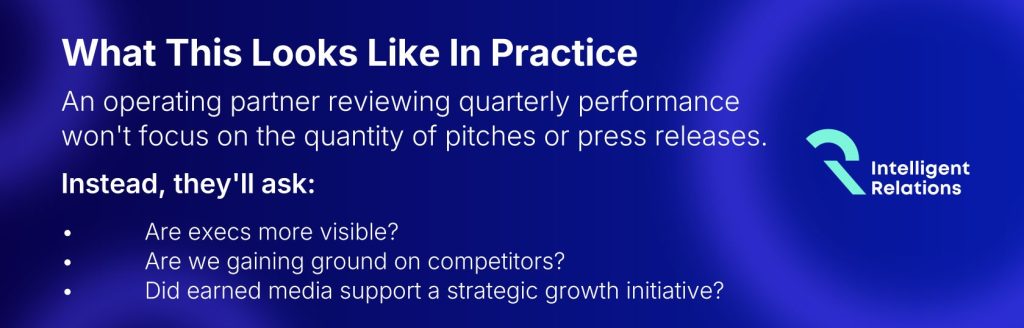
- Are we strengthening our market position?
- Are executives becoming more visible and credible?
- How do we compare to competitors?
- Are communications efforts supporting growth initiatives?
- What trends should leadership pay attention to?
You’re not reporting on more metrics — you’re providing more meaningful performance transparency.
Metrics Boards Actually Care About
Boards don’t want to hear about pitch or press release quantity. They want actionable data on performance and strategic progress.
Board-level PR metrics include:
- Competitive SOV
- Executive Visibility Trends
- Tier 1 Media Placements
- Coverage Quality and Relevance
- Thought Leadership Performance
- Brand Search Growth
- Strategic Campaign Outcomes
- Market Positioning Indicators
These metrics show what’s actually contributing to broader business objectives.
Example: Your team reports that media placements increased 30% year-over-year. While this number is encouraging, the board would rather know if and how those placements:
- Improved Competitive Visibility
- Strengthened Executive Authority
- Supported a Strategic Expansion Initiative
Building Executive-Friendly Reports
Highly effective board reports are to-the-point and outcome-focused.
Strong reporting frameworks include:
- Key Wins and Business Outcomes
- KPI Performance Trends
- Competitive Insights
- Executive Visibility Metrics
- Strategic Recommendations
- Next Quarter Priorities
Excessive detail isn’t necessary. Just focus on what changed and why.
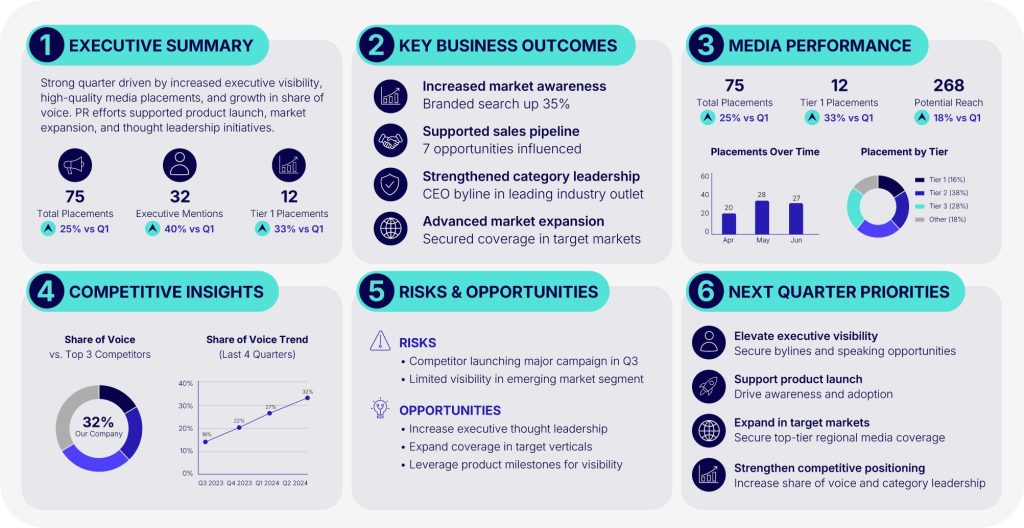
Quarterly Dashboard Example
Instead of a 20-page activity report, you provide a one-page dashboard highlighting:
- Executive Visibility Trends
- Competitive SOV
- Major Earned Media Wins
- Strategic Recommendations
This helps leadership quickly assess performance without digging through an overly detailed tranche of campaign data.
Why Context MattersMore Than Metrics
A metric without context isn’t actionable.
For example:
- A 15% increase in SOV is meaningful if competitors stayed flat.
- A small number of placements may be valuable if they appeared in highly influential industry publications.
- A dip in coverage volume may be acceptable if visibility has become more targeted and strategic.
Don’t just report numbers — explain their deeper meaning for the business.
Pro Tip: Board reports should answer three questions before presenting metrics:
- What happened?
- Why does it matter?
- What’s next?
For more on PR reporting, read our guide: PR Reporting – Displaying Metrics for Success [+3 Examples]
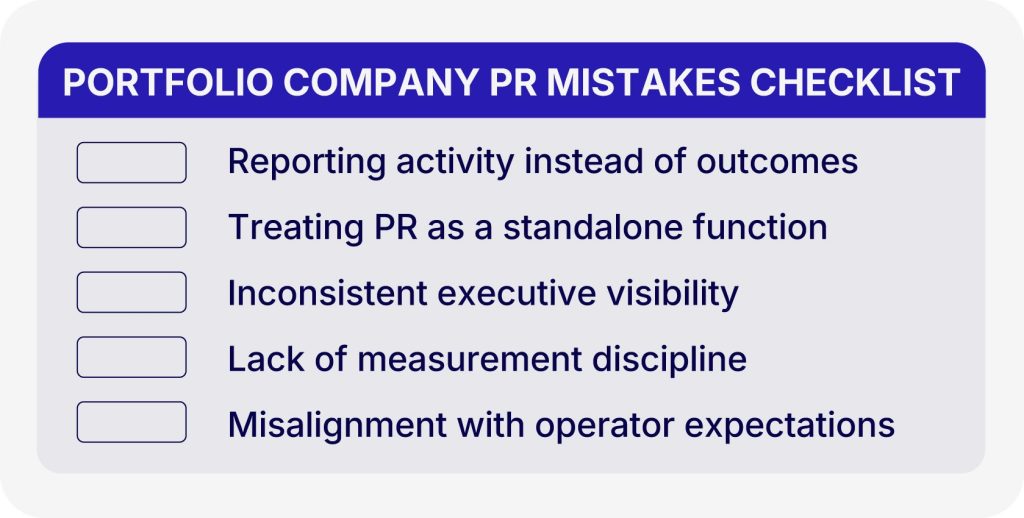
5 Common PR Mistakes in Portfolio Companies
Gaps in PR for PE-backed companies that prevent programs from meeting operational expectations are rarely caused by poor execution. They typically arise from misalignment.
Here are the top five mistakes that make it hard for leadership to:
- Measure Value
- Justify Investment
- Scale PR Effectively
1. Reporting Activity Instead of Outcomes
While the focus should be on impact, a lot of teams still place emphasis on outputs.
Common examples include:
- Number of Pitches Sent
- Press Releases Distributed
- Total Media Mentions
- Media Impressions
While these metrics do provide useful context, they don’t explain whether PR is actually helping the business achieve its objectives.
More meaningful measurements include:
- SOV
- Executive Visibility
- Referral Traffic
- Coverage Quality
- Strategic Campaign Outcomes
So, if you’re just reporting X number of placements and Y number of press releases, leadership is gonna say, “Great, but how did that support growth or make our execs look good?”
2. Treating PR as a Standalone Function
When is PR most effective? When it’s integrated into broader growth initiatives. But many portfolio companies still isolate communications.
This leads to:
- Missed Opportunities
- Inconsistent Messaging
- Weaker Business Impact
You need to keep PR aligned with go-to-market priorities and strategic business objectives.
Example: Your marketing team launches a major product initiative while PR runs an unrelated thought leadership campaign. Both efforts generate activity, but neither reinforces the other.
- As a result, visibility and business impact are diluted.
3. Inconsistent Executive Visibility
Investing heavily in company-level messaging while underinvesting in executive positioning results in:
- Reduced Industry Conversation Dominance
- Underrepresented Leadership Voices
- Missed Thought Leadership Opportunities
- Slow-developing Market Authority
Maintaining constant executive visibility becomes more important as PE-backed companies pursue things like:
- Growth Initiatives
- Fundraising Efforts
- Acquisitions
- Exit Events
Example: Your company receives steady media coverage, but your top competitor’s CEO regularly publishes op-eds in leading industry publications and goes on high-rated podcasts.
- Over time, that executive becomes synonymous with category leadership while your company struggles to own the narrative.
4. Lack of Measurement Discipline
You can’t evaluate and improve performance without a well-defined measurement framework.
Warning signs include:
- No Documented KPIs
- Inconsistent Reporting
- Changing Success Metrics Quarterly
- Limited Trend Visibility
- Goal-Measurement Disconnection
The best programs establish clear benchmarks and track progress consistently over time.
Example: Leadership requests a quarterly PR update, but they receive a different set of metrics each period because there’s no consistent framework.
- This makes it nearly impossible to identify trends or evaluate progress.
5. Failing to Align With Operator Expectations
The last and most common mistake is assuming operators evaluate PR differently than other business functions.
But operators expect:
- Accountability
- Clear Objectives
- Consistent Reporting
- Data-informed Decision-making
- Alignment with Business Goals
Understanding these expectations makes PR easy to defend, optimize, and scale.
Example: Your team reports successful campaign execution, but leadership is focused on market expansion and competitive positioning.
- Though everyone is discussing performance, success is being measured through different lenses.
Pro Tip: Most PR performance issues stem from misalignment — not a lack of media opportunities. Start by defining what success looks like for leadership, then build strategies that support those outcomes.
Learn more about auditing PR efficiency here: The PR Audit Guide: A Step-by-Step Framework for High-Performance Teams
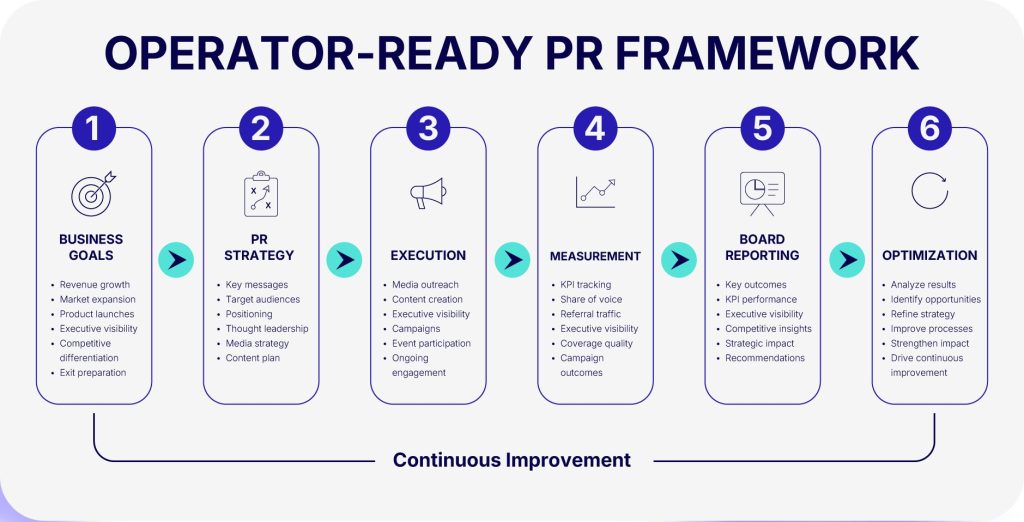
How to Build an Operator-Ready PR Program
To build an operator-ready PR program, you don’t need complex dashboards and overly detailed reporting.
You just need:
- Clear Objectives
- Measurable Performance Standards
- Company Priority Alignment
The goal is actually simple — run marketing and PR with the same discipline as other growth functions.
Start With Business Objectives
A lot of programs start by identifying PR goals. Operator-ready programs build from a foundation of clear business goals.
Before drawing up an actual game plan you need to understand how PR will actively contribute to priorities such as:
- Revenue Growth
- Market Expansion
- Product Launches
- Executive Visibility
- Competitive Differentiation
- Exit Preparation
PR is much easier to measure and defend when you prioritize business objectives above all else.
Example: Instead of setting a goal to land 20+ media placements, your team aligns strategy with a planned expansion into a new market.
- Now, your outreach, thought leadership, and commentary are collectively aimed at supporting that specific business initiative.
Establish a PR Accountability Framework
“Define success before execution begins” is the motto.
An effective accountability framework includes:
- Business Objectives
- Communications Goals
- KPIs and Benchmarks
- Reporting Cadence
- Ownership and Responsibilities
When PR teams are aligned with execs and operators, it reduces uncertainty around performance expectations.
KPI Alignment Model
| Business Goal | PR Objective | KPI Example |
| Market Expansion | Increase industry visibility | SOV |
| Revenue Growth | Support sales initiatives | Referral traffic, influenced pipelines |
| Category Leadership | Strengthen thought leadership | Executive mentions, media placements |
| Exit Preparation | Enhance market credibility | Executive visibility, tier 1 coverage |
Detailed KPI Reporting Example
Instead of presenting a monthly report with:
- 25 media placements
- 3.2 million impressions
- 15 backlinks
- 8 executive bylines
- 12 journalist meetings
Your reporting is organized around strategic goals:
| Business Objective | KPI | Result |
| Increase enterprise pipeline | Marketing-qualified leads from earned media | 42 MQLs generated |
| Support sales conversations | Prospects exposed to earned media before opportunity creation | 31% of new opportunities |
| Strengthen category authority | Tier 1 industry media placements | 8 placements in target publications |
| Improve search visibility | High-authority backlinks earned | 15 backlinks from DA 70+ sites |
| Elevate executive credibility | Executive thought leadership placements | 8 bylines and 3 podcast appearances |
This kind of reporting quickly answers key questions like:
- Did PR generate qualified demand?
- Did it increase market authority?
- Did it support revenue growth?
Align PR With Revenue Teams
Operator-ready PR isn’t an independent function. It requires strong alignment between:
- PR and Marketing
- PR and Sales
- PR and Product Marketing
- PR and Executive Leadership
This ensures messaging, campaigns, and thought leadership all reinforce broader go-to-market initiatives. When PR and revenue teams have the same strategic priorities, efforts influence meaningful business outcomes.
Detailed Alignment Example
You’re Head of Communications for a B2B SaaS company that’s preparing to launch a new AI-powered analytics platform in Q3. Before planning a campaign, you meet with the VP of Sales and CMO to understand the company’s primary objective — generate 50 enterprise sales opportunities among healthcare organizations.
During the meeting, you collectively identify three priorities:
- Sales needs credibility-building content to use in prospect conversations.
- Marketing is launching an account-based marketing (ABM) campaign targeting healthcare executives.
- Leadership wants to position the CEO as an authority on AI adoption in healthcare.
Rather than pursuing broad product coverage, your team builds a PR strategy that directly supports these goals by:
- Securing interviews and contributed articles in healthcare technology publications read by target buyers.
- Pitching stories focused on healthcare AI trends rather than generic product features.
- Coordinating media placements to coincide with the ABM campaign launch.
- Creating earned media assets that sales representatives can share with prospects.
- Prioritizing coverage in outlets that influence healthcare decision-makers.
The end result is that PR, sales, and marketing all contributed to the same objective of increasing awareness and credibility among healthcare buyers.
Beyond simply producing media impressions, this helped generate more qualified pipeline.
Create Repeatable Operating Processes
Systems are valuable to operators because systems create consistency.
Rather than relying on random campaigns or reactive outreach, establish repeatable processes such as:
- Quarterly Planning Sessions
- Monthly KPI Reviews
- Executive Content Development Workflows
- Competitive Monitoring
- Performance Reporting Cycles
Repeatable processes not only improve visibility, they strengthen accountability and long-term performance.
Example: Your cybersecurity company sets an annual goal of increasing enterprise market share. Rather than creating separate PR plans each quarter, you build a 12-month roadmap that supports your main objective:
- Q1: Establish thought leadership around emerging cyber threats.
- Q2: Promote new product innovations and customer success stories.
- Q3: Secure speaking opportunities at major industry conferences.
- Q4: Highlight year-end market insights and company momentum.
Because every quarter supports the same business goal, leadership easily tracks progress against a consistent set of KPIs:
- SOV
- Tier 1 Coverage
- Analyst Mentions
- Enterprise Pipeline Influence
Why Augmentation Outperforms Expansion
While many portfolio companies don’t necessarily need larger internal teams, they still need stronger PR performance. This is where an augmentation model comes in.
An augmented PR program provides:
- Specialized Expertise
- Additional Execution Capacity
- Data-informed Insights
- Consistent Reporting Support
- Flexible Scalability
An augmentation layer helps you strengthen PR performance without significant increases in operational complexity. Because for most PE-backed organizations, the aim isn’t simply more spend — it’s to improve efficiency and accountability.
Pro Tip: The most scalable PR programs operate like revenue functions — with clear objectives, consistent reporting, repeatable processes, and accountability at every stage.
Need a scalable budget blueprint? We’ve got you covered: PR for Startups: A Scalable Budgeting Blueprint for Series B–D [Examples + Tips]
Preparing PR for Exit (M&A or IPO)
Market perception becomes even more of a priority as companies get closer to an acquisition or public offering. Before due diligence begins, having a well-oiled PR program in place helps by:
- Strengthening Credibility
- Reinforcing Growth Narratives
- Demonstrating Category Leadership
Why Communications Becomes More Important Near Exit
While revenue growth and EBITDA remain central to valuation discussions, buyers also assess:
- Market Position
- Leadership Credibility
- Competitive Differentiation
- Future Growth Potential
Strategic communications helps reinforce:
- Market Leadership
- Executive Credibility
- Industry Influence
- Category Authority
- Growth Momentum
The best exit stories aren’t built in the months leading up to a transaction — they result from years of consistent positioning and visibility.
Example: Your software company is preparing for a potential acquisition. You spend several years building executive visibility and category authority.
- Before buyers even enter the picture, your company is already recognized as a market leader rather than another vendor in the space.
How Earned Media Supports Valuation Narratives
Third-party validation is a powerful influencer of how audiences view a company within its industry.
Consistent coverage strengthens narratives around:
- Innovation
- Market Leadership
- Growth Trajectory
- Industry Expertise
- Competitive Differentiation
Earned media coverage alone doesn’t increase valuation, but it does validate the strategic story company leaders want the market to understand.
Building a Defensible Market Story
Companies approaching an exit should be able to clearly articulate three things:
1. Why We Matter
Example: “Our B2B tech company enables large enterprises to accelerate digital transformation while reducing costs and operational risk.”
2. How We Differentiate Ourselves
Example: “Unlike legacy platforms that require lengthy implementations and extensive customization, our solution delivers measurable business outcomes within weeks using a highly scalable, AI-powered architecture.”
3. Where We Fit Within the Broader Market Landscape
Example: “We are a leading provider in the rapidly growing intelligent automation market, positioned between traditional workflow software and next-generation AI solutions.”
How PR Strengthen Your Story
PR for PE-backed companies helps strengthen that story through:
- Executive Thought Leadership
- Industry Commentary
- Strategic Media Placements
- Consistent Messaging
- Third-party Validation
The ultimate aim is to connect internal growth narratives with external market perception.
Example: Instead of appearing in the media only around product announcements, executives regularly contribute insights on:
- Industry Trends
- Market Shifts
- Customer Challenges
Over time, the company gains a reputation for expertise and leadership outside of isolated news events.
What Buyers and Investors Notice
As mentioned at the beginning of this section, potential buyers and investors will look at more than just revenue metrics to fully understand your company’s market position.
Areas that influence perception include:
- Executive Visibility
- Thought Leadership Presence
- Competitive SOV
- Industry Reputation
- Media Credibility
- Market Differentiation
These factors add context to your company’s growth story and future potential.
Exit-Readiness Communications Framework
| Objective | PR Focus Area | Potential Outcomes |
| Strengthen Market Position | Consistent industry coverage | Increased category authority |
| Build Executive Credibility | Thought leadership programs | Stronger leadership visibility |
| Support Growth Narrative | Strategic storytelling | Clear market differentiation |
| Improve Competitive Positioning | SOV initiatives | Greater market influence |
| Reinforce Investor Confidence | Consistent messaging and media presence | Stronger perception of long-term value |
Example: Company A and Company B have similar financial performance, but Company B has:
- A Stronger Market Presence
- More Visible Leadership Team
- Greater Industry Recognition
Those factors strengthen buyer confidence in Company B’s future growth potential.
Why Exit Readiness Starts Earlier Than Most Companies Think
Treating PR as an exit-stage initiative is a common mistake many portfolio companies still make when it’s actually a long-term strategy for value creation.
It takes time to build market credibility, executive authority, and industry influence. Investing in these assets early better positions your company to support strategic transaction opportunities when they arise.

High-Performance PR Requires the Same Discipline as Every Other Growth Function
The value of PR for PE-backed companies doesn’t change with investment — the expectations surrounding PR do. It needs to support the pursuit of aggressive growth targets.
This means operator-led PR strategies are held to the same standard of discipline as other growth functions.
You need to:
- Measure outcomes instead of vanity metrics.
- Report business impact rather than placement quantity.
- Align earned media initiatives with company growth objectives rather than isolated coverage wins.
Are you evaluating whether your current communications program meets PE-level expectations? Let us help.
At Intelligent Relations, we bring an operator-minded approach to earned media with a focus on performance and accountability. Portfolio companies use our platform to improve results, strengthen measurement, and align communications with broader value-creation goals.
Schedule a Strategic PR Performance Review or PE-Ready PR Audit to identify opportunities, strengthen accountability, and ensure your PR program is positioned to deliver measurable business value.